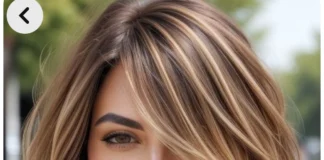

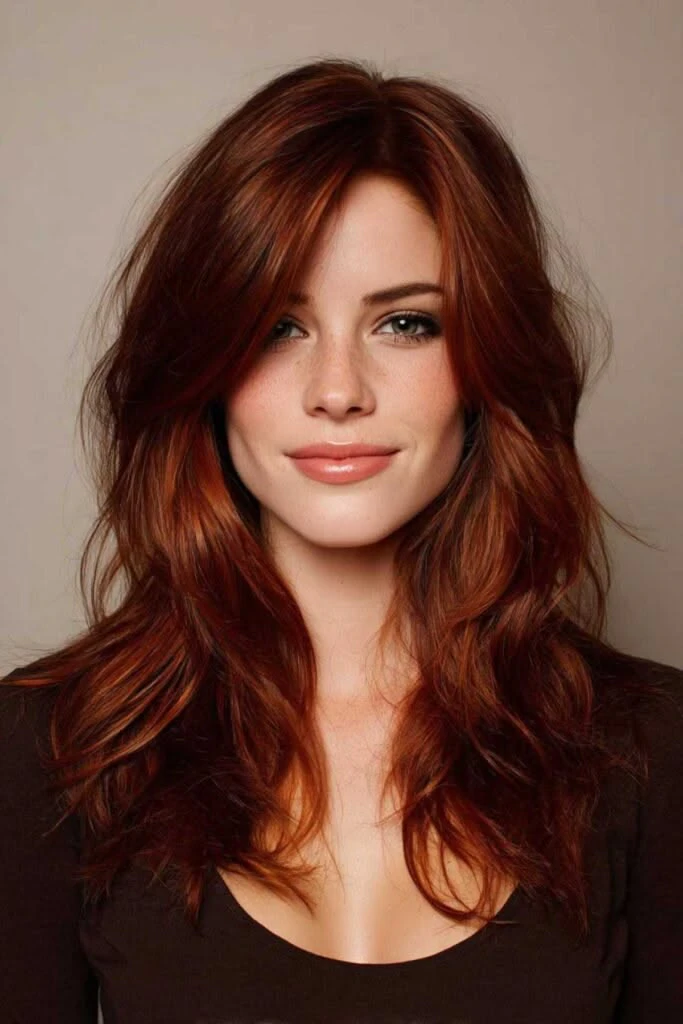
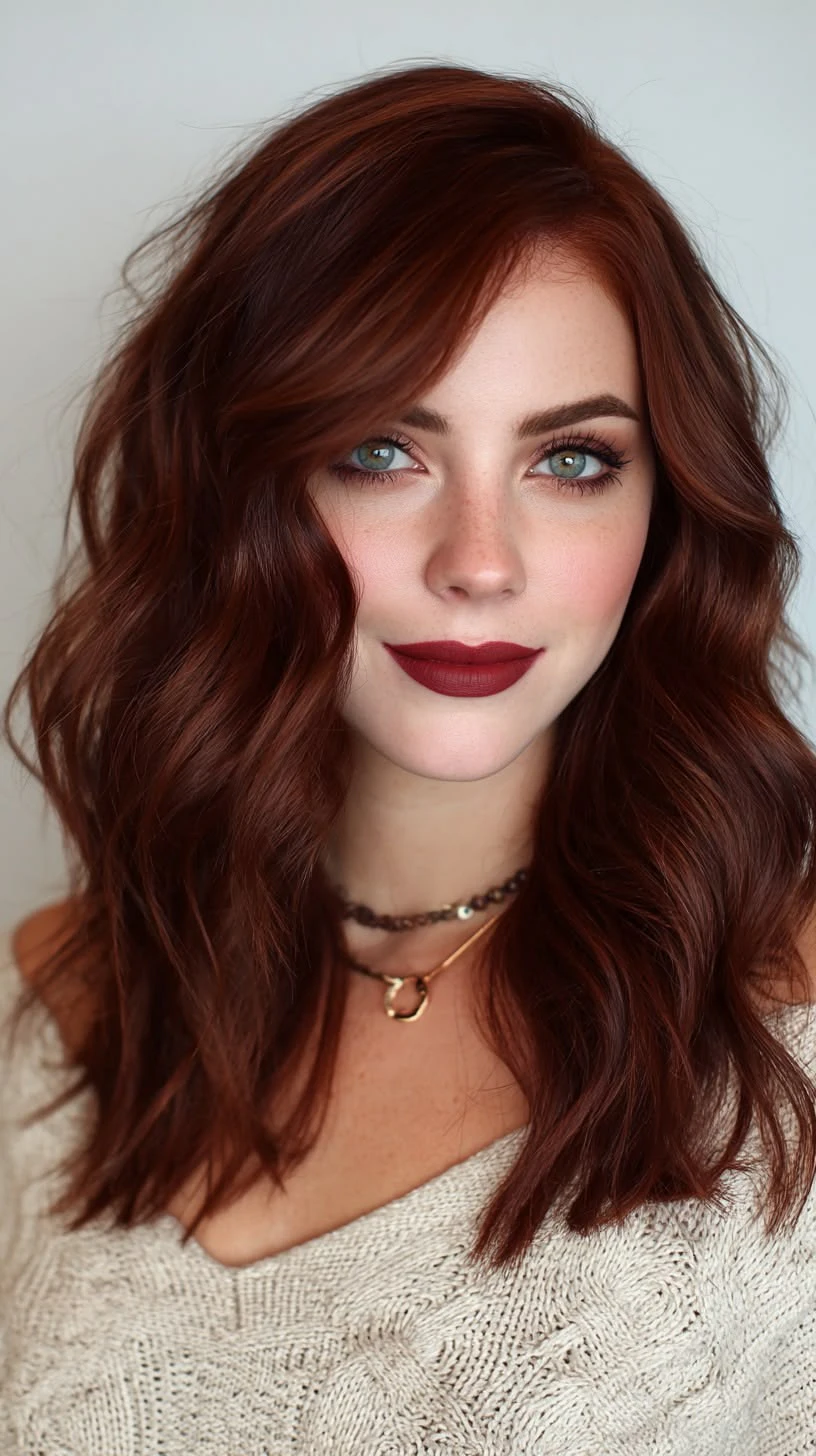
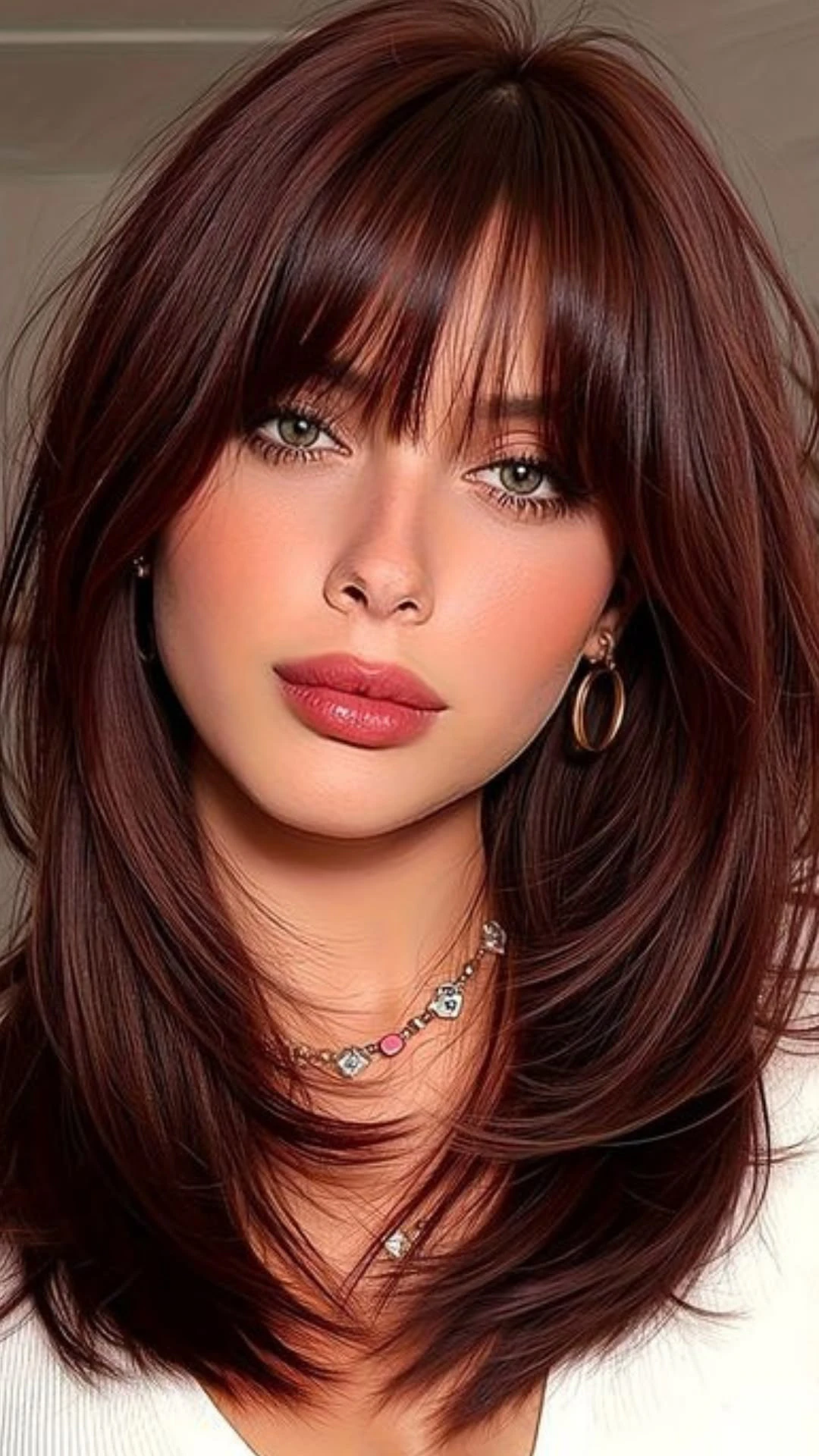
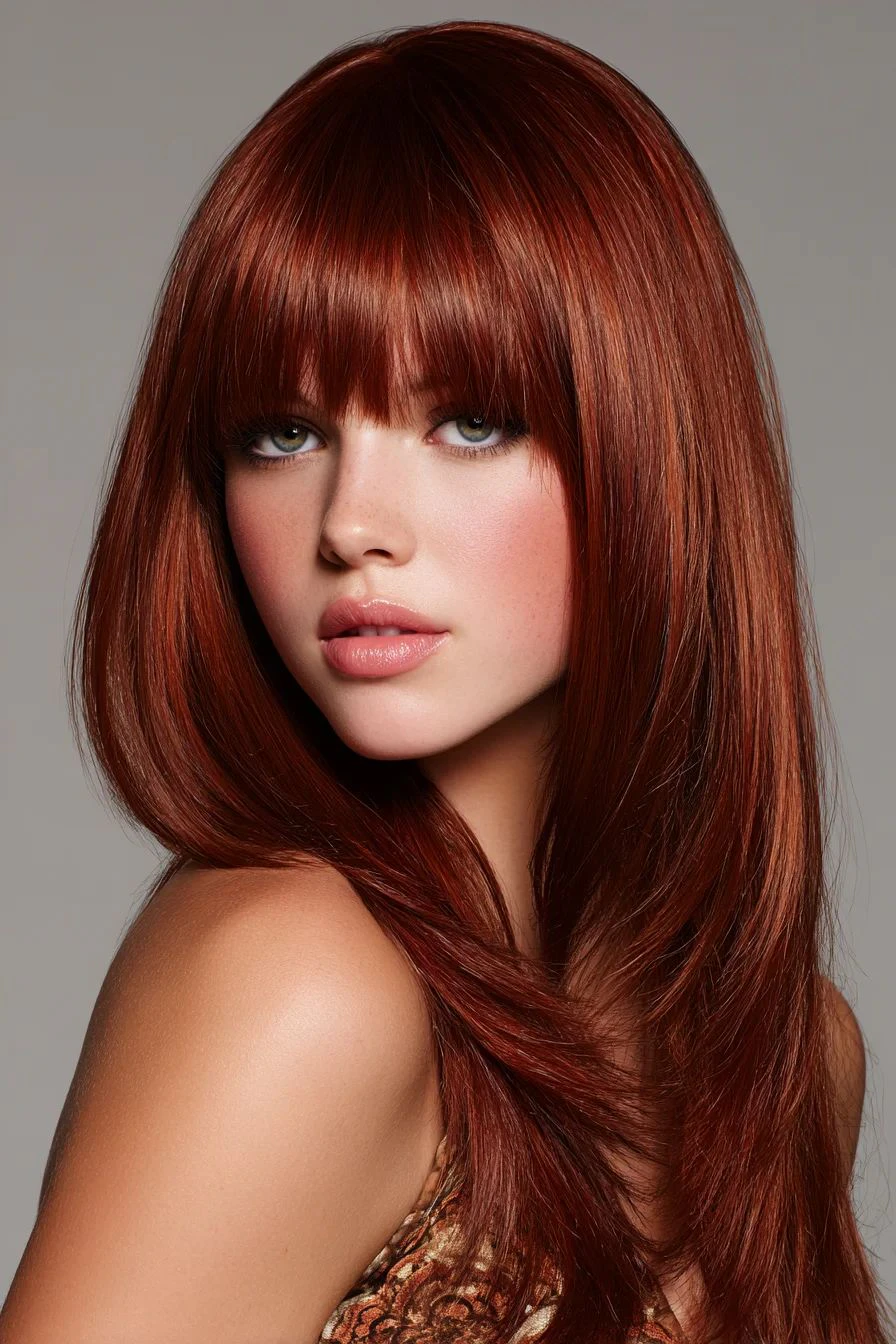
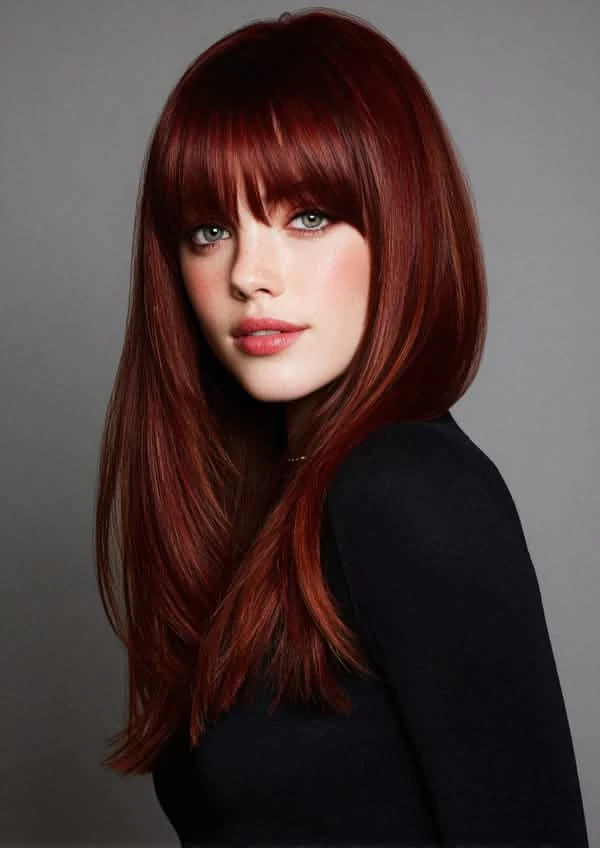
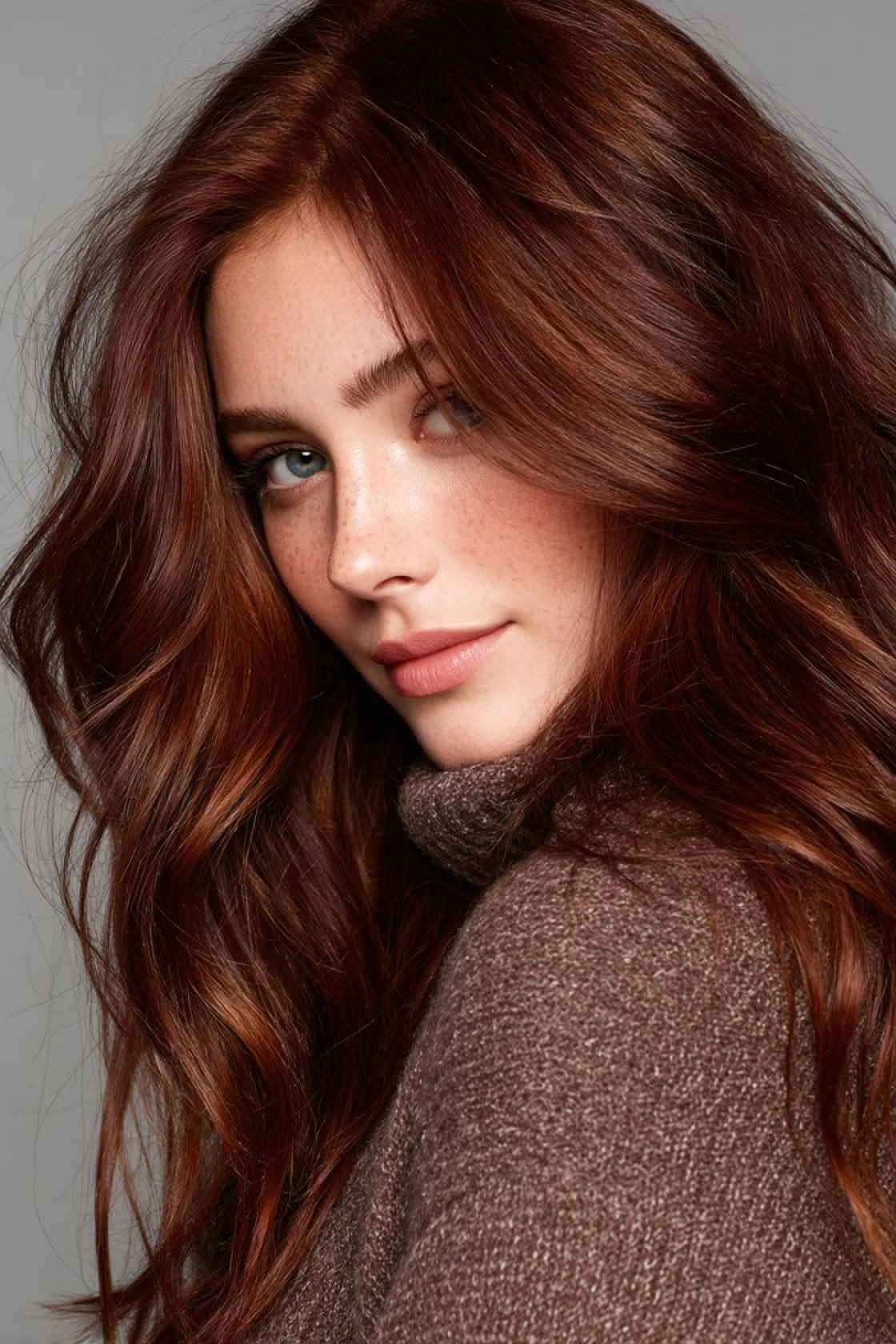
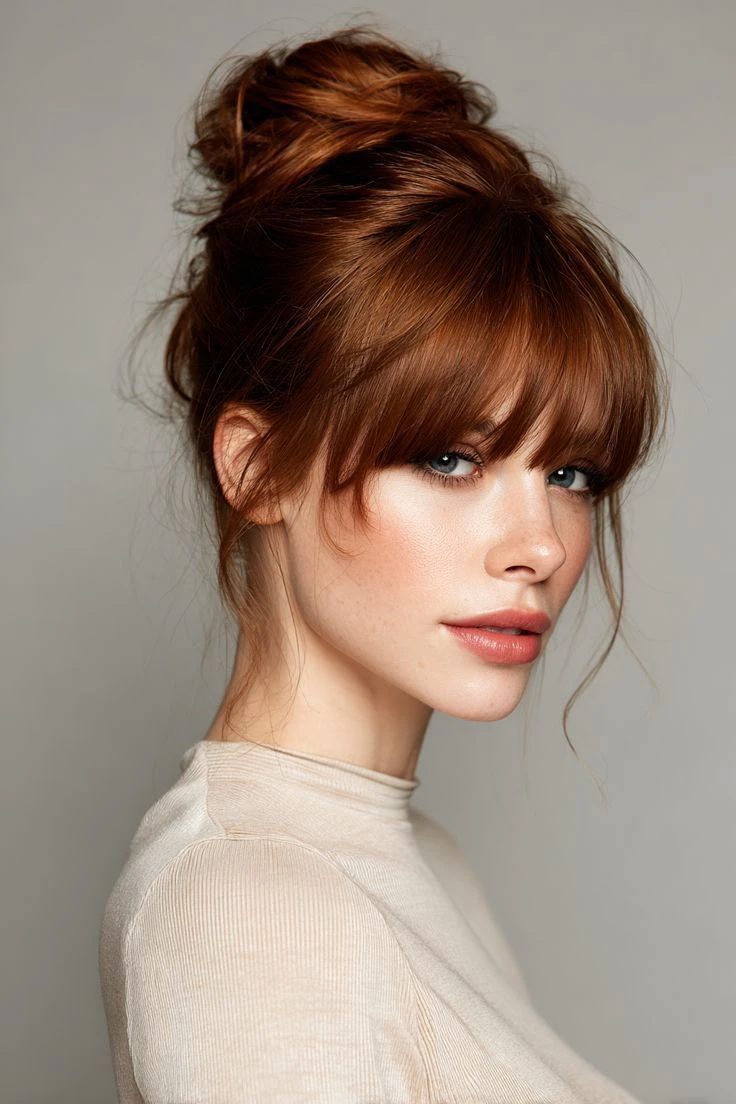
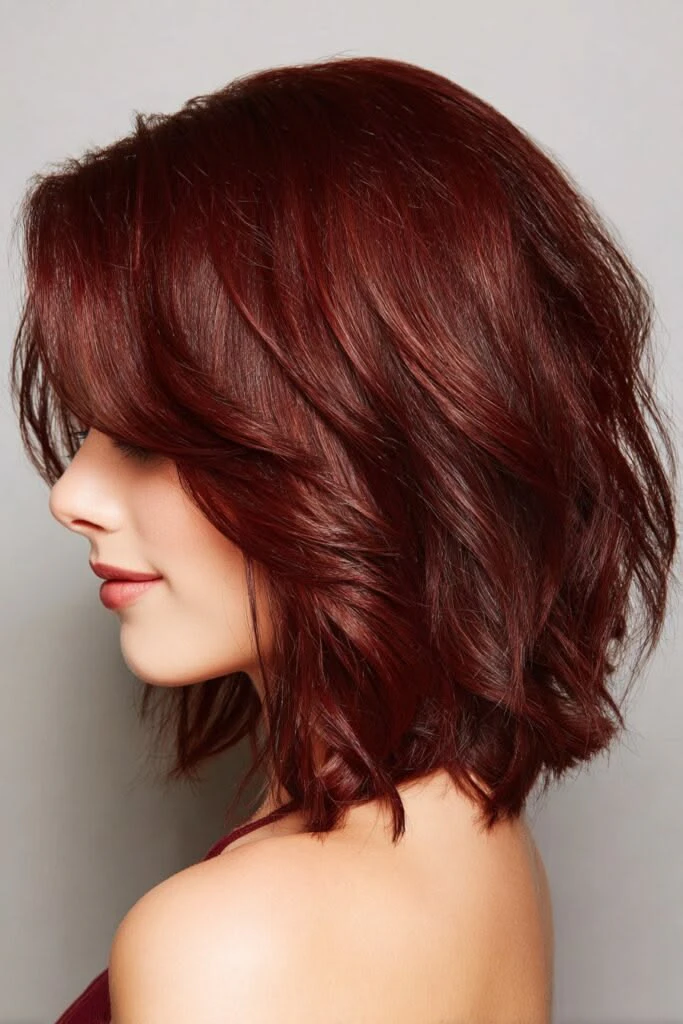
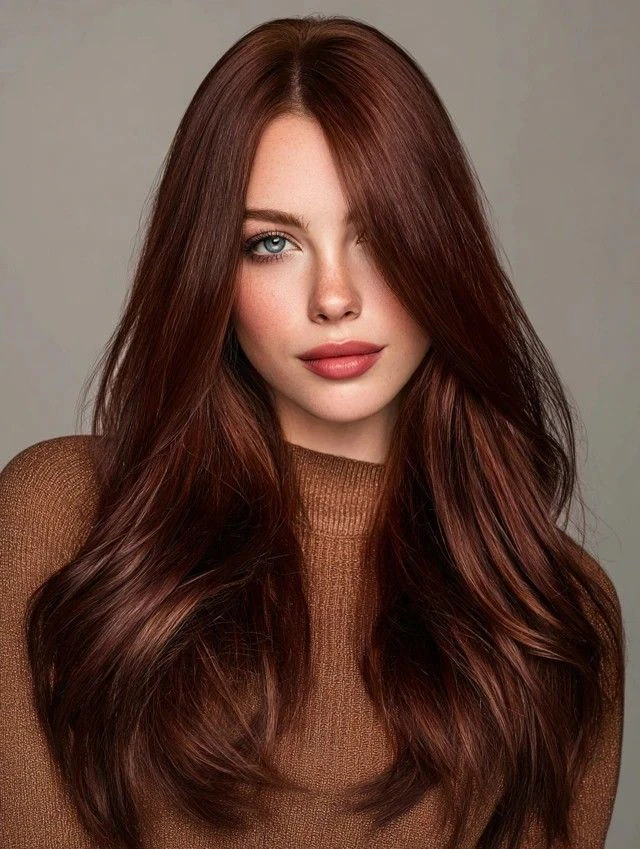
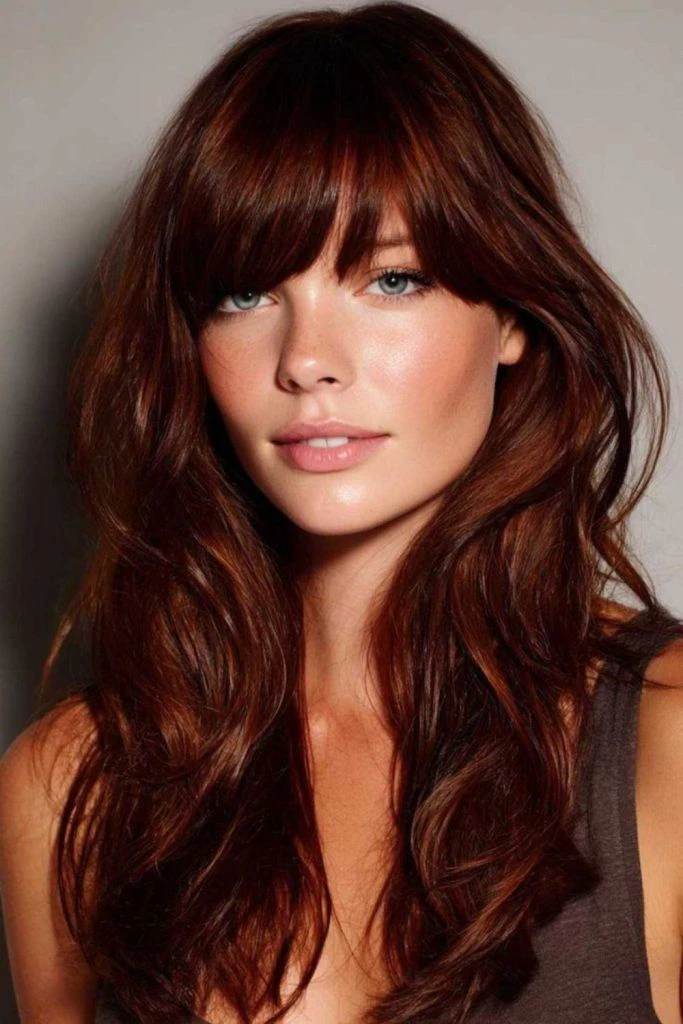
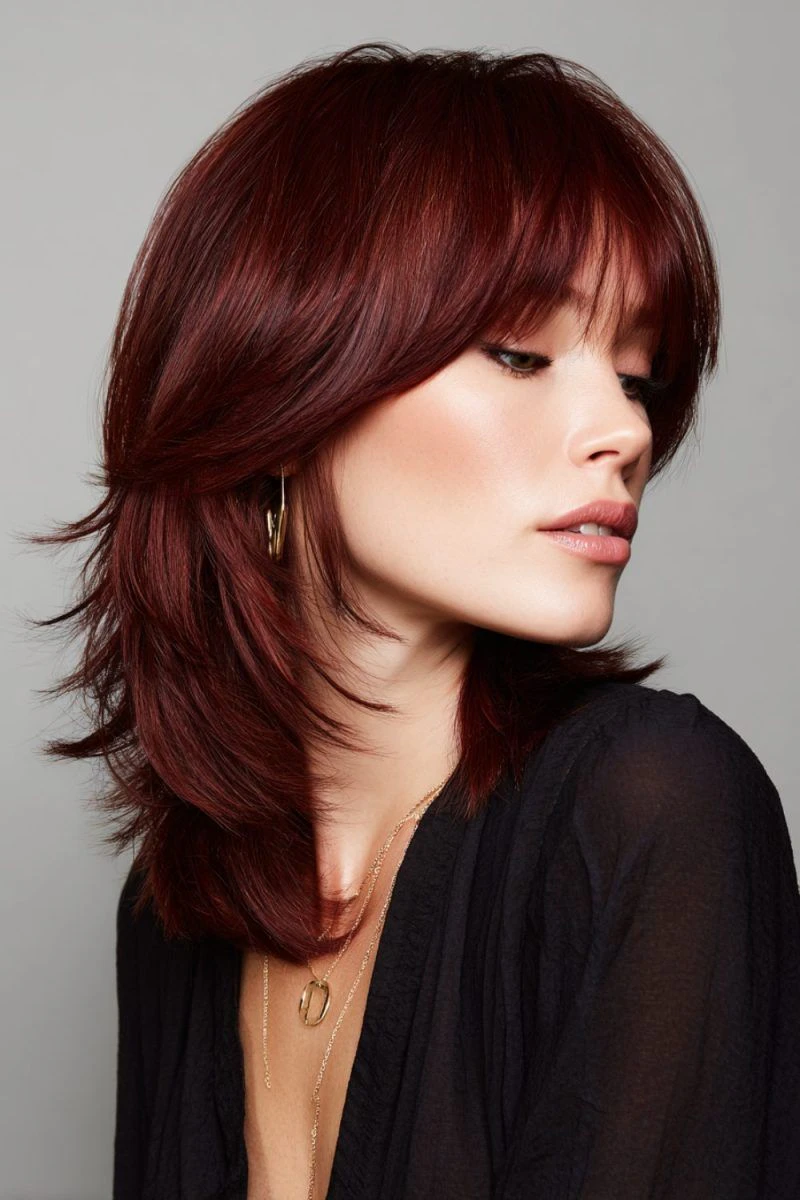
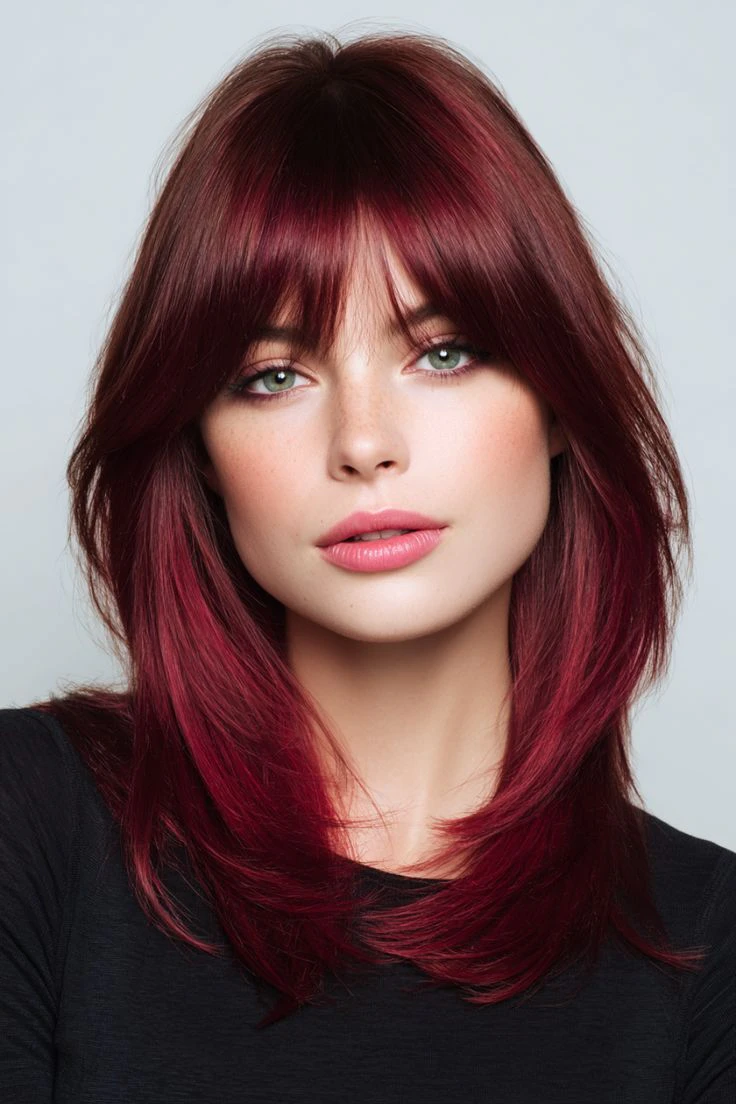
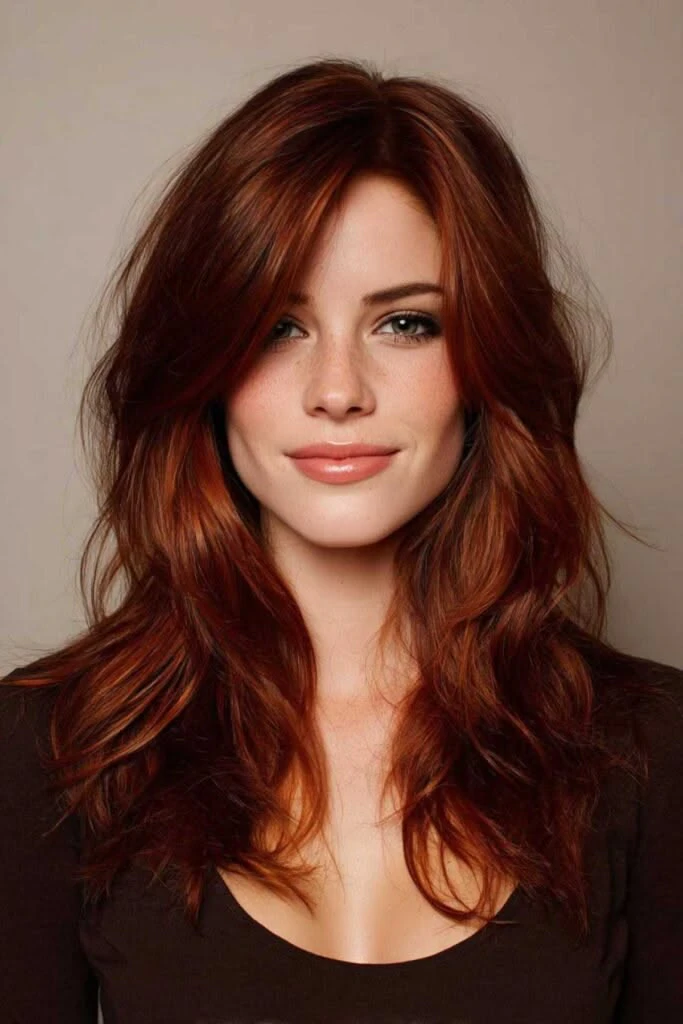
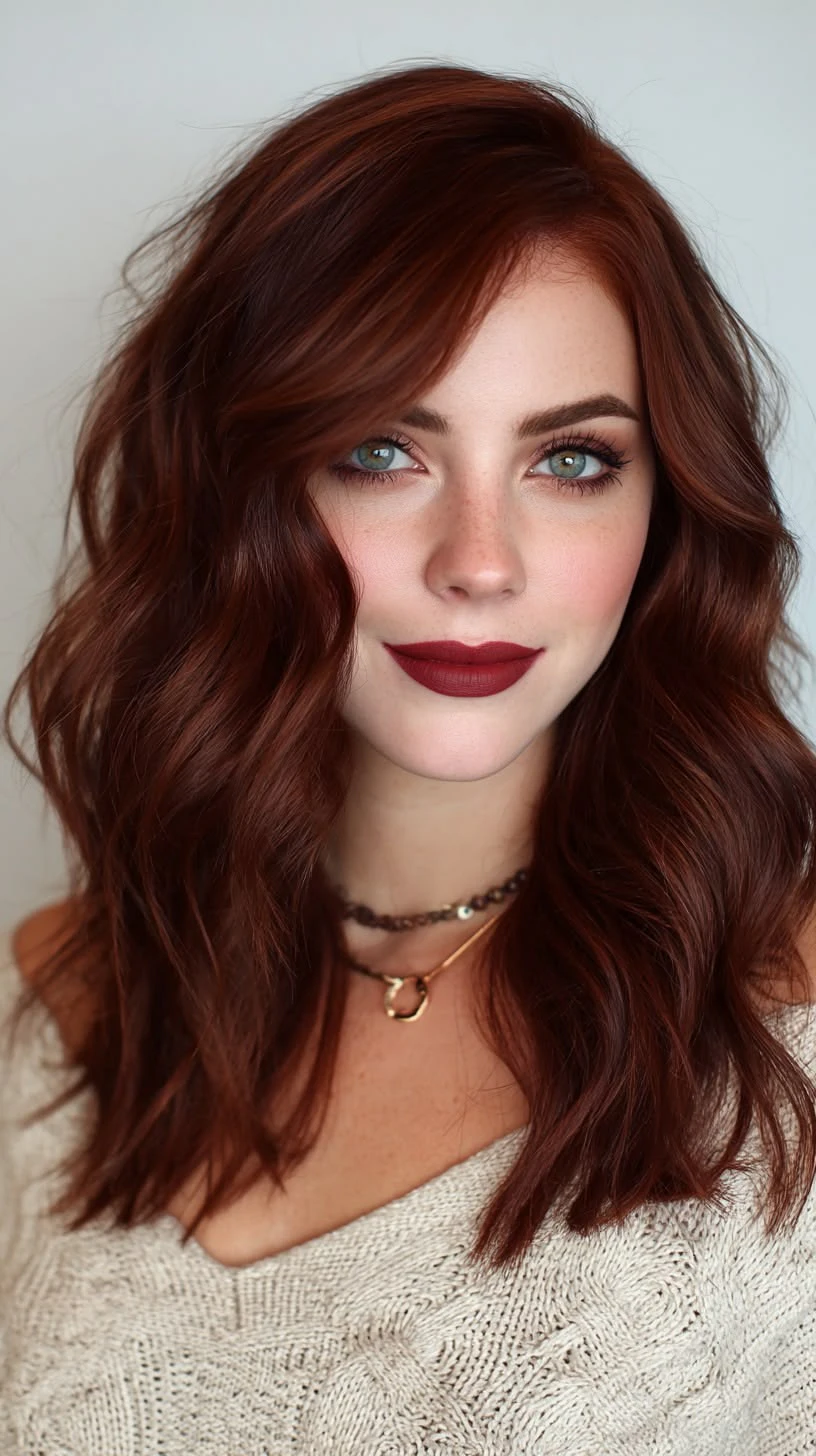
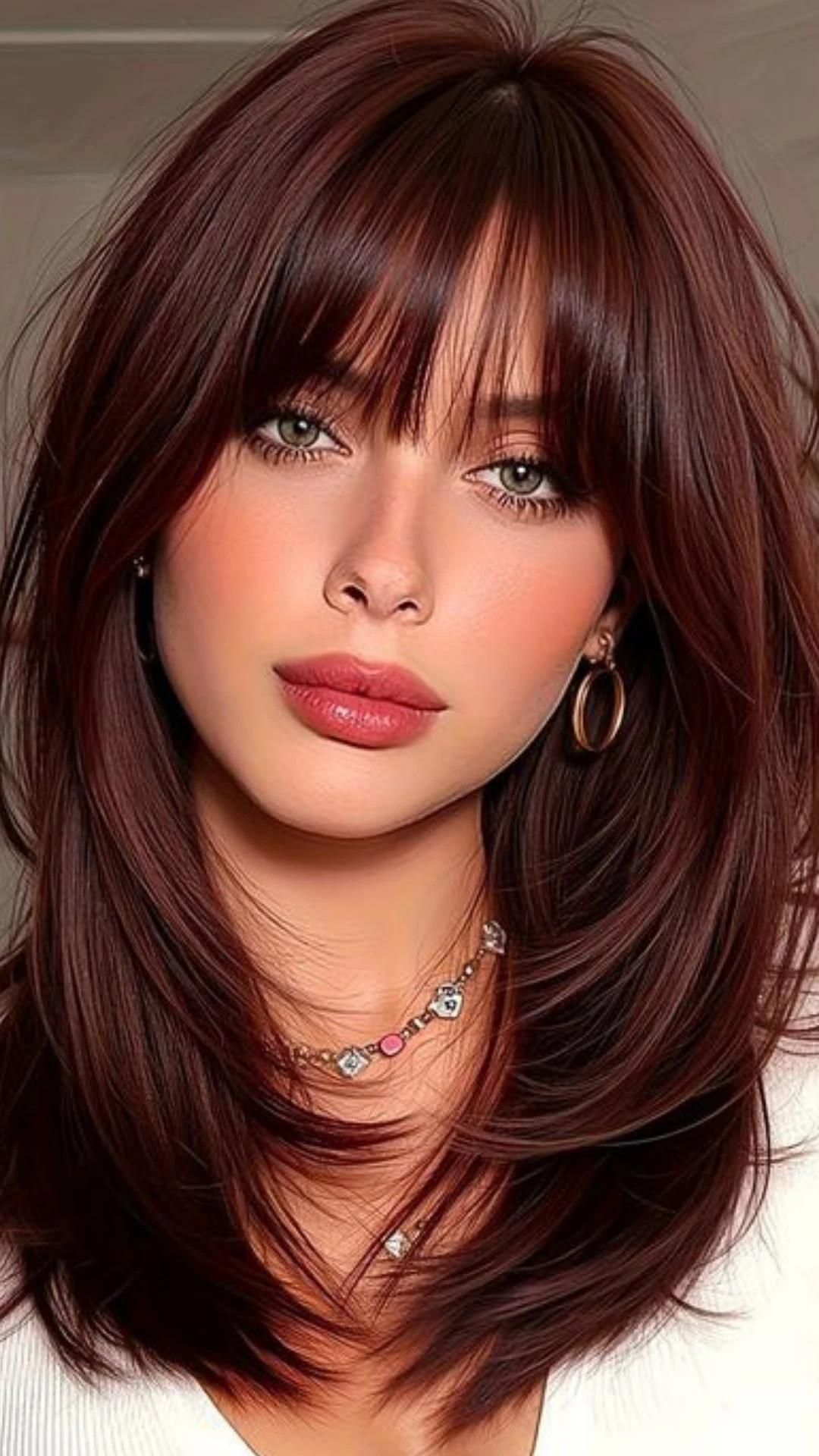
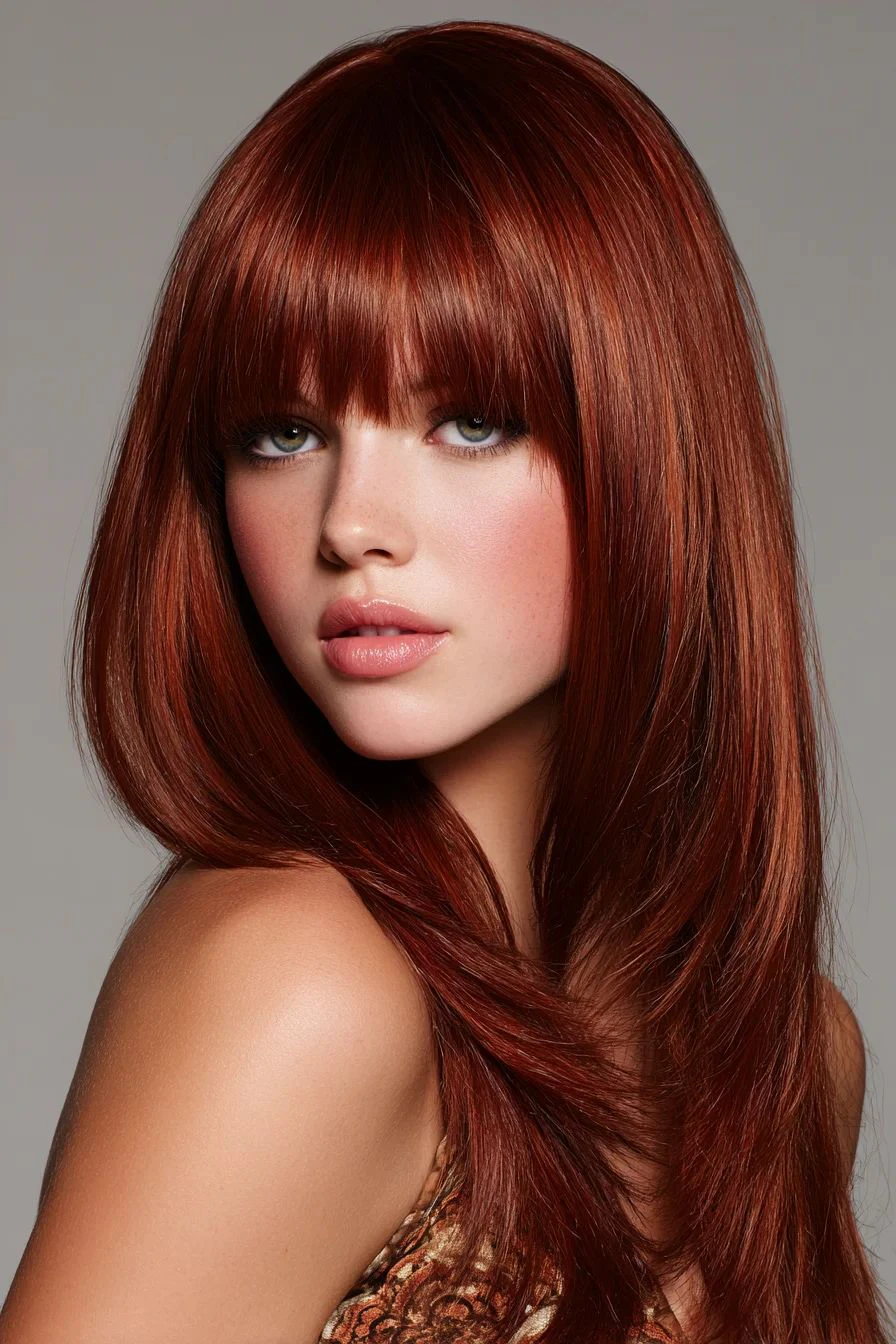
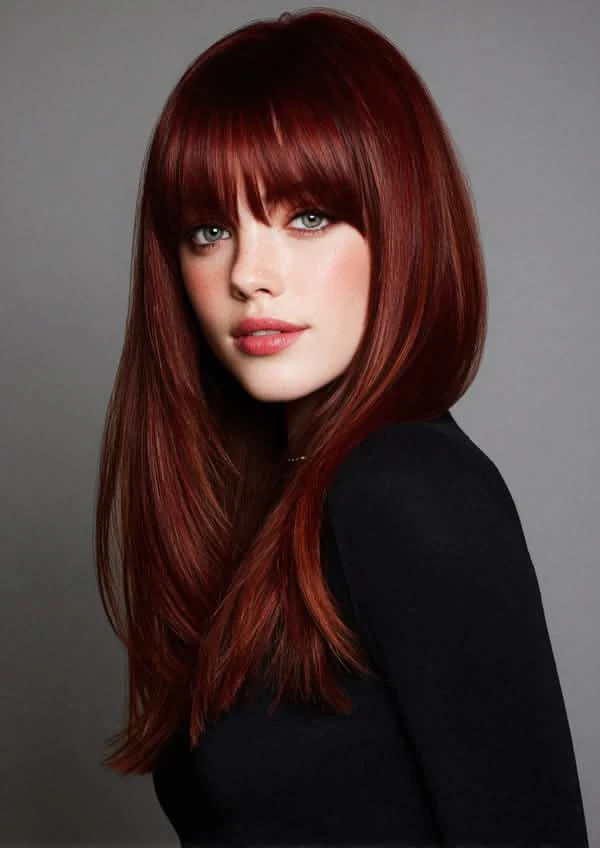
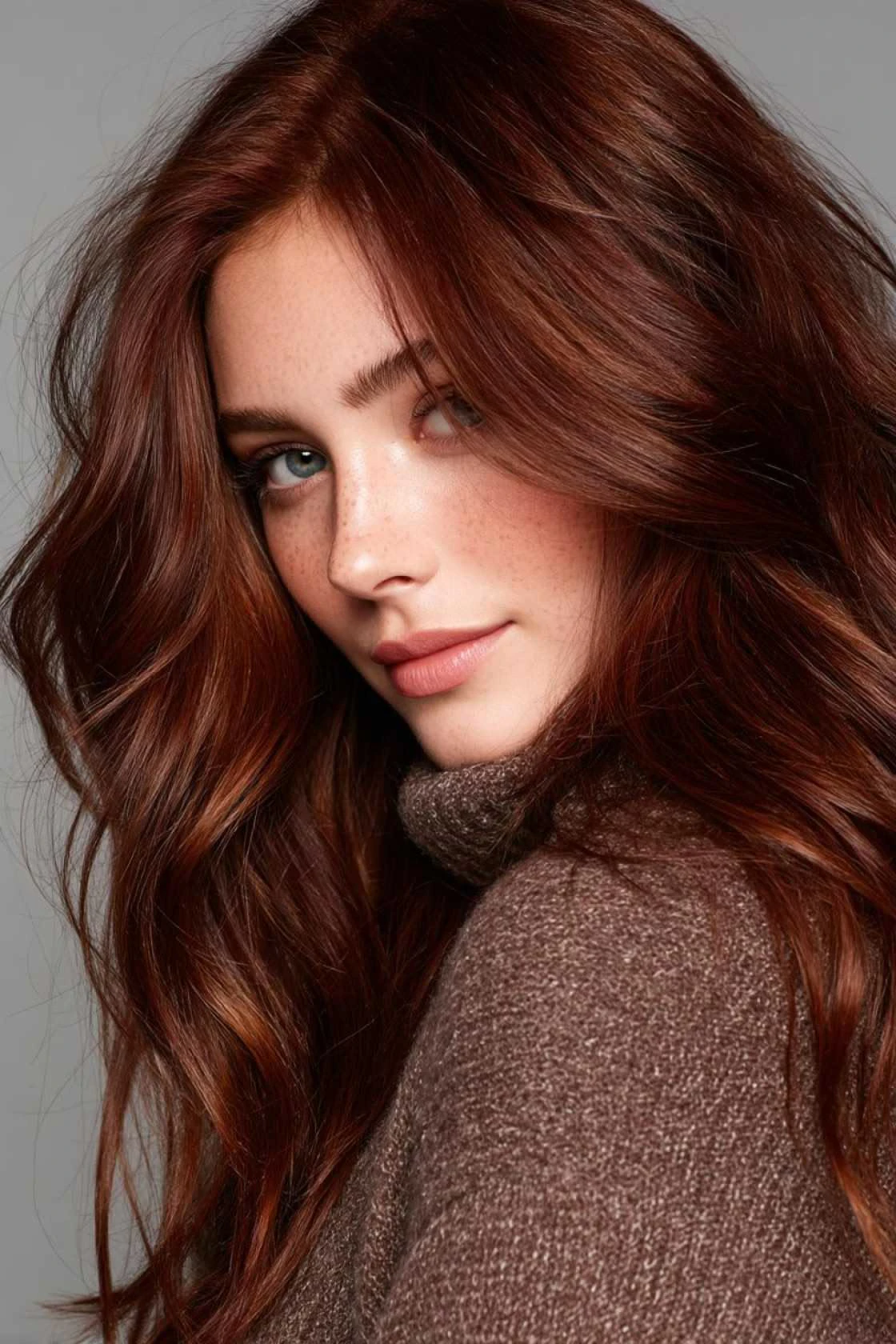
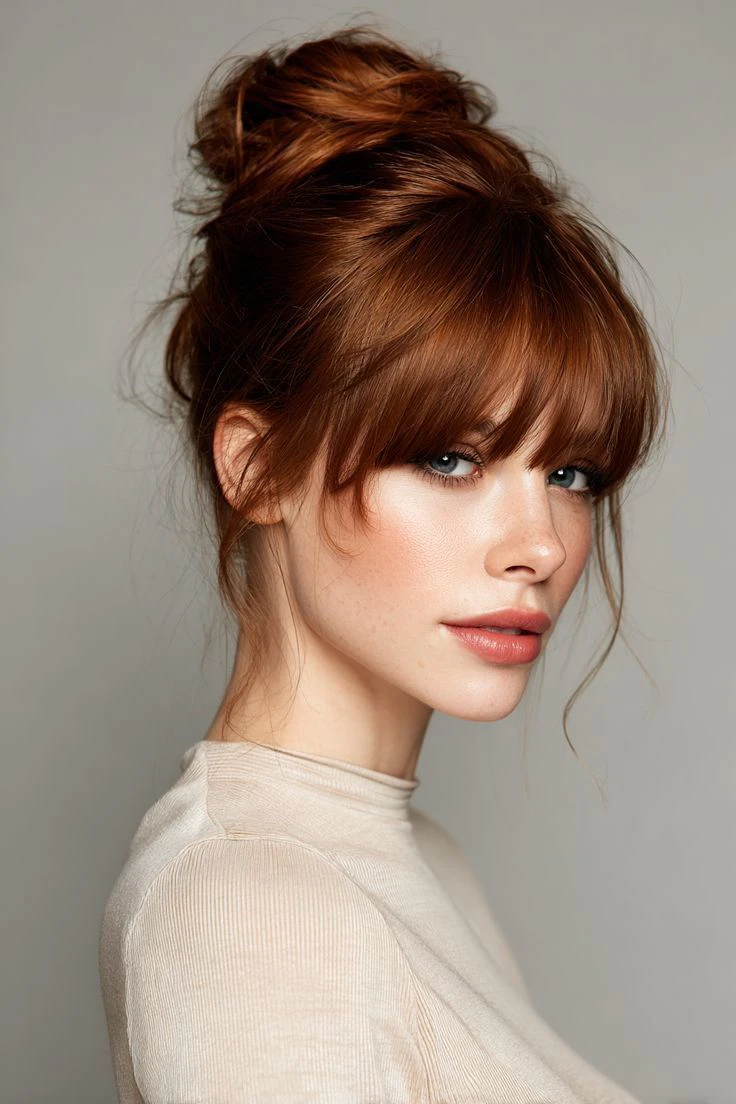
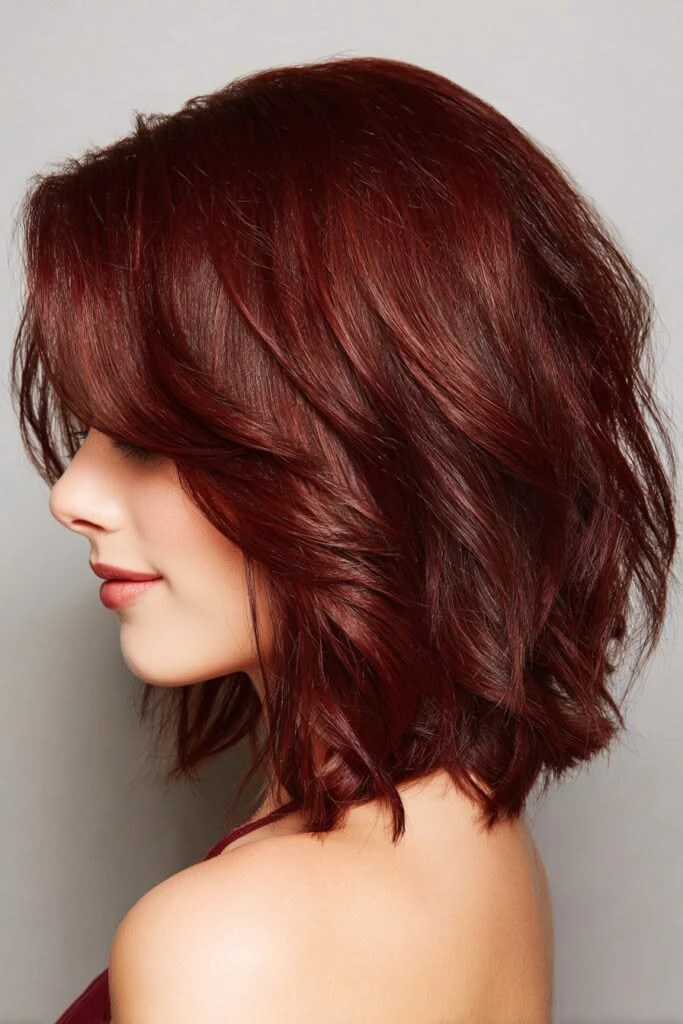
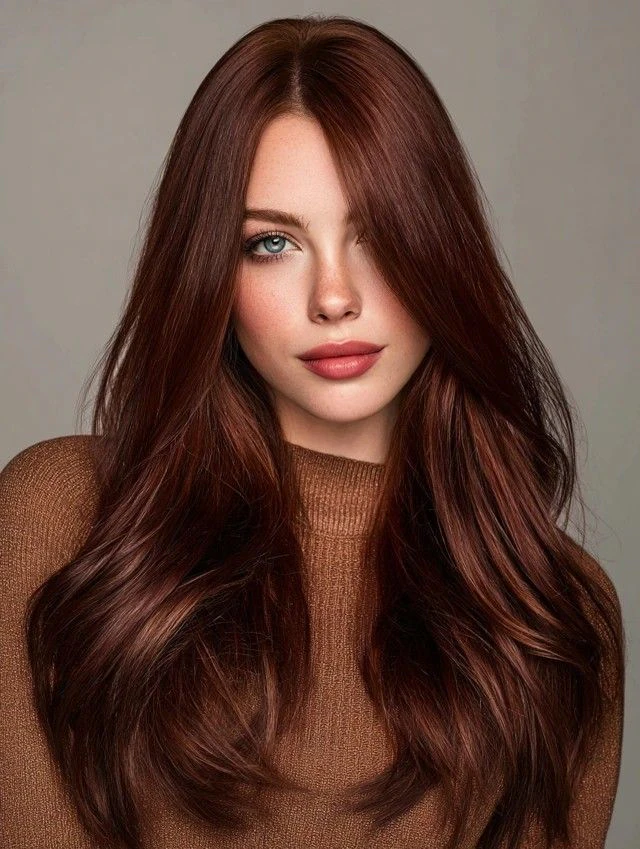
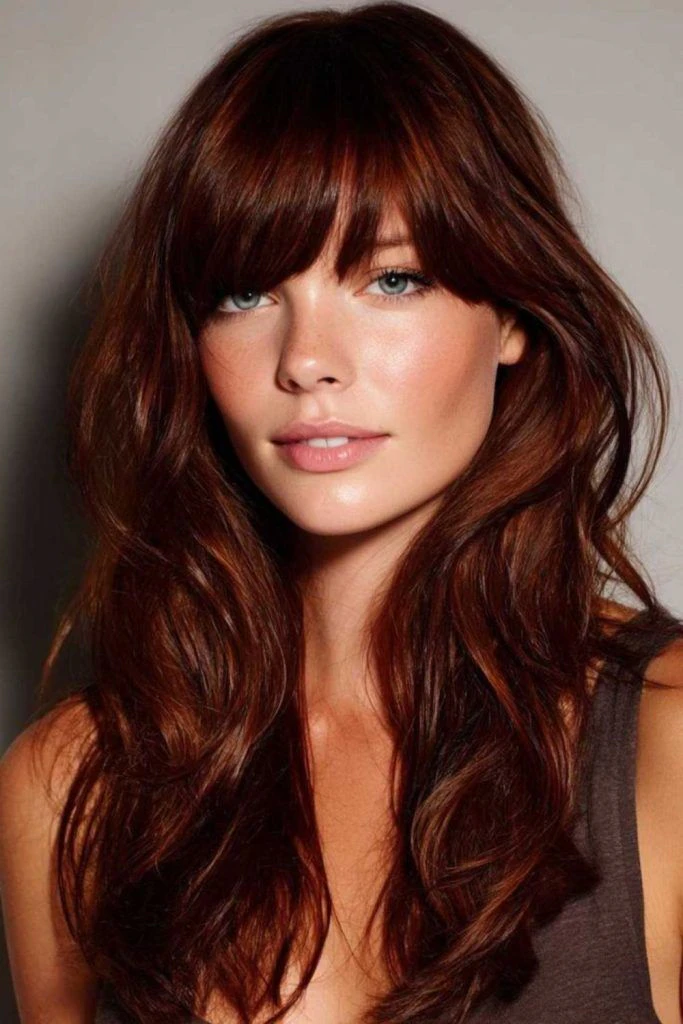
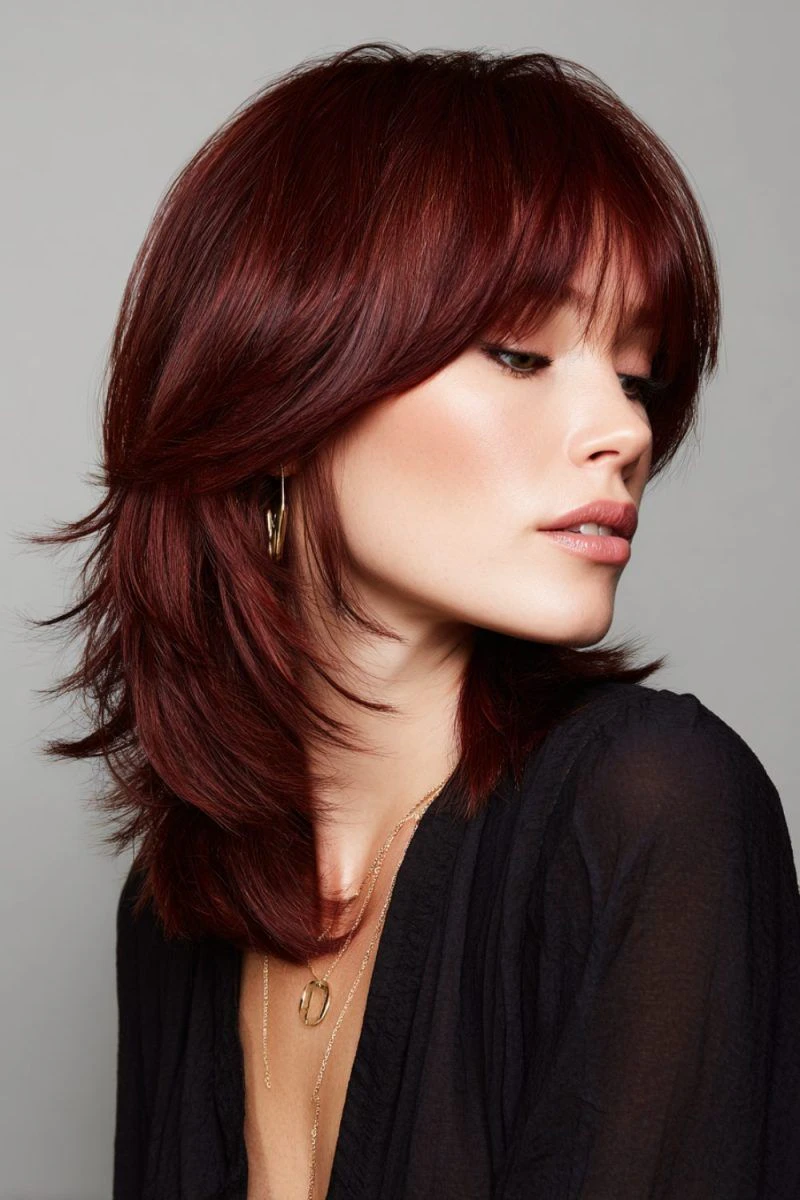
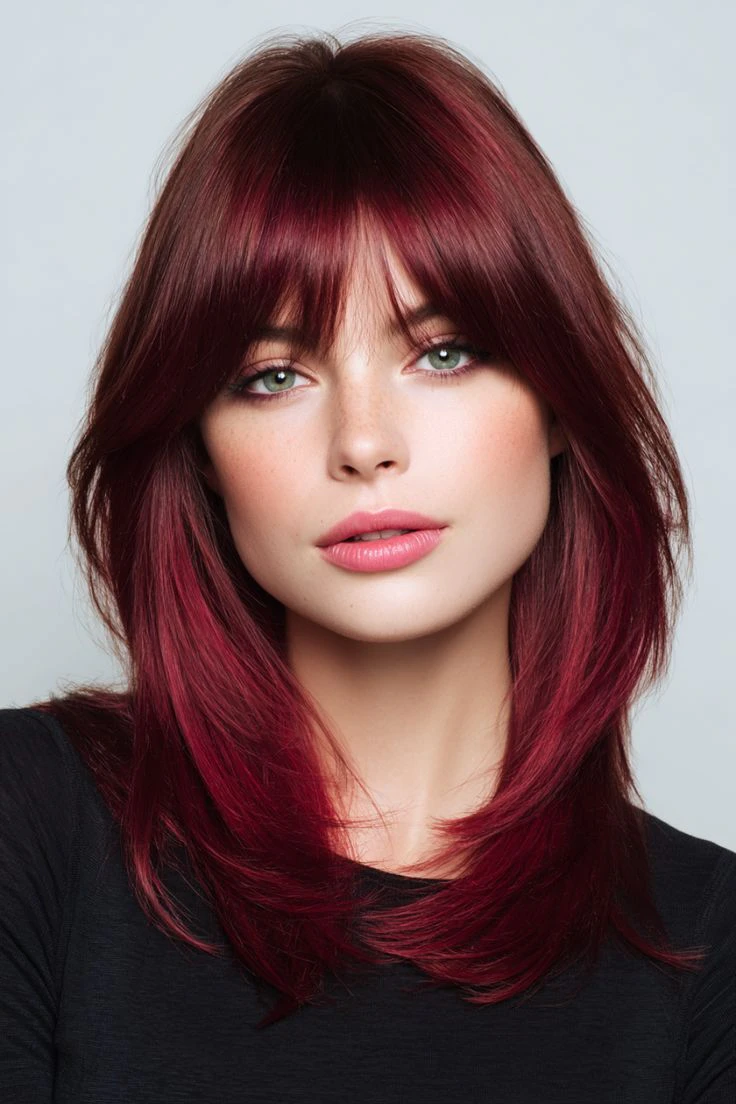
Auburn is the shade people tend to describe without quite knowing its name. It is not fully red, not fully brown, and never as loud as copper. Instead, it sits in that warm middle ground where chestnut meets cinnamon, and that is precisely why it suits so many people. On a gray morning, it looks like a rich brunette. Then you step into sunlight, and suddenly the red comes alive.
If you have been thinking about warming up your color, this guide walks you through the full range of auburn hair colors, from soft strawberry auburn to deep mahogany. You’ll also learn how to match a shade to your skin, which cuts show it off best, and what to do at home to keep the warmth from washing out in a month.
What Makes Auburn Different From Red and Copper
Colorists usually describe auburn as a red brown. In other words, the base is brown, and red is layered on top of it. Copper, by contrast, leans toward orange and gold, while true red sits closer to cherry or crimson. That brown foundation gives auburn its depth and makes it feel natural, even on people who were not born with it.
Because of this, auburn is also more forgiving. It does not fade into a brassy orange as quickly as bright copper does. As the red softens over the weeks, it usually leaves you with a warm brunette that still looks intentional. For anyone nervous about committing to red, that gentle fade is a big advantage.
Auburn also changes with light more than most brown shades. Indoors, under warm bulbs, it can look almost chocolate. Outside, however, the red undertone shows clearly. So one appointment gives you two moods, depending on where you are.
Choosing Your Auburn Shade
Before you sit in the salon chair, it helps to know the main families of auburn. Each one carries a different balance of red and brown, so the effect on your skin and eyes varies quite a bit.
Light and Strawberry Auburn
Light auburn has more gold and a softer red. As a result, it looks fresh and youthful, especially on fair skin with freckles or light eyes. It also works well as a first step for natural blondes or light brunettes who want warmth without a dramatic change. Keep in mind, though, that lighter shades fade a little faster, so they need more regular glossing.
Classic Medium Auburn
This is the shade most people picture when they hear the word. It has an even balance of red and brown, which gives a polished, rich result. Medium auburn suits a wide range of complexions and looks especially flattering on medium brown natural hair, because the colorist can often deposit it with very little lightening.
Dark Auburn and Mahogany
Dark auburn leans toward brown, with red that shows mainly in the light. Mahogany adds a hint of violet, so it feels a touch cooler and more sophisticated. Both are ideal for dark brown or black hair, since they need very little bleach. Moreover, they tend to hold their tone for longer than lighter versions.
Cinnamon and Chestnut Auburn
Cinnamon auburn brings in a spicy, golden warmth, while chestnut auburn stays closer to a deep brown with a red glow. These in-between shades are a smart choice if you want people to notice a change without being able to say exactly what it is.
Matching Auburn to Your Skin Tone
Undertone matters more than how light or deep your skin is. To check yours, look at the veins on the inside of your wrist in daylight. Green veins usually point to warm undertones, while blue or purple veins suggest cool ones. If you see a mix, you are probably neutral.
Warm undertones generally glow in golden, cinnamon, and light auburn shades. Cool undertones, on the other hand, often look best in mahogany or a deeper auburn with a slightly violet base, because those tones avoid clashing with pink in the skin. Neutral undertones can wear most of the range, which makes the choice mostly about personal taste.
Eye color also matters. For example, green and hazel eyes stand out beautifully against medium auburn. Brown eyes, meanwhile, pick up warm flecks when framed by cinnamon or chestnut tones. Still, the most reliable test is simple: hold a few swatches near your face in natural light and see which one makes your skin look brighter rather than worn out.
How Your Starting Color Affects the Result
Most auburn shades are deposited rather than lifted, which means they add color instead of removing it. Therefore, what you can achieve depends heavily on your natural base.
Blonde hair takes auburn easily, but it can turn too bright or slightly pink if the colorist does not add enough brown. For that reason, many stylists use a filler step first. Light and medium brown hair are the easiest canvases of all, because the existing warmth blends straight into the new tone.
Dark brown and black hair need a little more planning. A deep auburn or mahogany can often go on without bleach and still show a clear red glint in the sun. However, if you want a lighter or brighter auburn, some gentle lifting will be necessary, ideally spread over more than one session to protect the hair.
Auburn by Haircut and Length
The cut you pair with auburn changes how the color reads. Some shapes show off a single rich tone, while others reveal several shades as the hair moves.
Long Layers and Waves
Long hair provides the most room to show dimension. Long, soft layers let lighter and deeper strands overlap, so the color never looks like a flat block. Add loose waves with a large barrel iron, and every bend catches the light differently. As a result, you see cinnamon at the top of a wave and deeper brown in the shadow underneath.
Auburn Lob and Bob
A lob in medium auburn looks polished and modern, especially with a blunt edge that reflects light evenly. On the other hand, a softly layered bob suits auburn balayage, because the movement reveals the blend of tones. For a sharper look, dark auburn on a sleek chin-length bob feels elegant and effortless to wear at the office.
Pixie and Short Cuts
On short hair, color becomes the main feature. A dark auburn pixie looks confident and refined, while a light auburn crop feels playful. In addition, short hair is trimmed often, so faded ends are cut away regularly, which keeps the tone looking fresh between color appointments.
Curly and Coily Textures
Curls scatter light in many directions, so auburn often looks deeper and more dimensional on textured hair. Because curly and coily hair tends to be drier, moisture should come first. Use a rich leave-in conditioner after every wash, seal it with a light oil, and keep heat styling to a minimum.
Placement Ideas and Coloring Techniques
Some people prefer not to have a full head of color. Fortunately, auburn adapts well to softer placements that grow out gracefully.
A full-color application gives the strongest result and works well if you want auburn to be your signature shade. However, it also shows regrowth faster, especially on darker natural hair.
Auburn balayage is hand-painted through the mid-lengths and ends. Consequently, there is no harsh line at the roots, and many people can stretch salon visits to ten or twelve weeks. Face-framing auburn highlights are another gentle option, since warm pieces around the face brighten the complexion without changing your whole look.
Finally, a root melt blends your natural roots into auburn lengths. This approach looks especially natural on brunettes and makes the grow-out phase far less noticeable.
Keeping Auburn Rich at Home
Red-based pigments are some of the quickest to fade, so your daily habits matter as much as the salon formula. Fortunately, a few simple changes make a real difference.
First, wash less often. Two or three times a week is enough for most people, and dry shampoo can cover the days in between. Second, choose a sulfate-free shampoo made for color-treated hair, since harsh cleansers strip red pigment fast. Third, rinse with cool or lukewarm water, because hot water opens the cuticle and lets color escape.
A color-depositing conditioner or gloss in an auburn tone is also worth having. Used once a week, it refreshes the warmth and helps you push back your next appointment. In addition, apply a heat protectant before blow-drying or using hot tools, and keep the temperature moderate.
Sun and chlorine are the other two threats. UV light dulls warm tones, so wear a hat on long sunny days. Before swimming, wet your hair with clean water and add a little conditioner, since damp hair absorbs less pool water. For more on looking after dyed hair, these hair color care tips are a useful read.
How Auburn Shifts Through the Seasons
Auburn is often linked with autumn, yet it works all year. In spring and summer, a lighter strawberry or cinnamon auburn feels fresh and catches the sun beautifully. As the weather cools, many people move toward deeper mahogany or chestnut auburn, which looks rich against heavier fabrics and darker clothing. Because these shades sit in the same family, you can shift gradually with a gloss rather than starting over each time.
What to Ask Your Colorist
A clear conversation gives you a better result. Bring two or three photos of auburn hair colors you love, taken in natural light, along with one or two you dislike. Then be honest about your color history, including box dye or henna, because both affect how new color takes.
Next, ask how many sessions the change will realistically need and what aftercare products they recommend. Also mention how often you wash and style with heat. That way, your colorist can choose a shade and technique that fits your real routine, not just a photo.
If you color at home, always do a patch test 48 hours before and a strand test on a hidden section. This shows you the true result before you commit to the whole head.
Finding the Auburn That Feels Like You
The best auburn hair colors are the ones that suit your skin, your base color, and the amount of upkeep you actually want. If you prefer something subtle, start with chestnut auburn or a few warm face-framing pieces. For a more impactful look, consider a classic medium auburn or a rich mahogany. Whichever direction you choose, protect the color with gentle washing and a little heat care. This way, the warmth will remain vivid and continue to evolve with you.
Once you have found your shade, see our picks for trending auburn haircuts for women over 30 to pair it with the right cut.