

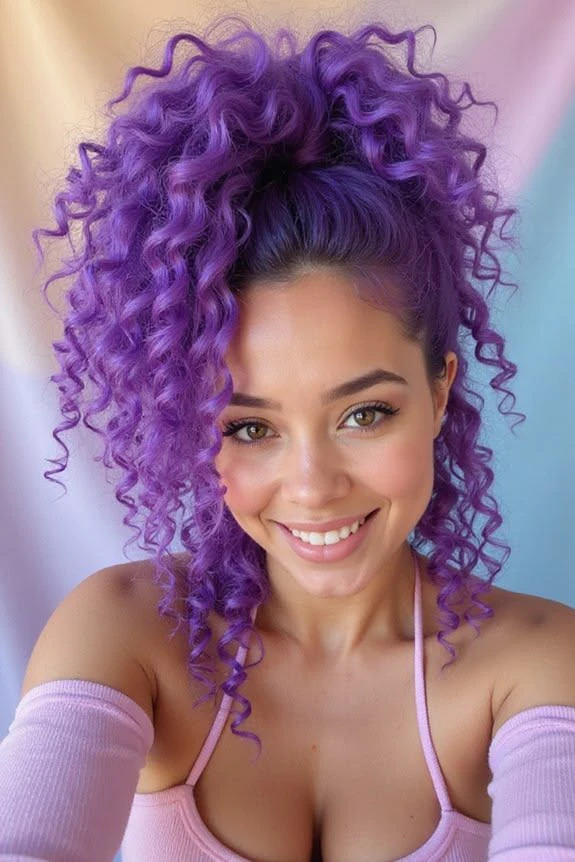
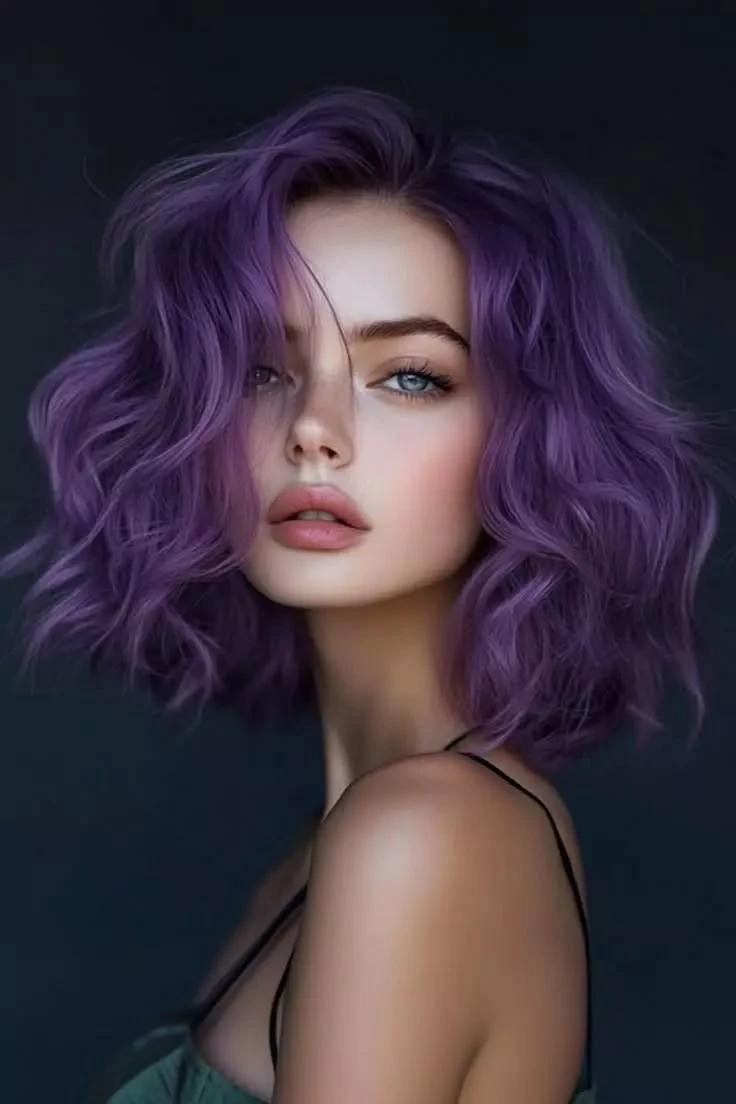
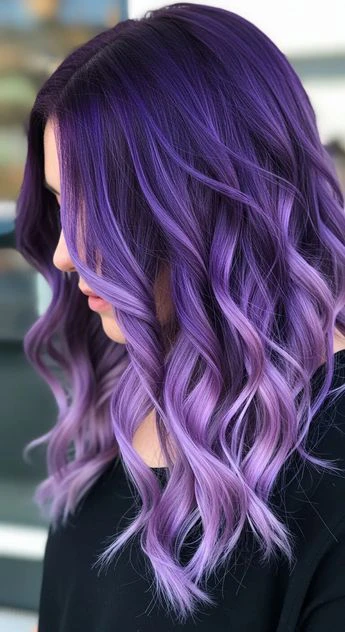

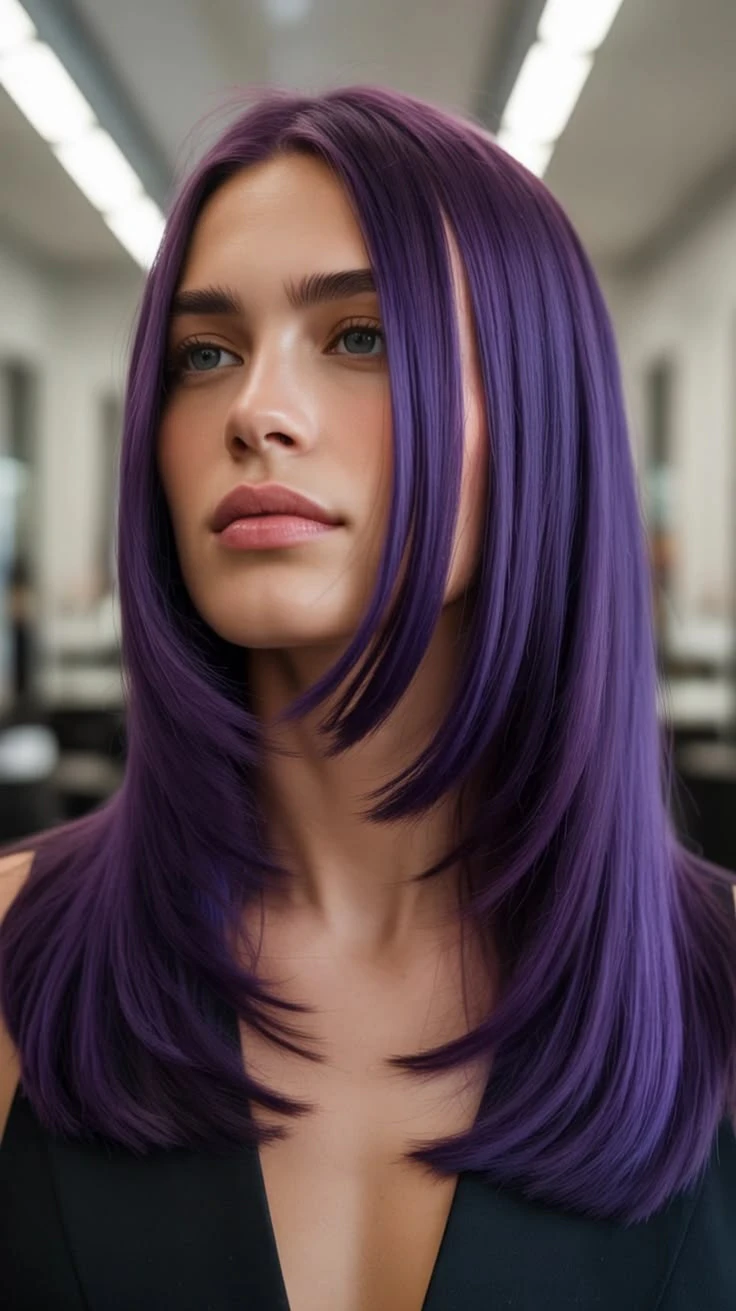
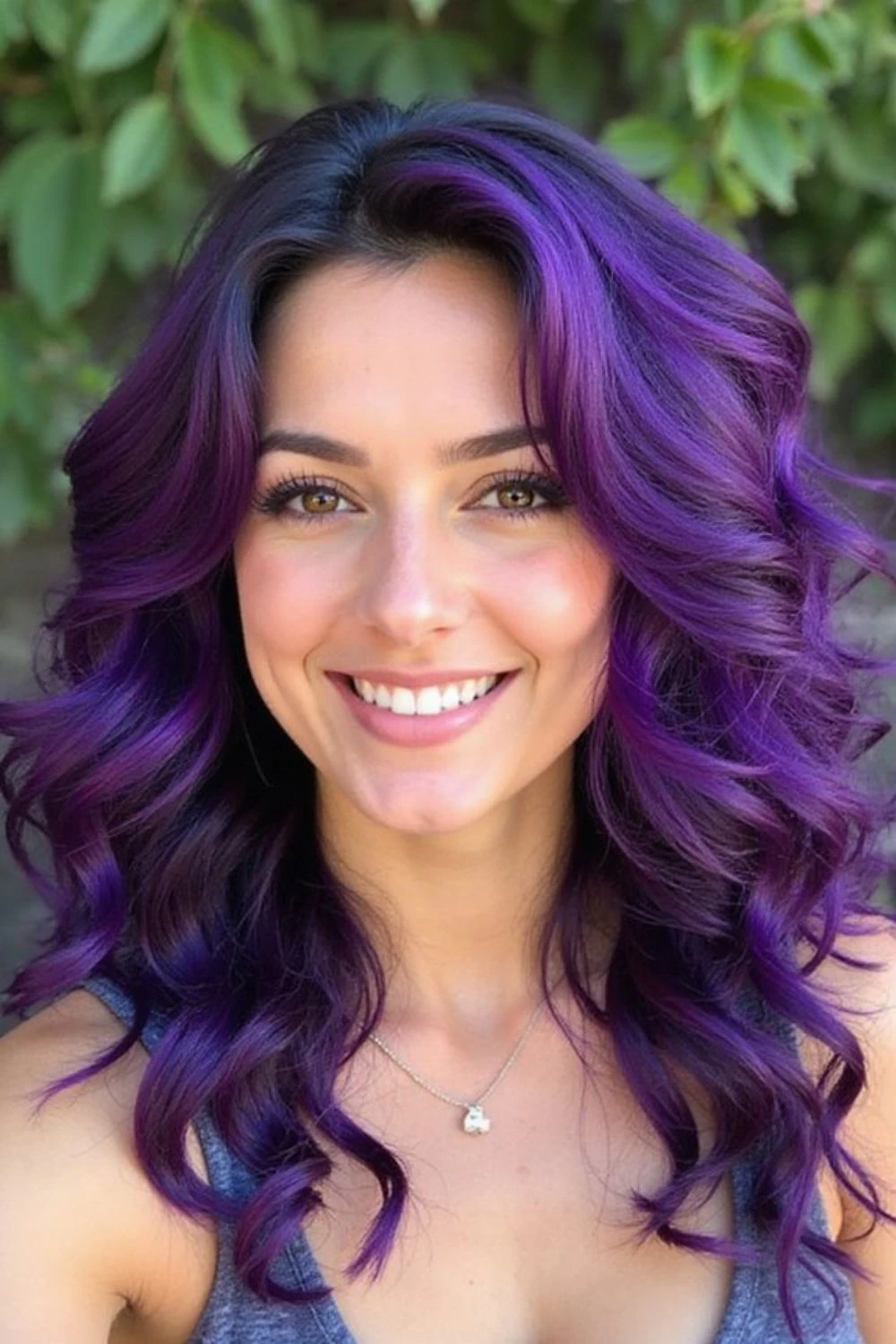
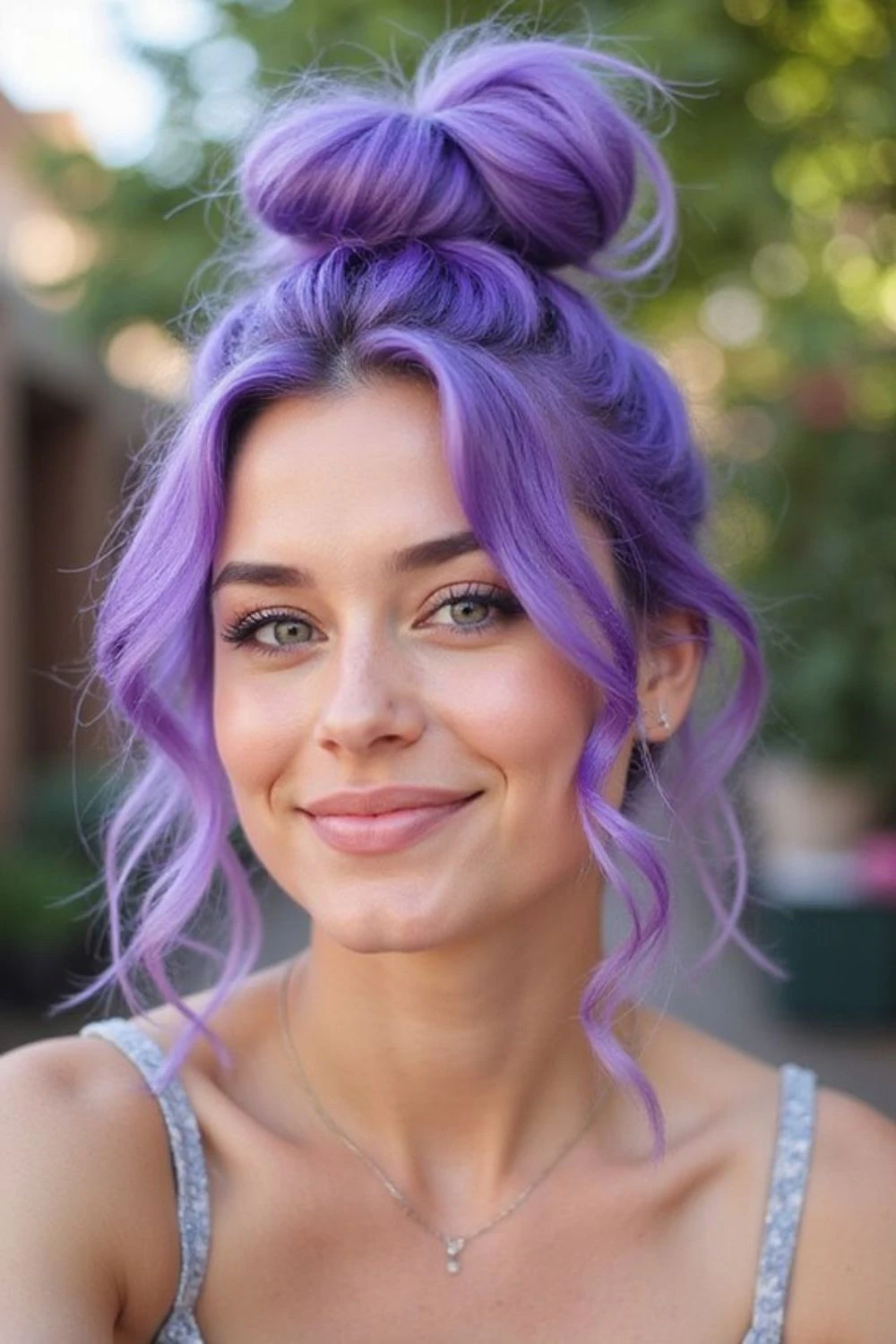
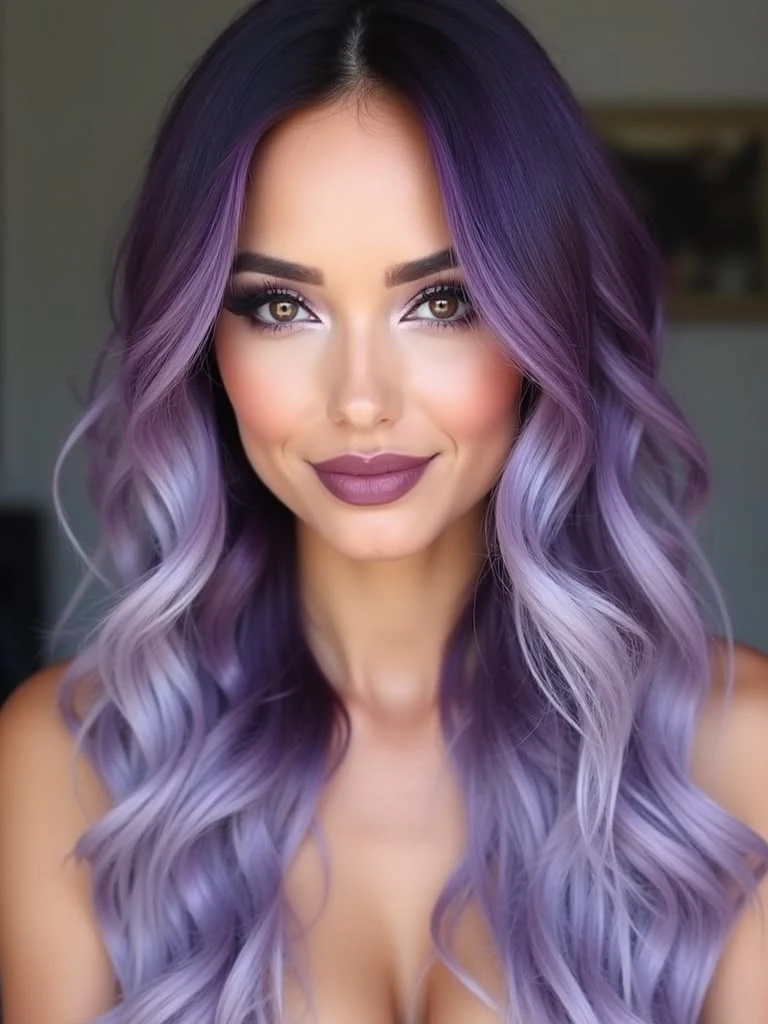
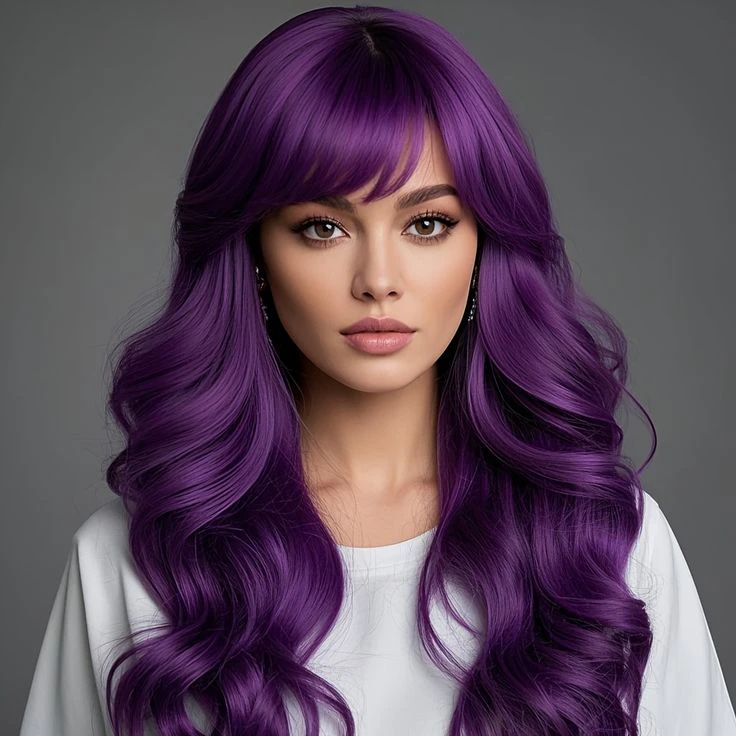
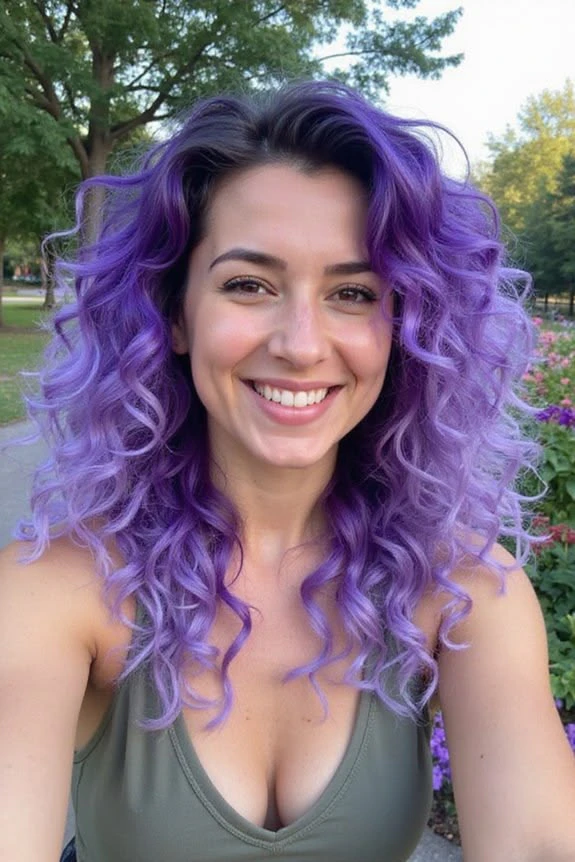
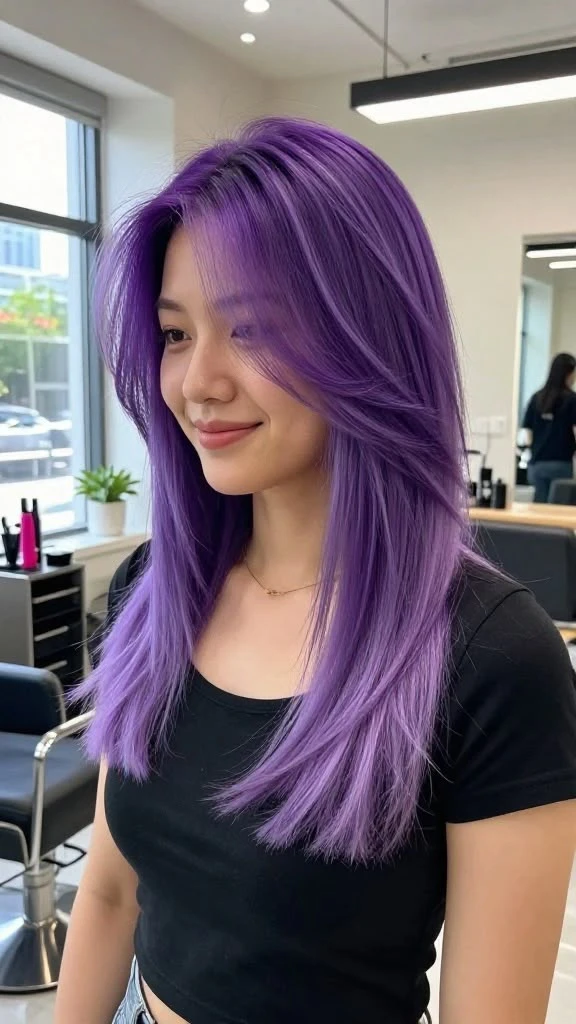
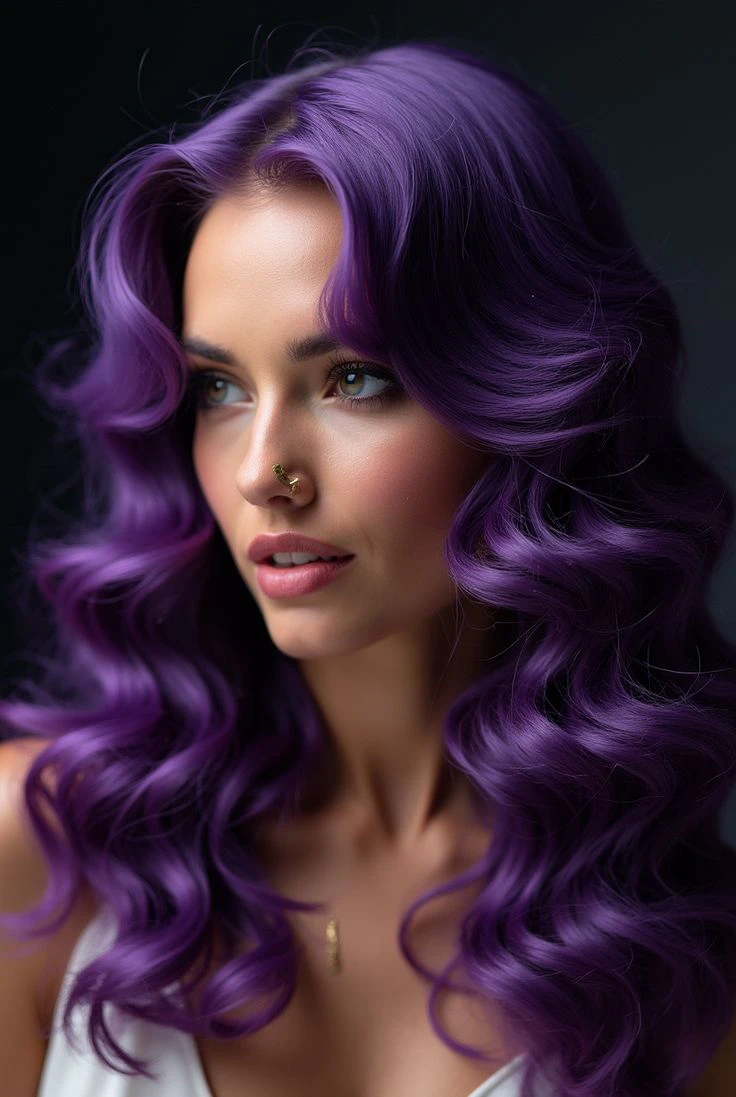
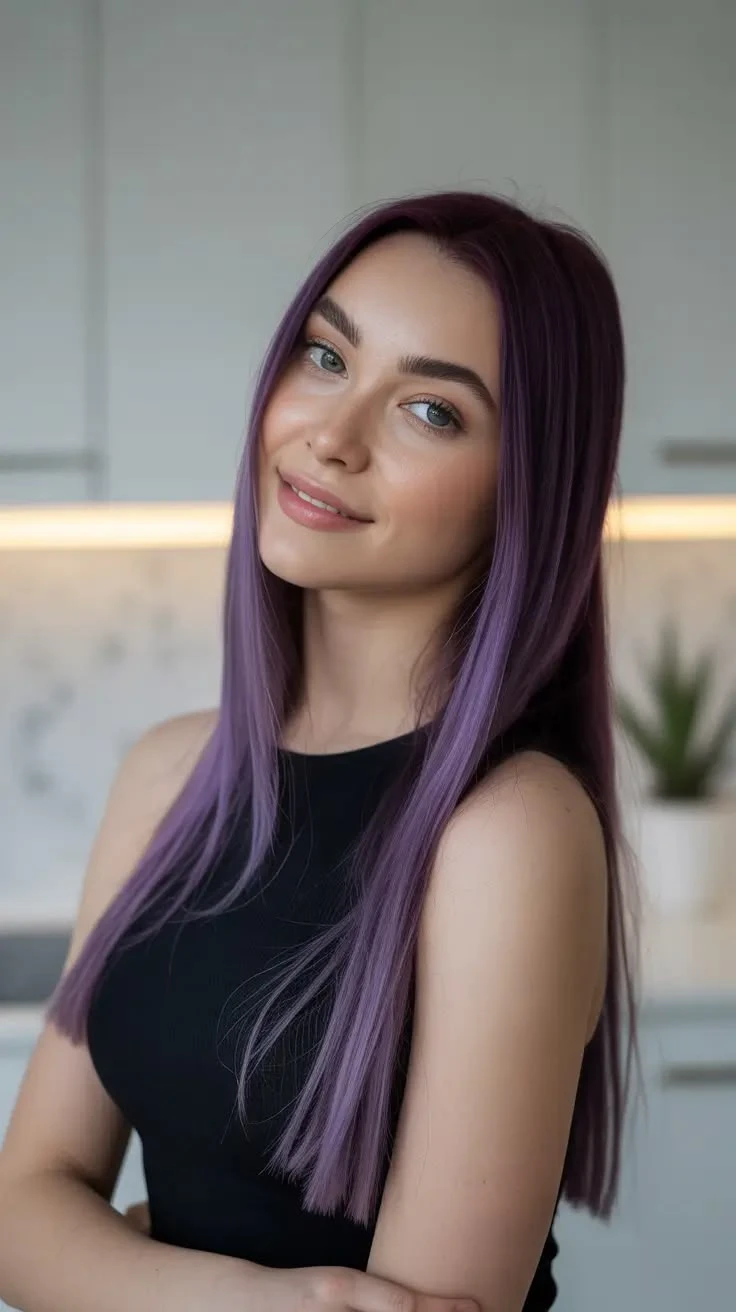
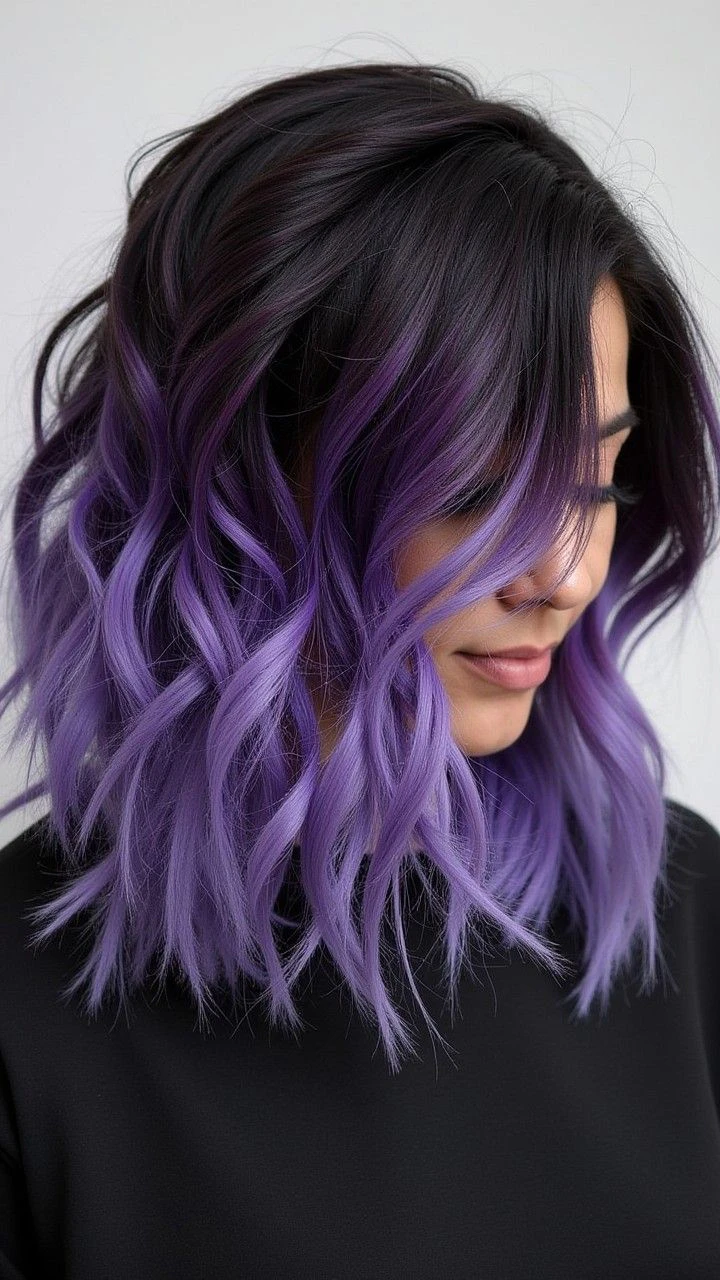
Certain hair colors fade from the limelight after a season. Purple, though, keeps coming back. You see this look in salons, on the runway, and all over social feeds each year. One reason is its range. Purple can be gentle and romantic like lilac or rich and mysterious like aubergine. Purple hairstyles therefore suit a first try at color as well as someone who has been wearing bright hues for years. This guide is full of style ideas for short, medium, and long hair. You will also learn how texture, skin tone, and your starting color affect the final result. Finally, we discuss application options and care habits that maintain the color’s vibrancy.
The Everlasting Appeal of Purple Hair
Purple sits between blue and red on the color wheel. For this reason, it carries calmness on one side and warmth on the other. That balance gives it a feeling of creativity without being loud, at least in deeper tones. For example, a plum shade may be appropriate for a conservative office setting, while neon violet signals self-expression. This versatility means that you can control both the message and the specific tone you desire.
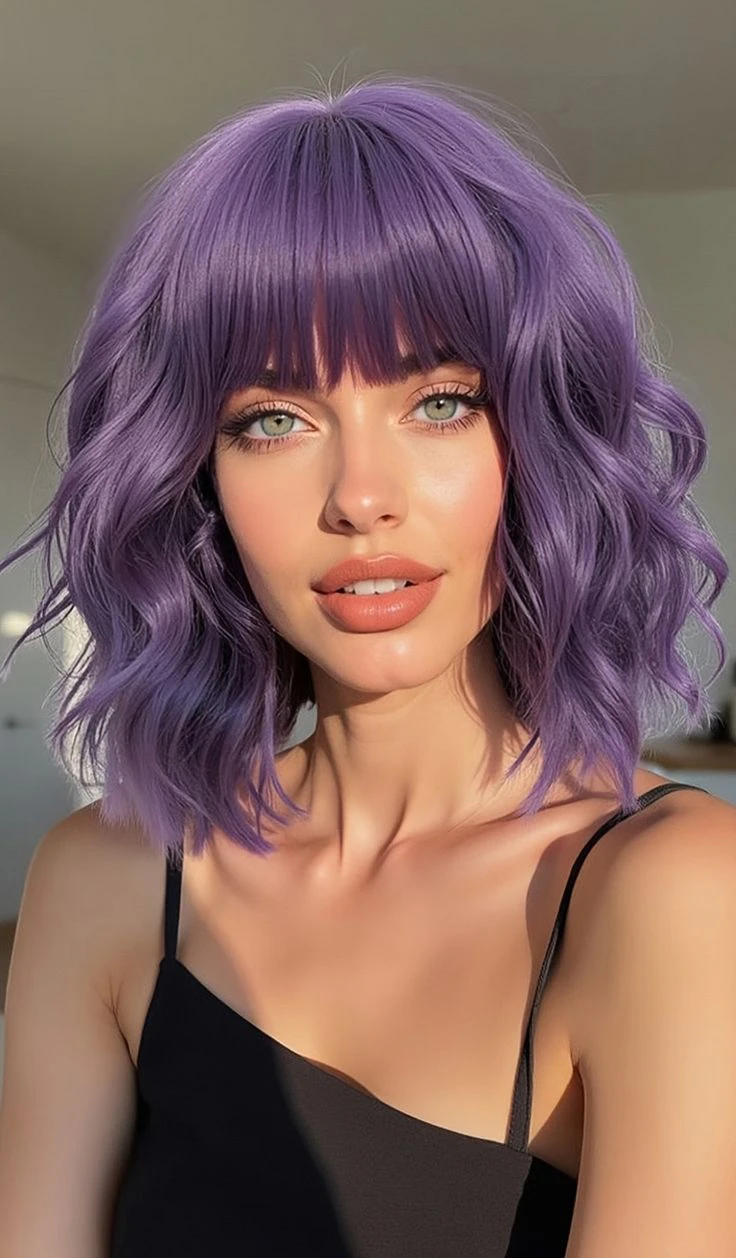
Many different cuts also look good in purple. The color suits a blunt bob, a layered shag, and long natural curls. Furthermore, the shade family is huge. It includes lavender, lilac, amethyst, orchid, plum, magenta, and blue-violet. So even if one particular tone doesn’t work for you, another probably will.
How to Find the Right Purple for Your Skin Tone
Pick a shade that goes with your undertone. Individuals with cool undertones generally look appealing in blue-based violets and icy lavender. In contrast, warm undertones tend to glow in red-based shades like plum, berry, and magenta. Most neutral undertones can wear both. A simple test can help here. Take a piece of purple fabric and hold it near your face in daylight. If the tone is flattering, your skin will look brighter. If it looks tired or sallow, go one step warmer or cooler.
Eye color is important too. For example, a deep plum makes green and hazel eyes pop. Blue eyes, meanwhile, often stand out against soft lavender.
Purple Color With Short Cuts
A deep violet pixie cut makes a powerful first impression. Less surface area makes the color look dense and saturated on short hair. Short hair is also easier to recolor, since you cut off faded ends every few weeks anyway. This makes the pixie a good choice if you like to change shades a lot. If you want a sharp cut, ask your stylist to give you a slightly darker tone at the nape. That little detail gives shape and dimension.
Cropped Cut With Lavender Tips
If full color is too much, just color the ends. A cropped cut with lavender tips allows you to keep most of your natural color at the roots. Consequently, regrowth is hardly noticeable. This also reduces bleach exposure, which is a big win for fine or fragile hair. If you like the look, you can always build the color up later in stages.
Purple Undercut
An undercut is another low-risk choice. Here, the color is applied only to the shaved or hidden part. You can wear it down for a clean look or pinned up to show some violet.
Purple Medium-Length Hairstyles
Lob with Plum Balayage
This long bob with plum balayage gives movement without harsh lines. The color is hand-painted, and it blends into your natural base. As a result, regrowth looks intentional rather than neglected. With this technique, many people can stretch their salon visits to every ten or twelve weeks. Plum also goes well with darker bases, so less lightening is required.
Shoulder-Length Amethyst Waves
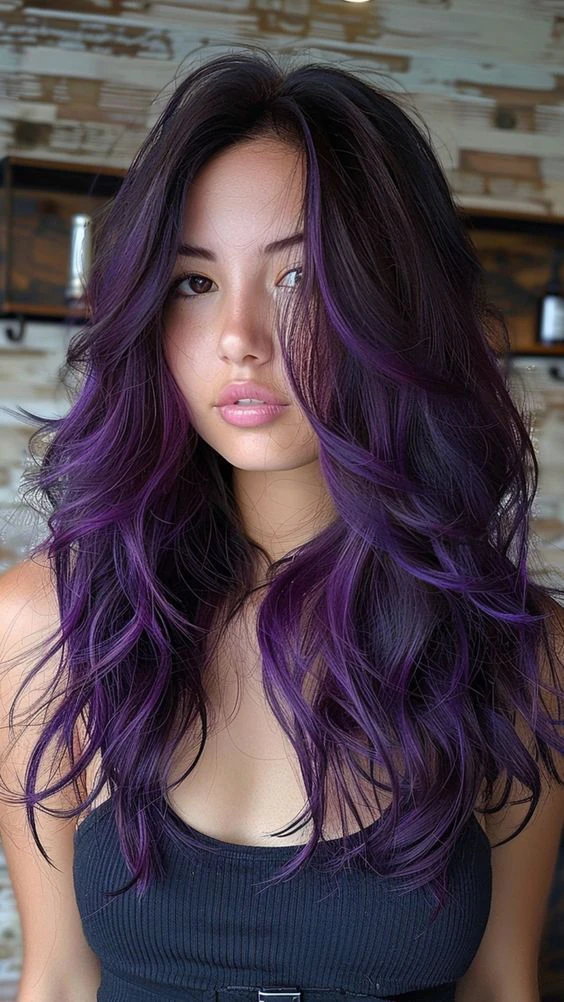
Loose shoulder-length waves in amethyst show off the color variation beautifully. Every curl catches the light in a different way. This means you see several shades at once, even if the colorist has used only a few. To achieve this effect, request a mix of lighter and darker purple pieces. Style with a large-barreled curling iron. Or, braid damp hair overnight and enjoy soft waves without the heat.
Peekaboo Purple in a Choppy Shag
Peekaboo color sits beneath the top layer of hair. In a choppy shag, it only flashes when you move, so it is ideal for people with strict dress codes at work.
Lilac and Violet Long Hair Ideas
Long hair gives you room for gradual transitions. One of the easiest looks to maintain is an ombre starting with natural dark roots and fading into a rich violet end. The roots are natural, so you avoid frequent touch-ups. Most people only refresh the ends every six to eight weeks.
Magenta and Purple Blend for Medium Length
For maximum impact on medium-length hair, try a magenta and purple blend from root to tip. But this style requires a real commitment. You will be looking at root lightening every four to six weeks and doing regular toning. Still, if you like bold color, you can’t beat the payoff.
Pastel Lilac Braids and Updos
Pastel lilac is especially soft in braids, buns, and half-up styles. Braids help protect the ends from friction, which helps prevent fading. Twisted updos also reveal the different depths of color layered in the hair.
How Purple Looks Different Depending on Hair Texture
Texture affects the appearance of purple in real life. Straight hair reflects light in a smooth sheet. So it shows solid, clear color very well. At the same time, it also reveals any patchy application. In contrast, curly and coily hair diffuses light through each curl. This gives the color a more multidimensional look and makes it appear a bit deeper than it would on a straight strand.
Wavy hair falls somewhere between the two, offering both shine and depth.
Why Porosity Matters
Porosity is often more important than texture, though. Hair that is highly porous will grab pigment quickly but will also lose it rapidly. Low-porosity hair is resistant to dye initially but holds color longer. Unsure of your porosity? Drop a clean strand into a glass of water. If it sinks quickly, your hair is likely highly porous. This knowledge helps you and your stylist figure out the right formula and choose purple hairstyles that will keep their color.
Then think about your natural shade. Pastel lilac usually needs very pale blonde hair, almost the color of the inside of a banana peel. In contrast, deep violet and plum look excellent on medium blonde or light brown. On dark brown or black hair, purple dye without bleach shows only as a subtle gleam in the sun. It can look appealing, but it won’t look bright indoors.
Gray and silver hair should be mentioned separately. Gray hair has no natural pigment, so it takes pastel purple effortlessly. In fact, one of the gentlest ways to try the trend is a lavender gloss over gray hair.
Color Services
A professional colorist can lighten evenly, protect the scalp, and choose tones to suit your cut and complexion. Furthermore, many salons use bond-building treatments in bleaching. These treatments reduce breakage and help keep your hair stronger. It’s usually worth the salon price for bright or pastel results.
Semi-Permanent and At-Home Options
Semi-permanent purple dyes coat the outside of the hair instead of penetrating deep inside, and they fade slowly over a few weeks. This makes them ideal for testing out a shade before you commit. Most of these products also contain no developer, which means they cause little damage on their own.
Home kits are less expensive, but the results will depend on your base color and porosity. Always do a skin patch test 48 hours before you start. Test the dye on a hidden strand to see what the final shade will look like. To avoid uneven patches, be sure to follow the product directions closely and check out a couple of tutorials online.
Questions to Ask Your Stylist
A successful consultation saves time and money. First, bring two or three pictures of the precise shade taken in natural light. Then ask how many lightening sessions your hair will require. Also ask about aftercare products to protect your new color. Finally, be honest about your budget and your time. A clear plan lets your stylist suggest a look that fits your real life, not just your mood board.
How to Care for Purple Hair at Home
Purple fades faster than most colors. The reason is pretty simple. Many purple pigments are loosely attached to the hair shaft, which means they wash away quickly with water and heat. So your daily routine is just as important as the dye.
First, rinse with cool or lukewarm water. In hot water, the cuticle lifts and pigment escapes. Second, wash less frequently. A dry shampoo can help you go an extra day or two between washes. Third, select a sulfate-free shampoo that’s formulated for color-treated hair. This makes a real difference, because sulfates strip pigment quickly.
A color-depositing conditioner in a similar purple hue can also help refresh your tone between visits. Many people mix a little bit with their normal conditioner to control the strength. A weekly deep conditioning mask will restore moisture, especially if you’ve lightened your hair previously.
Styling Without Sacrificing Vividness
Heat tools accelerate fading. So always use a heat protectant spray before you use a flat iron, curling wand, or blow dryer. Keeping the temperature moderate is also effective. Most styles work well at around 180 degrees Celsius, so there is rarely a need to go higher.
Sun and chlorine are two further threats. UV light will degrade pigment, and pool chemicals will turn violet into a dull gray or even green. Wearing a hat on bright days is advisable. And wet your hair with clean water before you swim. A leave-in conditioner is a further layer of protection as well.
Another minor but useful change is to use silk or satin pillowcases. They reduce friction, so you get less frizz and less color rubbing off overnight.
Habits That Reduce the Lifespan of Your Color
Many people are afraid to try purple hair because of the maintenance involved. In fact, most problems with purple hair are caused by a few specific habits. The biggest one is skipping color-safe shampoo. Next, don’t forget about root touch-ups. A harsh line of regrowth can make even the prettiest shade look worn out.
Too much heat without protection also leads to dullness and dryness. Similarly, washing daily with hot water can strip a fresh color in under two weeks. Lastly, if you re-dye too soon after bleaching, you can damage hair that is already fragile. In between major transformations, give your strands a little break with some deep conditioning sessions.
The American Academy of Dermatology offers practical advice on safely dyeing hair and maintaining scalp and hair health during color treatments. Their tips fit right into any color routine.
Seasonal Purple Trends
Purple shifts around a little with the calendar. Deeper plum, eggplant, and wine violet notes tend to become popular in the autumn and winter. They look wonderful with dark clothes and cozy textures. In spring and summer, softer lavender, lilac, and pastel orchid shades return to the spotlight.
However, you don’t have to follow the seasons strictly. Many people let their tone evolve gradually instead. For example, a deep violet in January can fade into a softer orchid by spring with minimal additional color.
Selecting Your Next Look
Purple is one of the most versatile colors in fashion. You can begin with subtle lavender tips or a discreet undercut. Alternatively, you can opt for a complete magenta and violet blend. Whatever you choose, the right choice depends on your skin tone, base color, hair texture, and how much time you want to spend on upkeep.
Once you know those factors, it’s a lot easier to choose purple hairstyles. Bring a picture of your favorite shade to your stylist, ask about the lightening process involved, and plan your aftercare before the appointment. With that preparation, your color will look better and last longer. So if you have been thinking about a change, the next few weeks might be the ideal time to schedule that consultation.
If you like the idea of purple but want a softer start, our purple ombre hair color ideas blend the shade gradually into your natural color.