
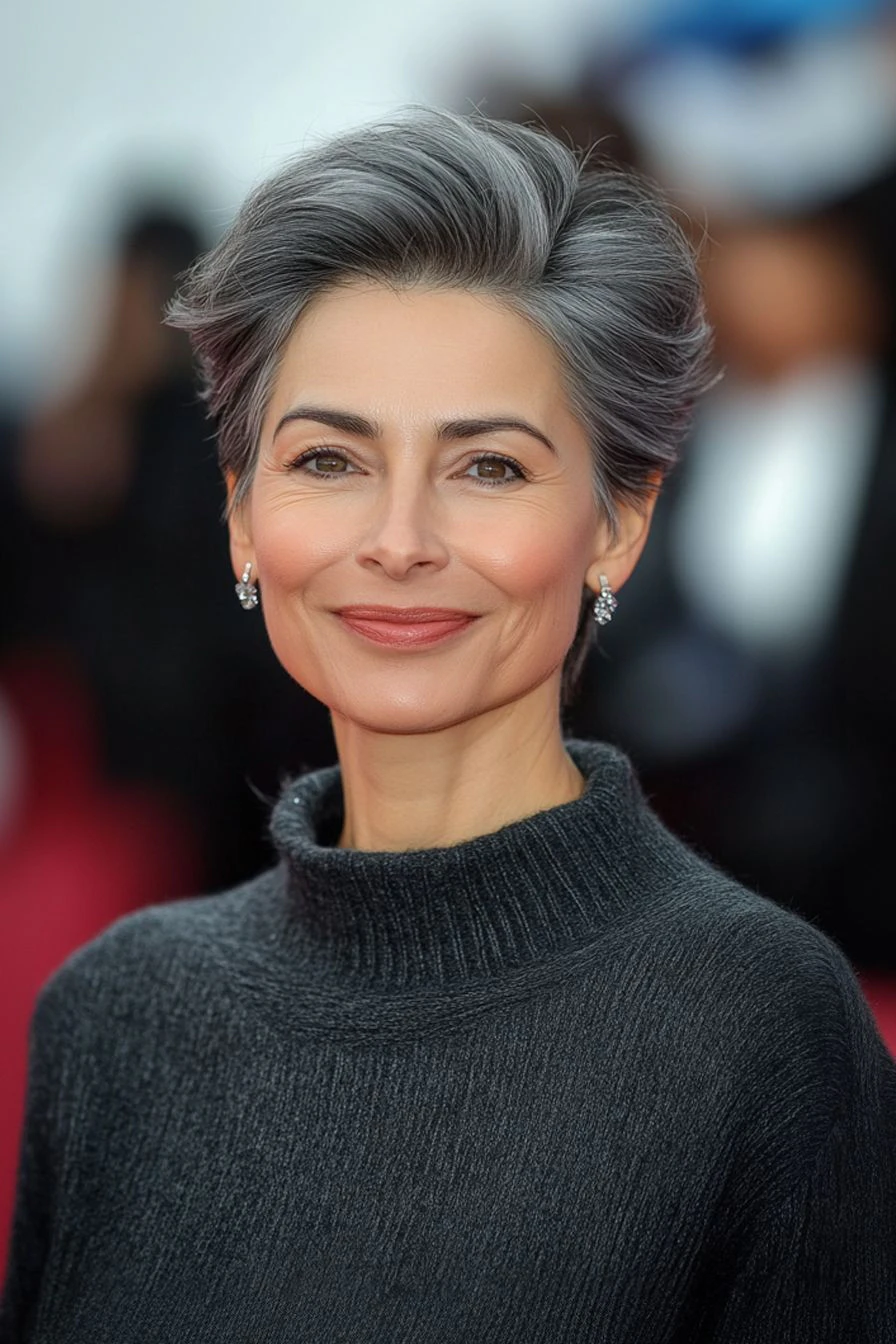
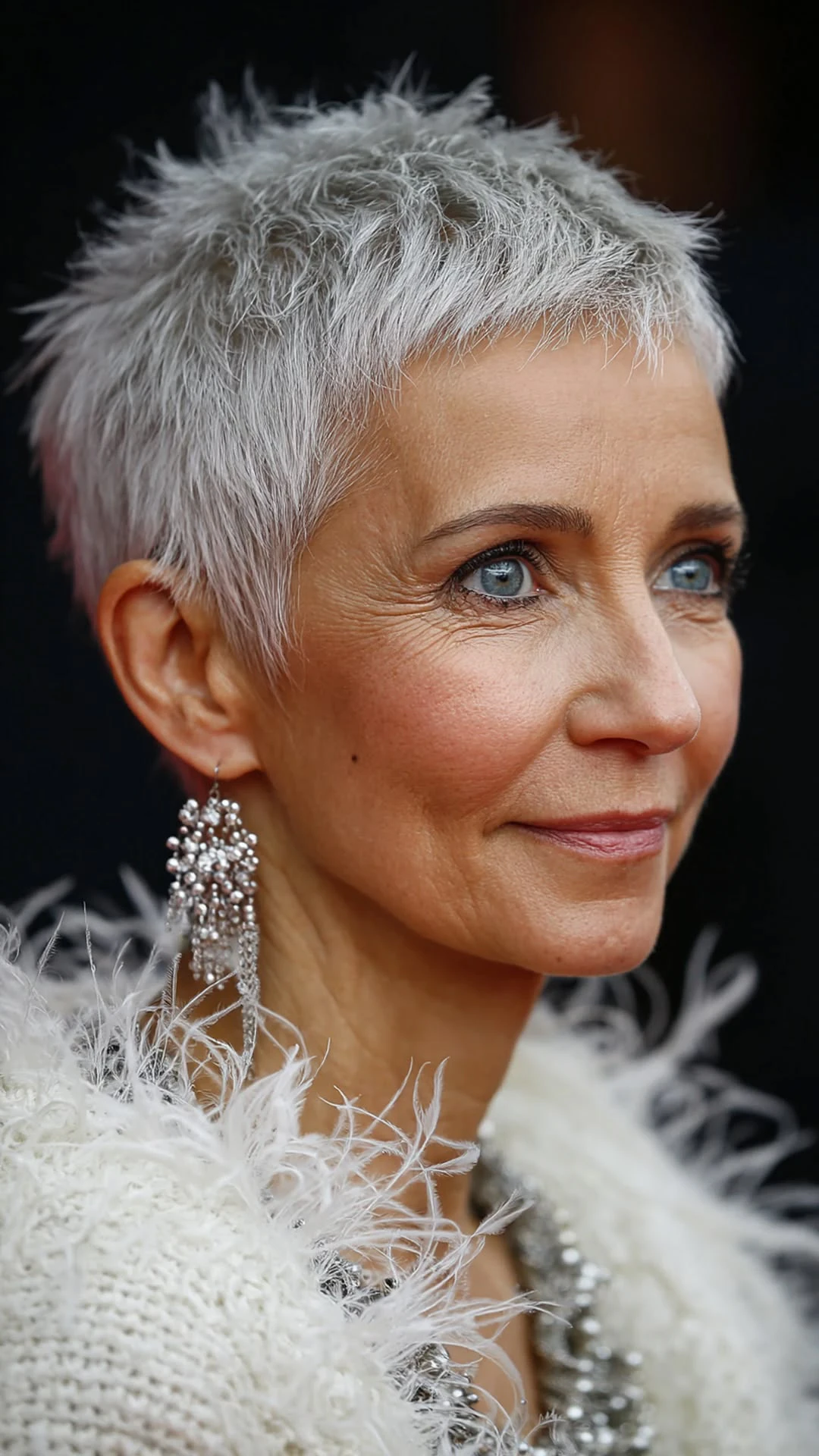

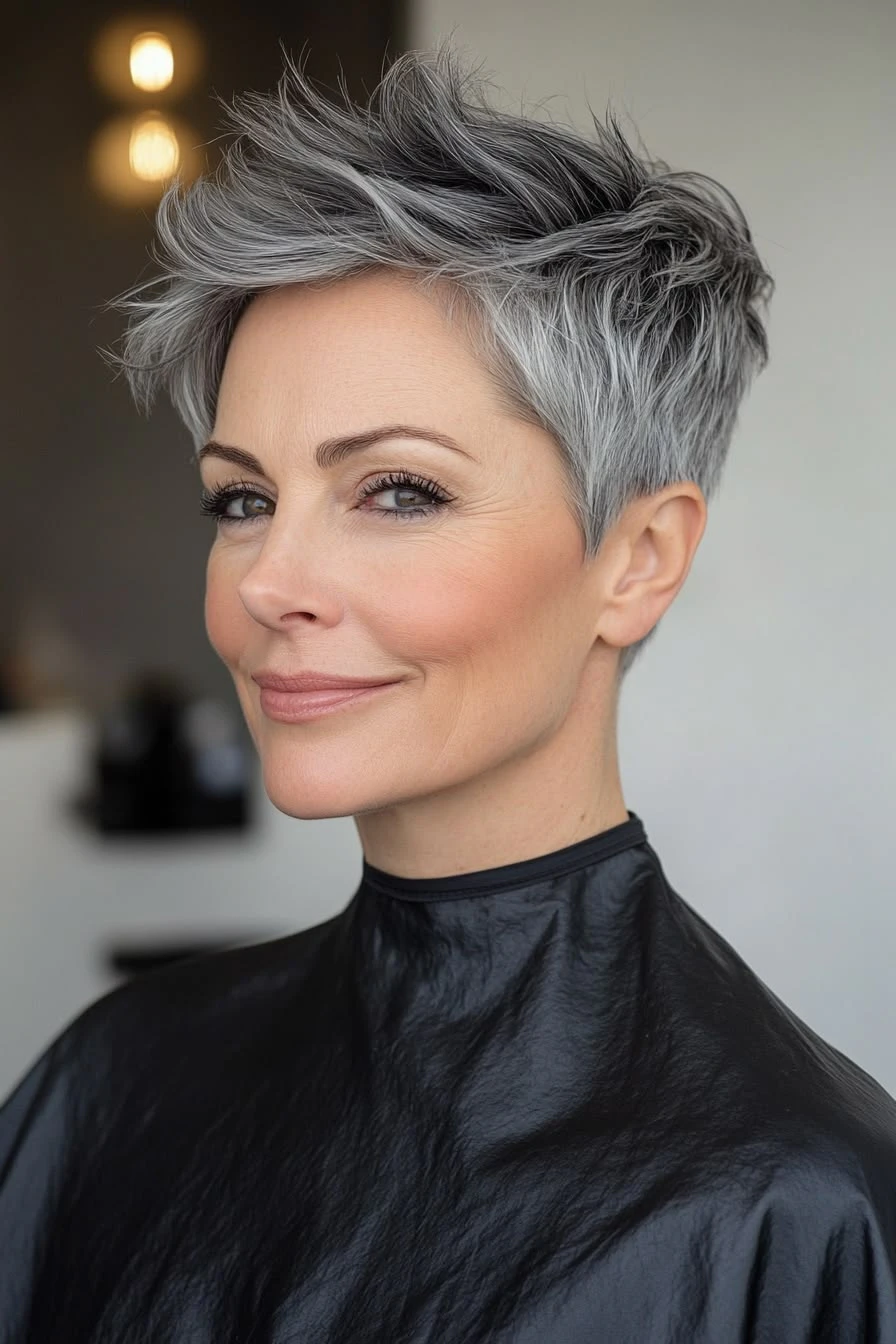
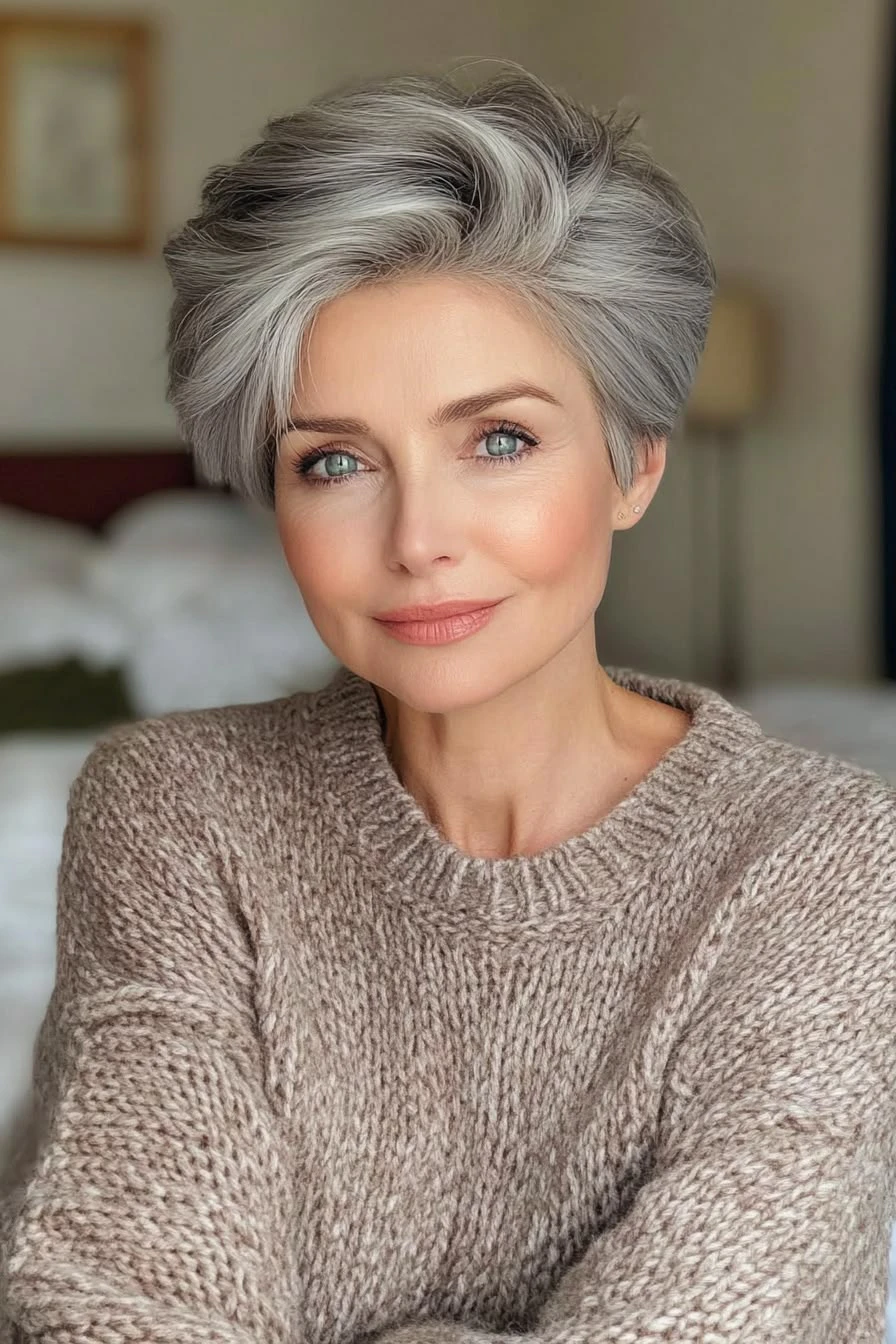
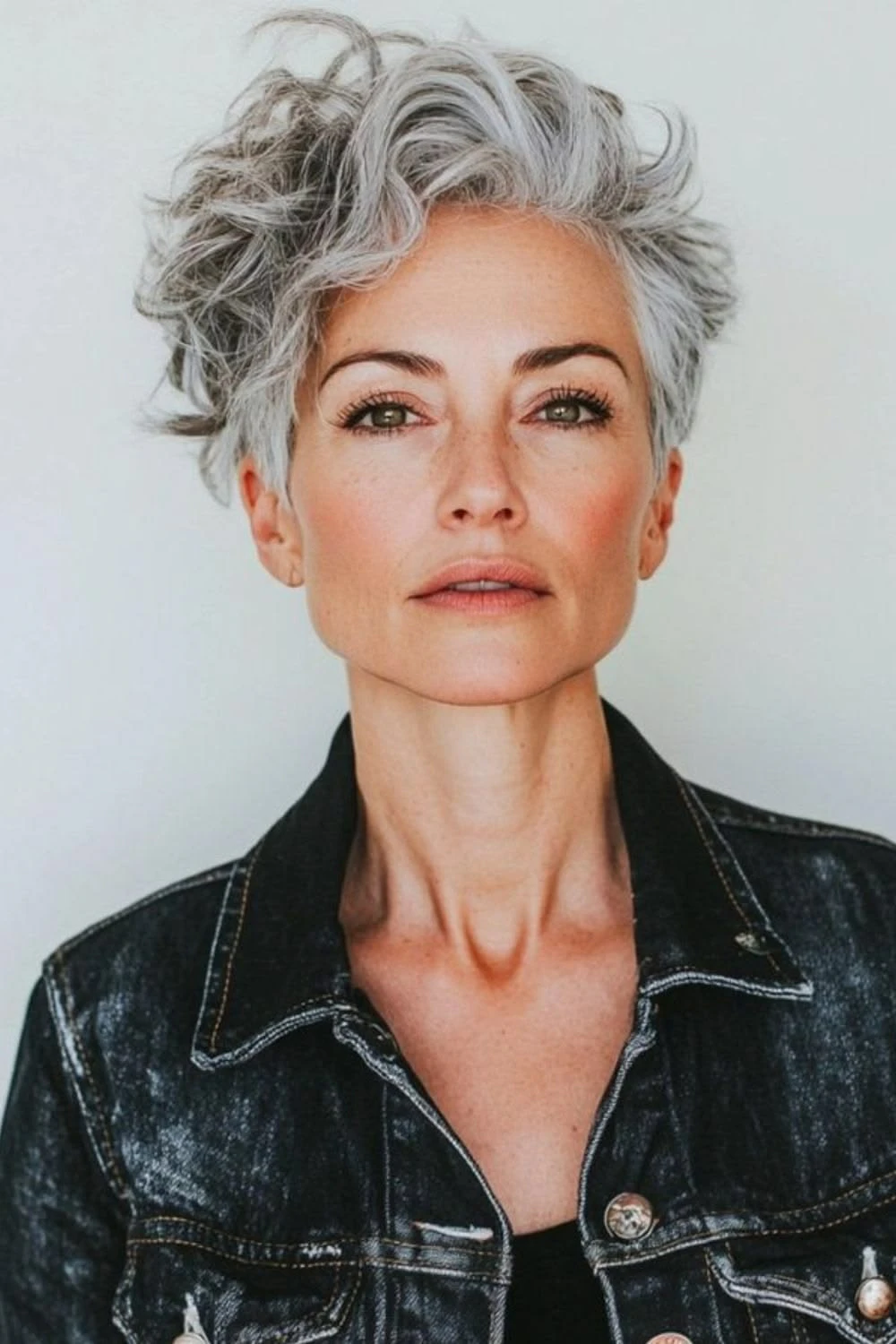

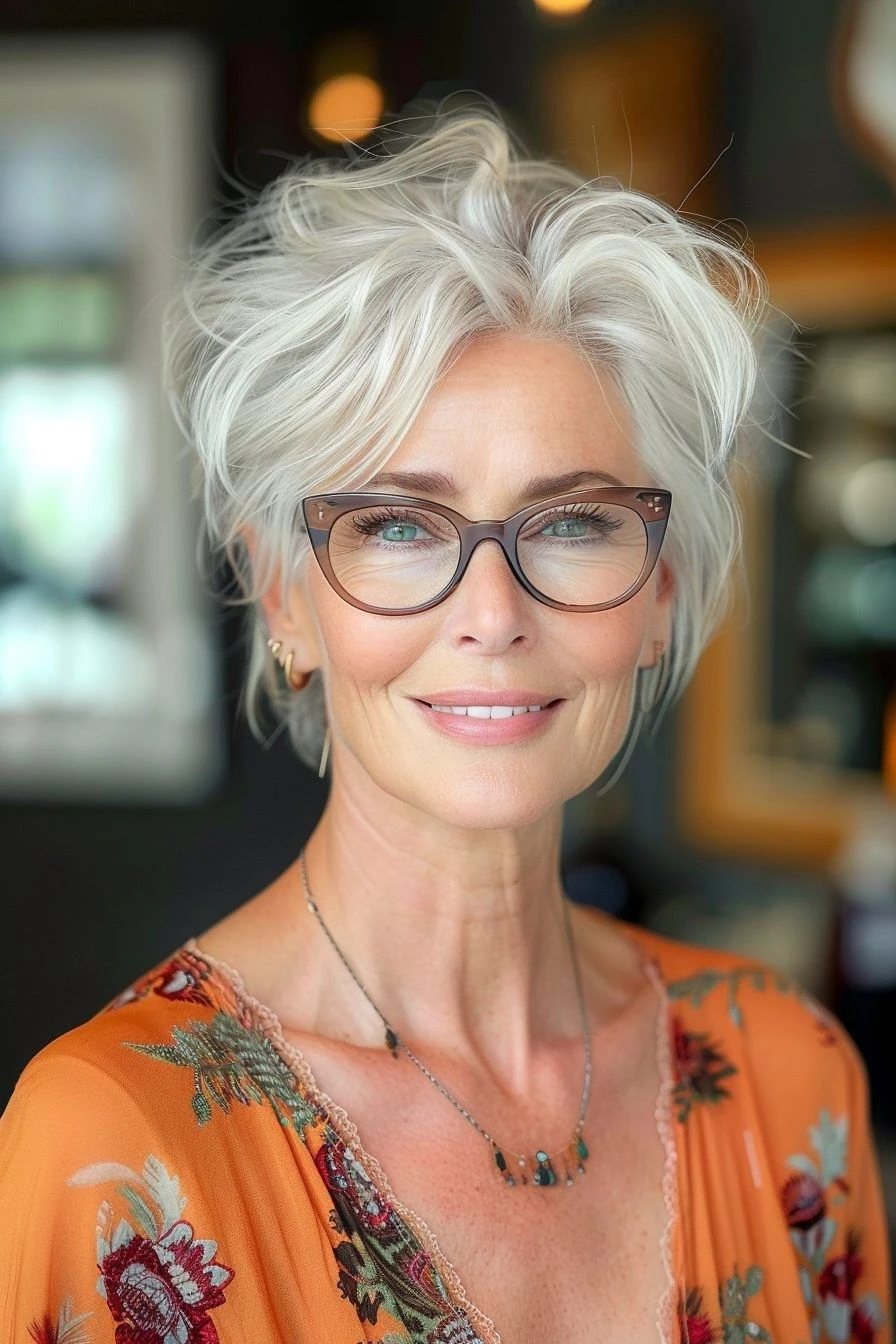

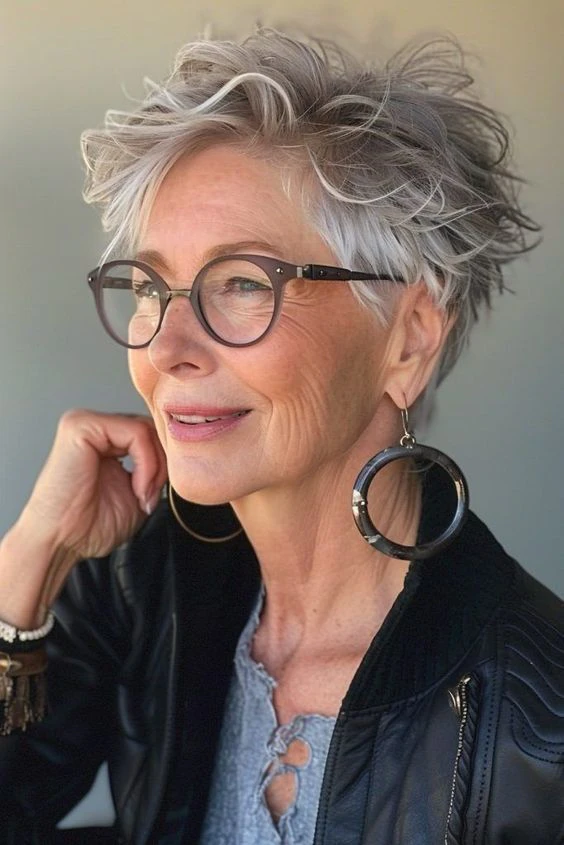
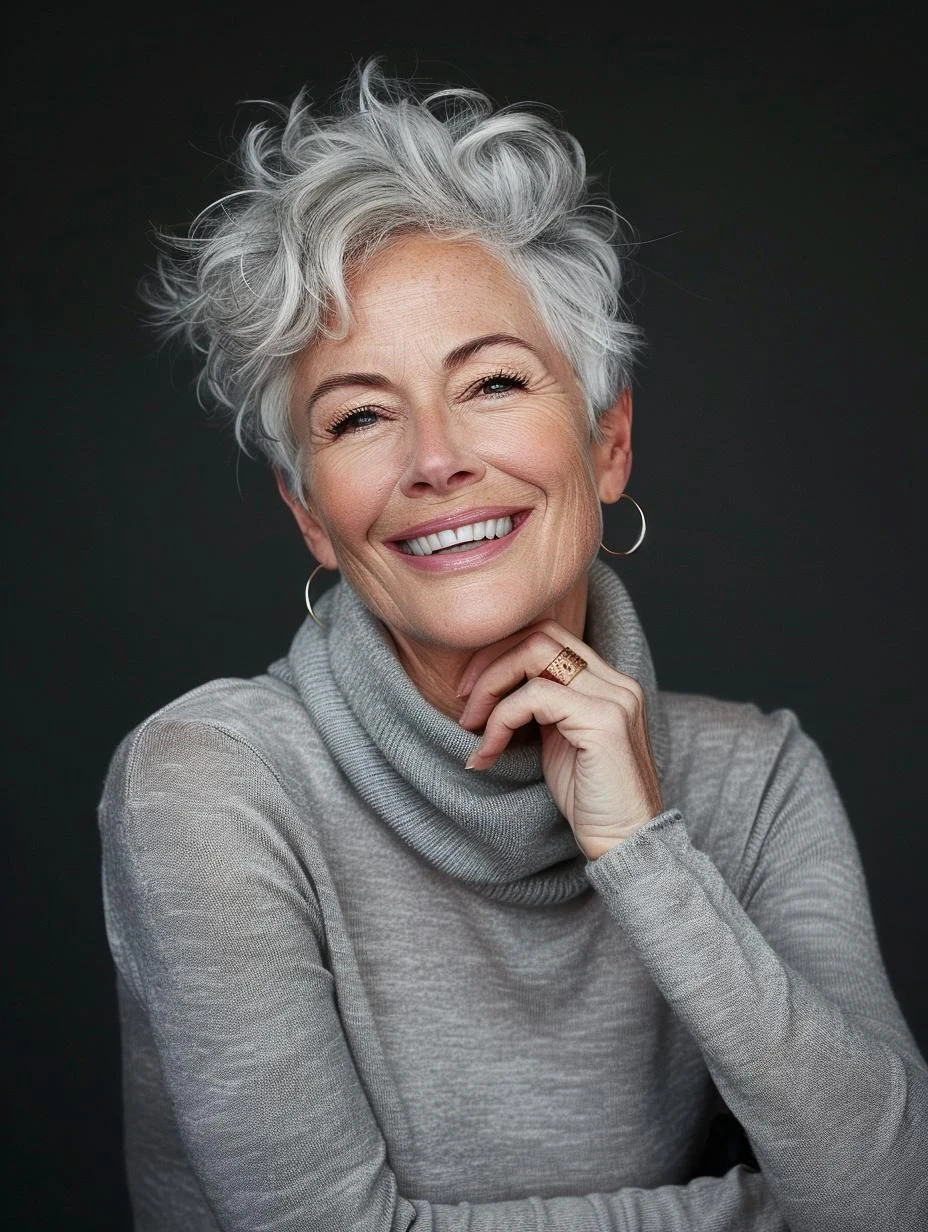
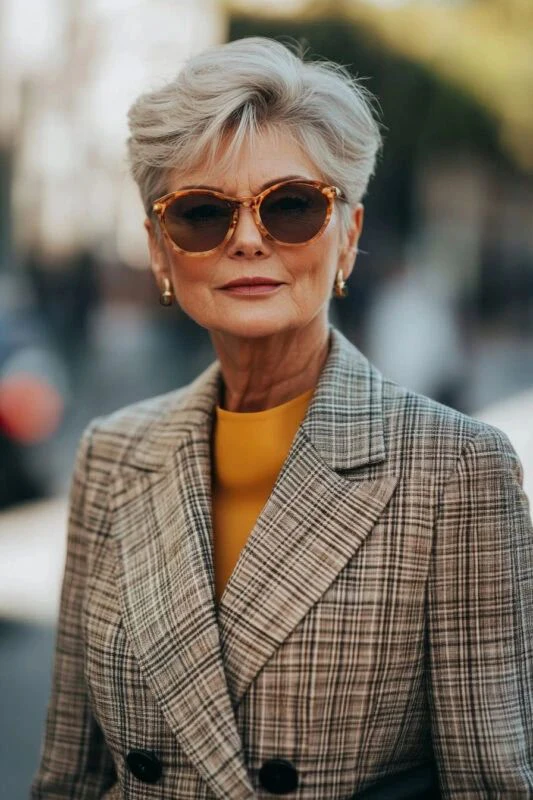
Does a Pixie Cut Look Flattering on Older Women?
Spend an afternoon in any busy salon and you’ll get asked the same question more than once. A woman in her fifties or sixties runs her hands through her shoulder-length hair, looks at her stylist in the mirror, and quietly asks, ‘Does a pixie cut look appealing on older women?’ It is a reasonable question, because cutting off years of length is a real decision, not a casual one. The honest answer is hopeful. Usually, a well-chosen pixie is very flattering on mature faces. This guide explains why short hair is flattering for mature faces, how to select the right style for you, and what daily life with short hair looks like.
Why Going Short Seems Like Such a Big Leap
For decades, long hair has been part of many women’s identity. It has been carefully styled for weddings, job interviews, and family pictures. So, the idea of a dramatic shift is, understandably, a little scary. Many of us also grew up with the idea that women of a certain age should wear their hair in a soft, safe, set style. Those old rules shaped our sense of self.
But attitudes have changed a lot. Judi Dench and Jamie Lee Curtis have worn cropped styles for years, showing that a pixie cut can look excellent and timeless on older women. As a result, short hair is now widely seen as modern, polished, and self-assured. A pixie cut isn’t considered a compromise; it’s a conscious choice.
Age Is Less Important Than You Think
Here’s something stylists like to say. A short cut’s success depends far less on your birth date than on three other things. The first is face shape. The second is hair texture. The third is how much time you want to spend styling each morning. Once you know those three things, the decision is much clearer. In fact, many women find their sixties to be the best time to try a pixie cut because they finally care more about comfort and personal style than trends.
How a Pixie Cut Works With Older Features
It Draws the Eye Upward
A pixie lightens the weight around the jaw and neck. This puts the eyes and cheekbones in the spotlight. These are often the most expressive parts of the face, whatever the age. Longer hair, in contrast, tends to draw the eye down and can accentuate areas where the skin has lost some of its firmness. So a little change of focus can make the whole face appear brighter and more alert.
It Frames Rather Than Hides
Many women grow their hair long partly so they can hide behind it. That is a reasonable habit. But hair on the face can also make it appear tired or heavy. A pixie cut does the opposite. Because it frames the face, it emphasizes excellent bone structure, a warm smile, and expressive eyes. It also shows off earrings and necklines in a way longer styles rarely do. Many women say they feel more visible after the cut, in a positive way.
Practical Benefits for Mature Hair
More Volume From Less Weight
As we age, our hair often changes. For example, strands may become finer, drier, or less springy. If that hair is long, its weight pulls it flat against the scalp. In contrast, short hair has very little weight to pull it down. As a result, the natural lift at the roots becomes much more visible. Many women with thinning hair are surprised to discover that a pixie actually makes their hair look thicker than when it was shoulder-length.
Mornings Are Shorter
Long hair often requires time, heat, and a whole lot of products to look its best. Most pixie cuts, however, can be styled in five to ten minutes. To style a pixie cut, wash your hair, apply a small amount of product, and shape it with your fingers. That is usually enough. This routine saves time and is also gentler on the hair because you don’t rely on hot tools as much. Many women, therefore, describe the change as liberating rather than restrictive.
A Shorter Path to Gray
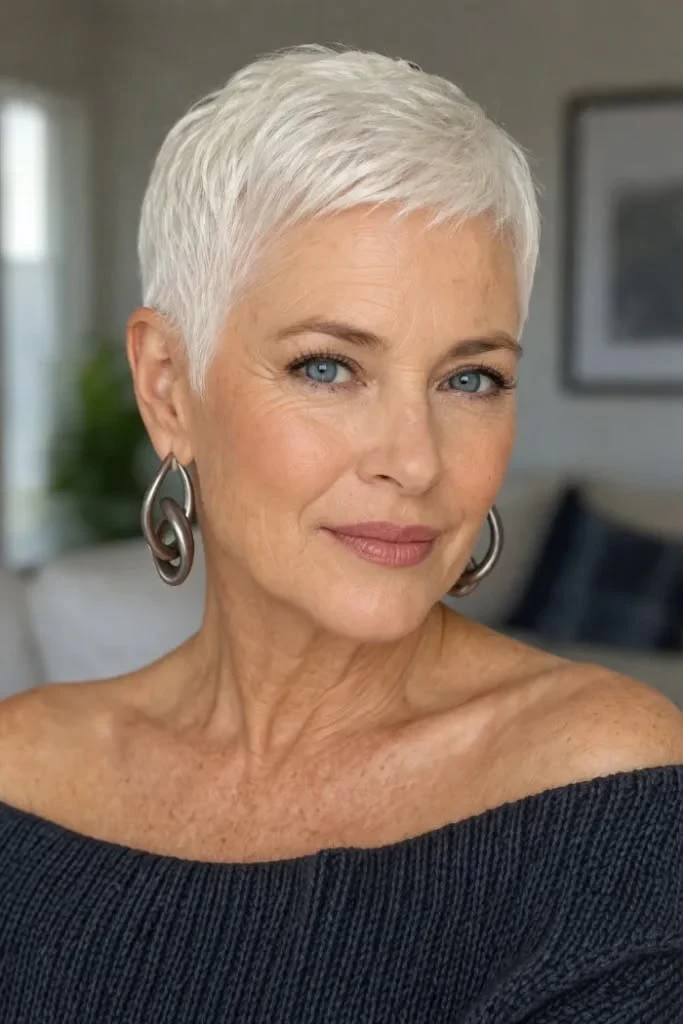
Many women who stop coloring their hair dread the grow-out phase. If you have long hair, it can take two or more years to grow out the old color. A pixie shortens that process dramatically. Because the ends are trimmed away every few weeks, the transition takes months instead of years, and a clear gloss treatment can help along the way. White and silver hair looks especially crisp and intentional in a short cut.
Finding the Pixie Style That’s Right for You
Not all pixies are created equal. In fact, there are far more options than most people realize. Here are four cuts that are especially flattering for women over 50.
The Soft Textured Pixie
This is the simplest version. It features soft, irregular layers throughout and is kept fairly close to the scalp. It’s ideal for just about any face shape because it’s free of harsh lines. The choppy layers also add the illusion of more fullness. It’s a wonderful choice for people with fine or thinning hair.
The Long Shaggy Pixie
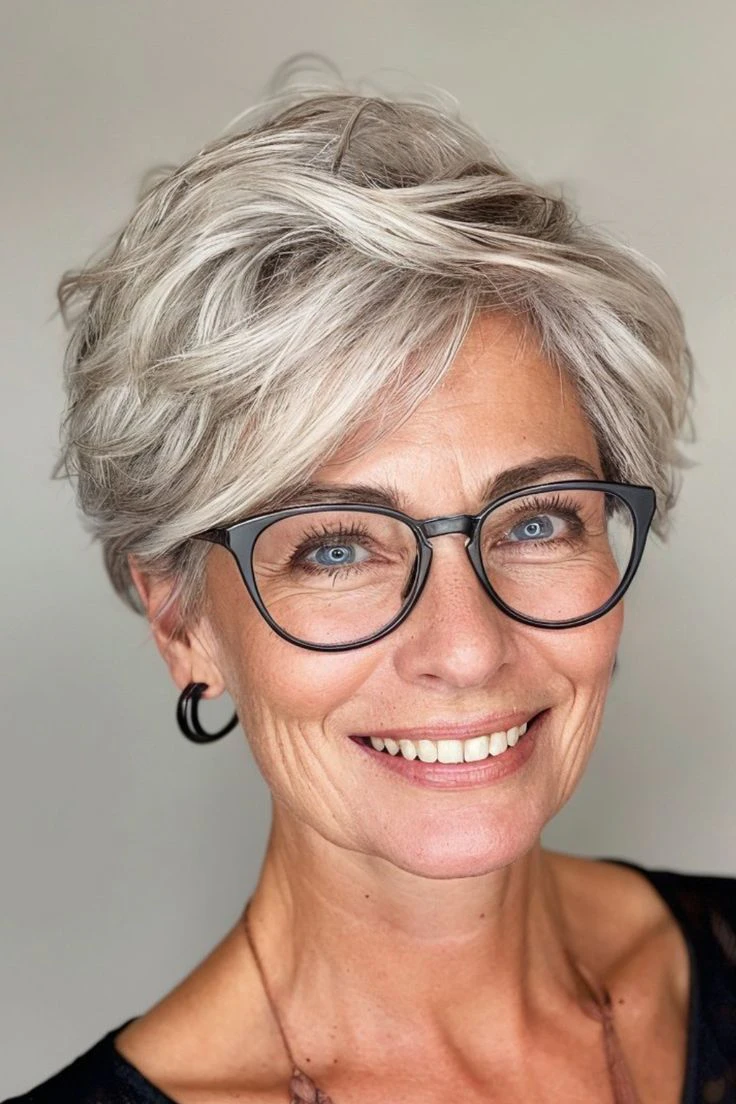
If a super-short crop seems a bit too daring, this is a nice compromise. It leaves some length on top and around the face. This allows for more day-to-day variety in style since those longer pieces can be swept to the side or tucked behind the ear. Plus, the soft pieces around your face help blur fine lines around your eyes and cheeks.
The Asymmetrical Pixie
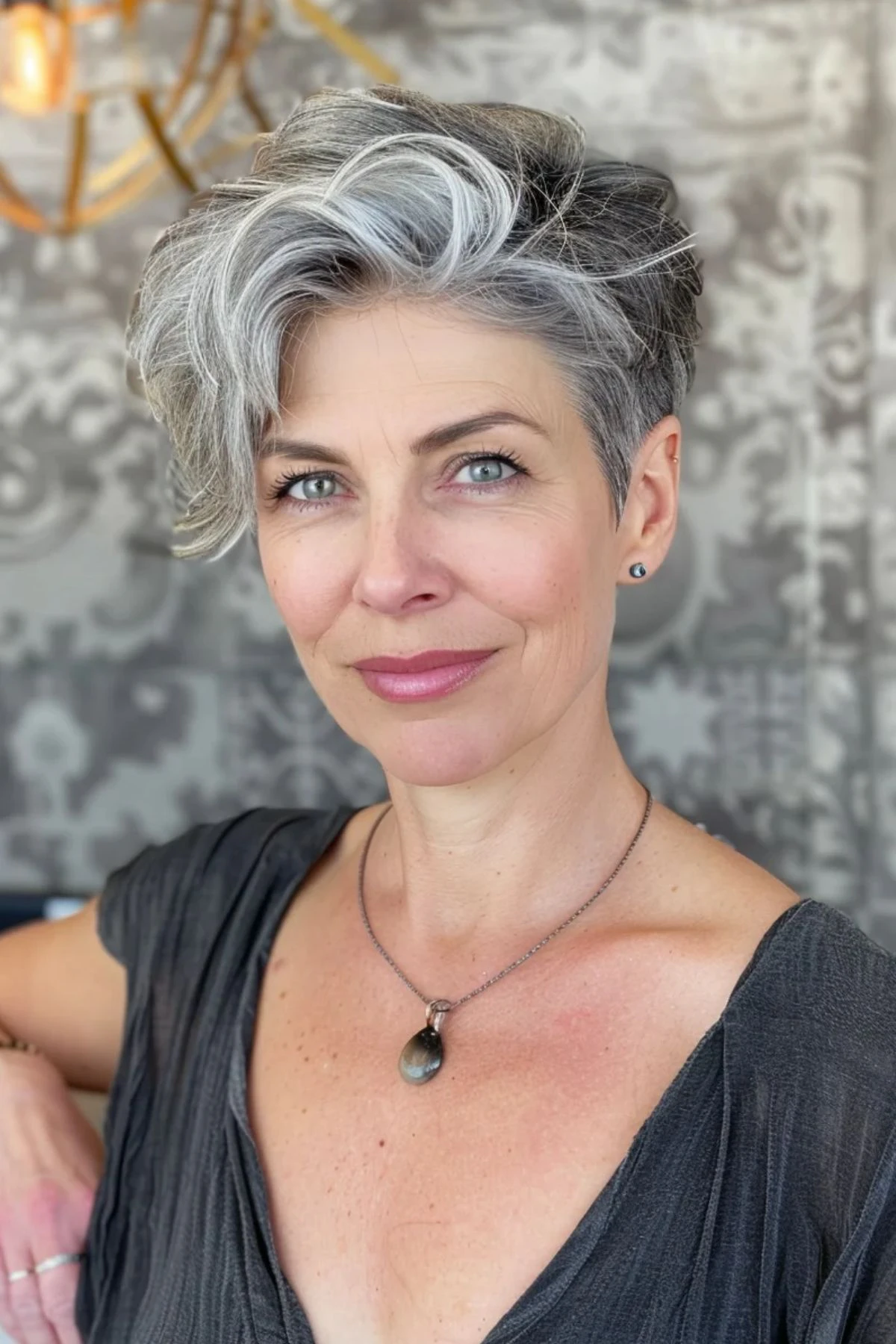
One side is longer than the other, creating a diagonal line across the face. This adds angles and movement to a naturally soft or round face. It also has a slightly artistic, fashion-forward vibe to it. But it needs frequent trims to keep the shape sharp.
The Cropped Pixie with Fringe
A short crop and soft bangs create a very different look. Overall, the shape is clean and polished. Meanwhile, the fringe softens the forehead and can hide lines there. If you’re a bang lover, a fringe is usually the most natural first step toward short hair.
How to Get the Right Cut for Your Face Shape
Round and Square Faces
If you are still wondering whether pixie cuts look good on older women with rounder faces, it’s all about height. A cut with a lift at the crown gives the illusion of length, balancing out width. Asymmetry and side-swept details also help break up circular lines. In contrast, square faces typically wear softness well. Wispy, textured layering softens a strong jaw and creates a gentler overall effect.
Heart- and Oval-Shaped Faces
The oval face is the easiest to work with. It can carry just about any pixie variation from the tightest crop to the longest shag. Heart-shaped faces require a bit more care, though. Here, side-swept bangs work well, as the forehead is wider and the chin is narrower. They soften the upper part of the face and thus balance the overall shape.
How Hair Texture Affects a Pixie Cut
Texture plays a big role in how a pixie will look and behave once you leave the salon. Straight hair, for example, gives a sleek, clean shape and works well with sharp lines and precise side-swept cuts. However, if it’s very fine, it can lie flat, so a little bit of texture spray often helps.
Wavy and curly hair create natural movement. In fact, talented stylists intentionally use that motion and cut each curl where it falls naturally. Similarly, coily and tight-textured hair can be dramatic when styled in a short, sculpted form. The volume is built-in, the silhouette strong. At the end of the day, there is a pixie for almost every hair type. The trick is to find a stylist who cuts with your texture, not against it.
How to Style Your Pixie Yourself
Start the Texture on Wet Hair
Styling begins before the hair is dry. First, towel-dry gently until the hair is damp, not dripping wet. Then, add a little bit of lightweight volumizing mousse or spray to the roots. Next, use your fingers to lift the hair as you dry it. This step adds height at the crown so that by midday, your cut won’t look flat.
End with Texture
For most pixie styles, use your fingertips instead of a brush when the hair is dry. Brushes tend to smooth the hair too much, and short cuts look best with a little separation. Then rub a pea-sized amount of matte paste or light pomade into your palms. Now pinch and twist some pieces around the crown and fringe. A small round brush and a little bit of shine serum work better for a more streamlined appearance. Either way, use less product than you think you need. Short hair shows heaviness fast.
Color Ideas That Go With Short Hair
Color can bring a pixie to life. Fine highlights near the crown catch the light and draw the eye upwards. Similarly, soft face-framing balayage brightens the complexion. It also makes growing out gray much less obvious.
Women who go for their natural silver often add a few lowlights. The darker strands add depth so the hair doesn’t look flat and one-dimensional. Or, every couple of months, a clear gloss treatment can help minimize yellow tones and keep gray hair shiny. To summarize, color is one of the simplest ways to make a basic pixie feel more personal.
Keep Your Pixie Trimmed
Why Regular Trims Matter
Short hair seems to grow fast, at least visually. A quarter-inch of growth may not be noticeable on long hair, but it can completely alter the shape of a pixie. That’s why most stylists recommend a trim every four to six weeks. The longer you stretch it, the more the cut can lose its structure and start to feel shapeless. Fortunately, these appointments are usually quicker and cheaper than a full cut.
Mature Hair Care at Home
Our hair tends to dry out as we get older. So a gentle, sulfate-free shampoo paired with a lightweight conditioner is a smart move. Heavy masks can weigh down short hair, so use them sparingly, or just on the ends. Furthermore, a healthy scalp means healthy growth. The American Academy of Dermatology has some excellent practical advice on scalp care and hair thinning that is well worth a read. For a more extensive routine, our full guide to short haircut care includes products, tools, and habits appropriate for any short style.
Straight Answers to Common Questions
Does It Look Less Feminine?
This concern is likely the biggest fear women have in common. However, in practice, the opposite is often true. A pixie emphasizes the eyes, the neck, and the cheekbones, which many people consider very feminine. Soft layers, a bit of fringe, and statement earrings also add softness. The look’s femininity is more about details than length.
What If I Have Regrets?
Another real worry is commitment. No one wants to feel stuck, and hair takes time to grow. For this reason, many stylists suggest a gradual approach. You could begin with a chin-length bob cut, then a short bob, and finally a long pixie. That way, you get used to less hair in stages. And you can stop at any point if one length feels right. Many women who take this route find that the answer to the question is yes.
Maximizing the Benefits of Your Consultation
The right stylist makes all the difference. Before choosing a stylist, look at their portfolio to see if they regularly do short haircuts. Then bring some reference photos to the appointment. Pictures of real women are really useful to see realistic results, especially if they have a similar hair texture and are around the same age.
Be honest about your routine in the consultation. Tell your stylist how much time you have for your hair in the mornings, whether you wear glasses, and how often you can come to the salon. These things feel small. But they do help the stylist make a cut that fits your real life, not some ideal life. And before you leave, ask how to style the cut yourself. A short lesson at the chair can save a lot of frustration later.
Is It the Right Time to Go Short?
Does a pixie cut look flattering on older women? For most women, the answer is an emphatic yes. The trick is choosing a version that works with your face, your texture, and your daily routine. A soft textured crop, longer shag, angled asymmetrical cut, or a fringe-heavy style can all look fresh and polished when done right. Of course, any big change feels a bit scary at first. But hair does grow back, and it can be well worth it. You could have easier mornings, fuller-looking hair, and a style that truly feels like you. If you’ve been thinking about it for some time, a chat with a trusted stylist is a good next step. The cut you have been anxious about might turn out to be the most comfortable hairstyle you’ve worn in years.