




Layered Medium-Length Hairstyles for Fine Hair That Actually Add Volume
Fine hair gets a bad reputation. Naturally, people assume it means flat, lifeless strands with no styling options. However, the truth is much simpler: fine hair needs the right cut. Once the shape is right, volume follows almost automatically.
That is precisely why layered medium-length hairstyles for fine hair have become the preferred solution in salons worldwide. To begin with, medium length hits the sweet spot. It is long enough to style, yet short enough to hold a body. Plus, strategic layers can make your hair look twice as thick.
Below, you will find everything you need. Specifically, we cover the best cuts, the mistakes to avoid, and the styling tricks that keep volume alive all day.
Why Fine Hair Falls Flat in the First Place
Before choosing a cut, you should understand the problem. Essentially, fine hair refers to the diameter of each strand, not the total number of hairs on your head. In other words, you might have plenty of hair. Each strand is simply thinner.
As a result, three things tend to happen:
Gravity wins. Thin strands cannot support their weight past a certain length.
Oil travels fast. Consequently, sebum coats fine hair quickly and flattens the roots by midday.
Residue accumulation weighs it down. Instead of absorbing, heavy creams and oils sit on the surface.
Meanwhile, length makes it worse. Therefore, very long hair on a fine texture often looks thinner than it actually is. Fortunately, medium length solves that problem almost instantly.
Fine Hair Versus Thin Hair
These two terms get mixed up all the time. Basically, fine describes strand thickness, while thin describes density. In practice, you can have thick fine hair, and you can also have thin coarse hair.
Still, this distinction matters. For instance, if you notice genuine shedding or a widening part, texture alone may not be the issue. In such cases, the American Academy of Dermatology offers reliable guidance on when hair loss deserves a professional opinion.
What Makes a Layered Cut Work on Fine Hair
Not all layers are created equal. In fact, the wrong layering technique is the single fastest way to make fine hair look sparse. Therefore, the goal always stays the same: create movement without removing weight from the perimeter.
Keep the Ends Strong
First of all, your baseline should stay relatively blunt. A solid perimeter creates the illusion of density. Meanwhile, layers above that line add lift and shape. For this reason, ask your stylist to avoid heavy point-cutting or aggressive thinning shears at the ends.
Start Layers Below the Chin
Layers that begin too high leave the bottom half looking wispy. Instead, the shortest layer should generally sit at or below chin level. From there, the layers blend gradually downward.
Fewer, Longer Layers Beat Many Short Ones
Over-layering shatters fine hair. In contrast, a handful of well-placed, softly graduated layers do far more than twenty choppy ones. Longer layers are also much easier to style at home.
Ask About Internal Layering
Some stylists build volume from underneath. Essentially, this technique removes bulk invisibly while the surface continues smooth and full. As a result, it works beautifully on fine hair that lacks natural lift.
Five Layered Medium-Length Hairstyles for Fine Hair
Below are the cuts that consistently deliver results. Above all, each one balances movement with weight.
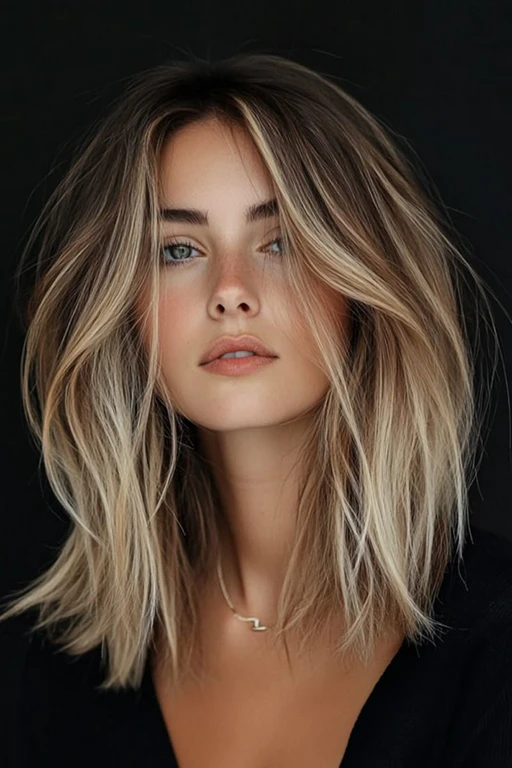
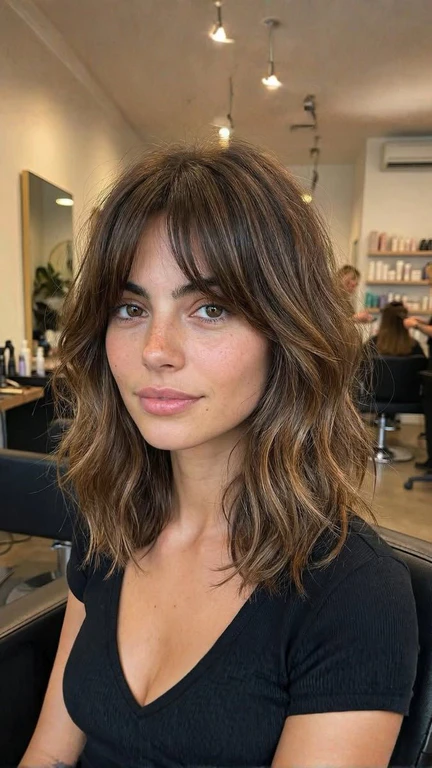
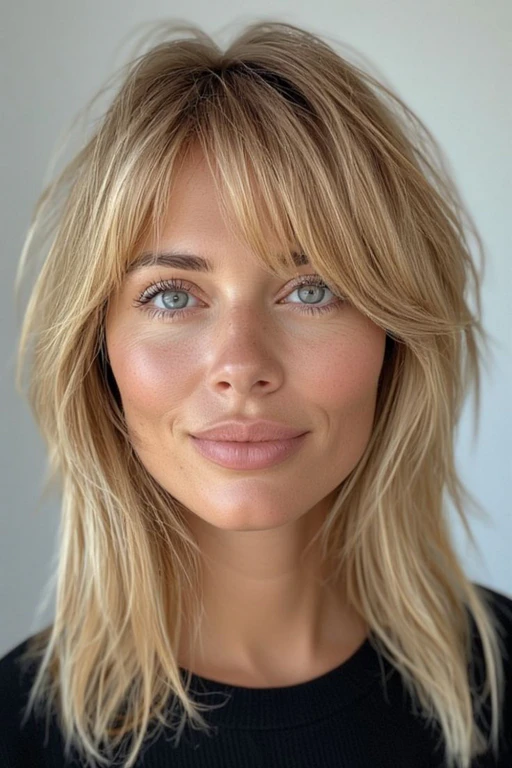
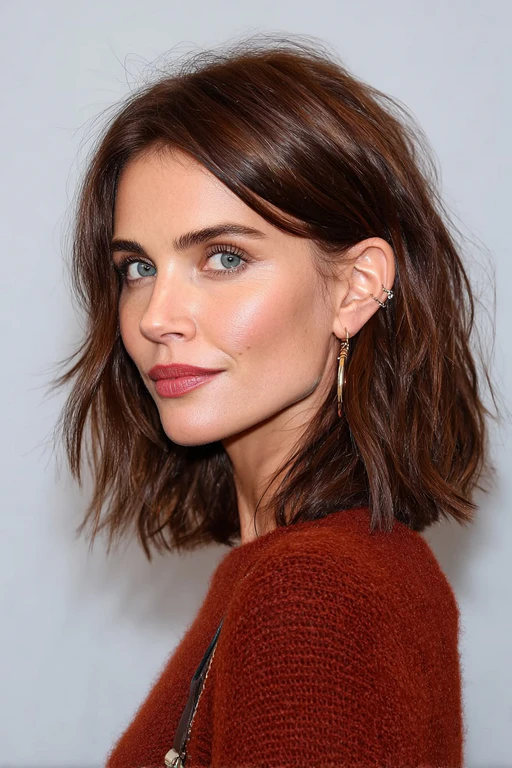
The Collarbone Cut With Soft Face-Framing Layers
To start, this haircut is the safest choice and, honestly, the most flattering. The length stops right at the collarbone. Then, gentle layers frame the face starting around the jaw.
Because the back stays nearly one length, the cut reads as thick from behind. Meanwhile, the front layers create softness and lift. As a bonus, it suits almost every face shape.
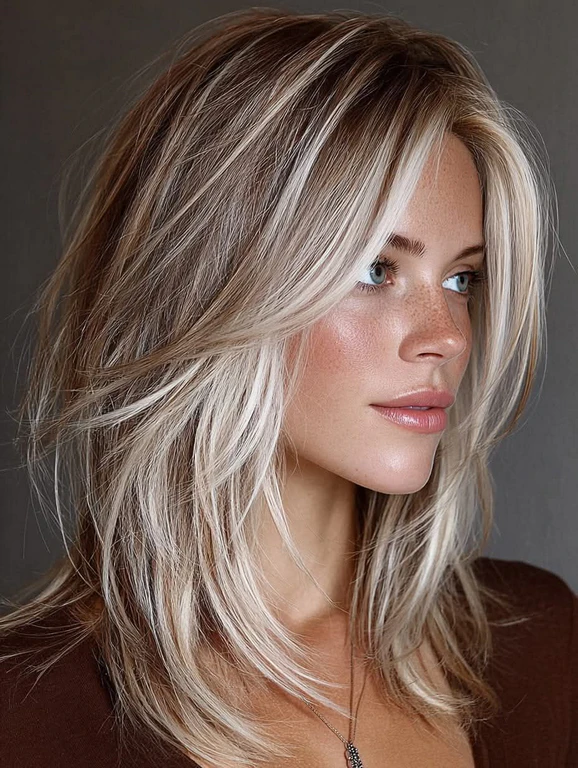
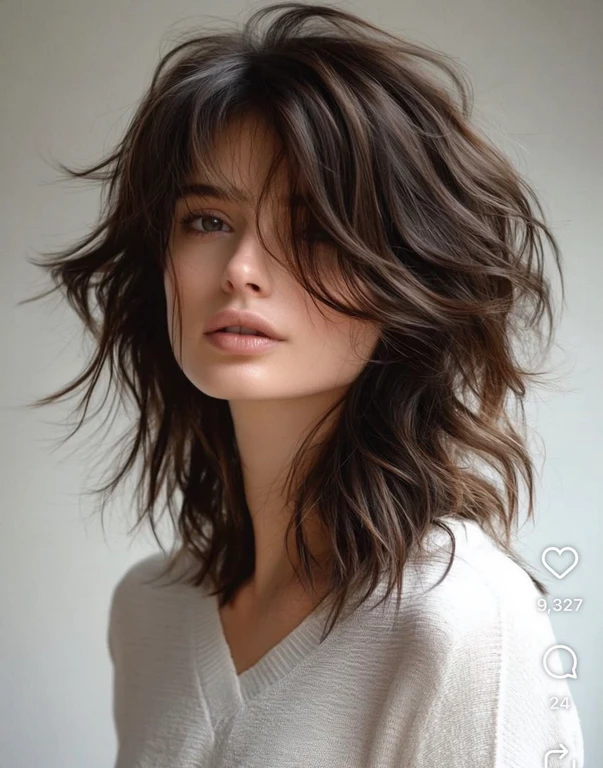
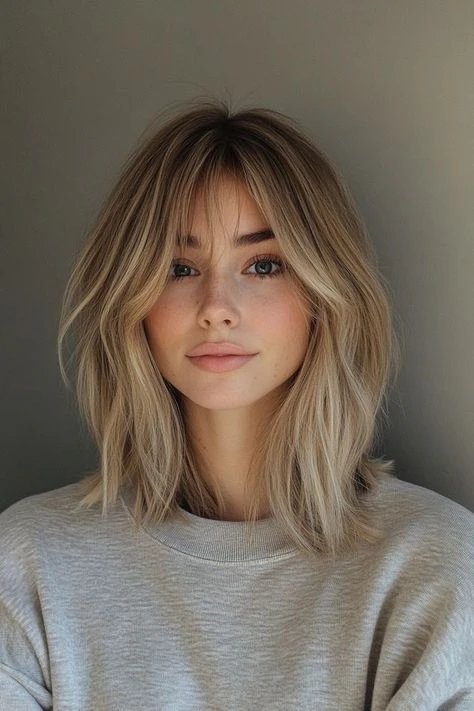
The Modern Shag, Toned Down
Traditional shags remove too much weight. However, a softened version works wonderfully. Specifically, ask for a shag with a heavier baseline and layers concentrated only through the crown.
The result is texture on top and density on the bottom. Furthermore, the blunt lob cut air-dries beautifully, which ultimately saves time on busy mornings.
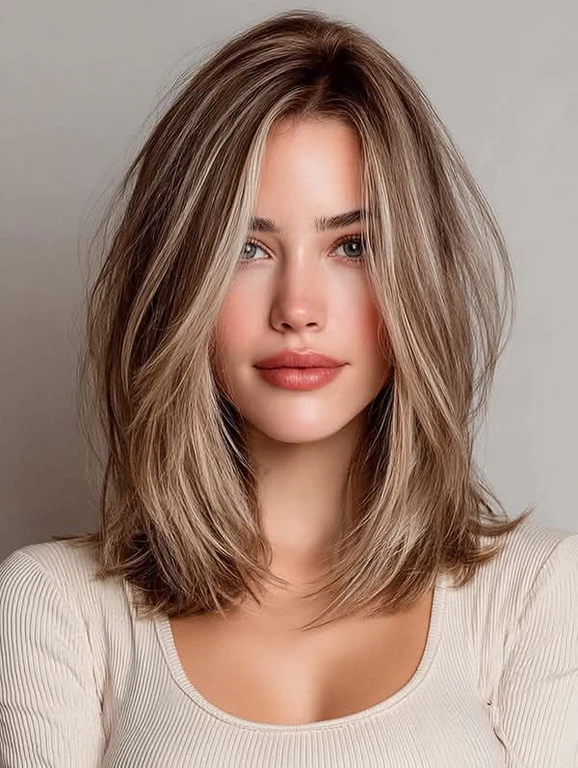
The Blunt Lob With Hidden Layers
At first glance, the style looks like a plain blunt lob. Underneath, though, subtle internal layers create bounce. Nothing is visible on the surface.
As a result, you get the polished look of a one-length cut with the movement of a layered one. This style is an excellent option if previous layers have left your hair looking thin.
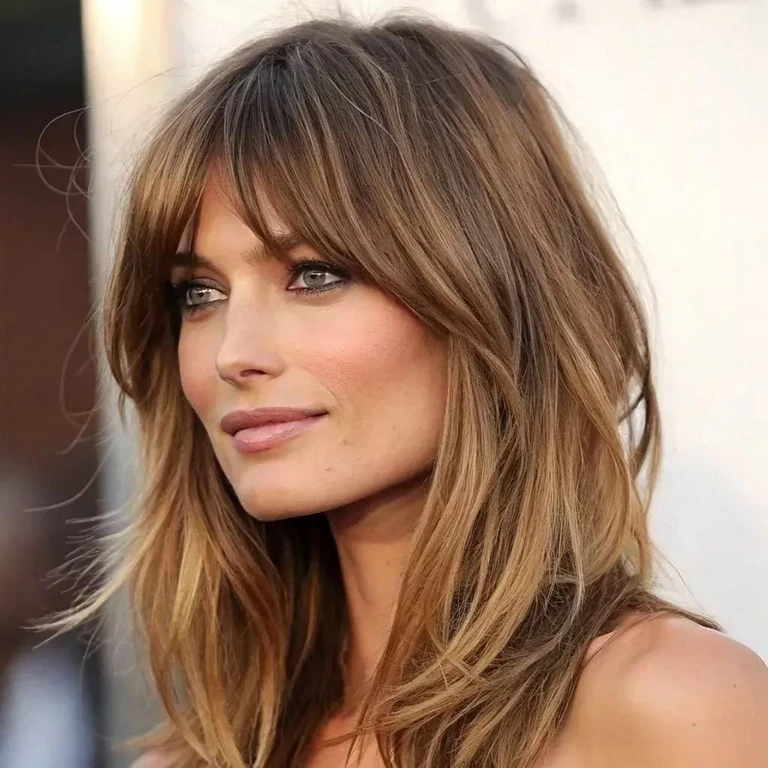
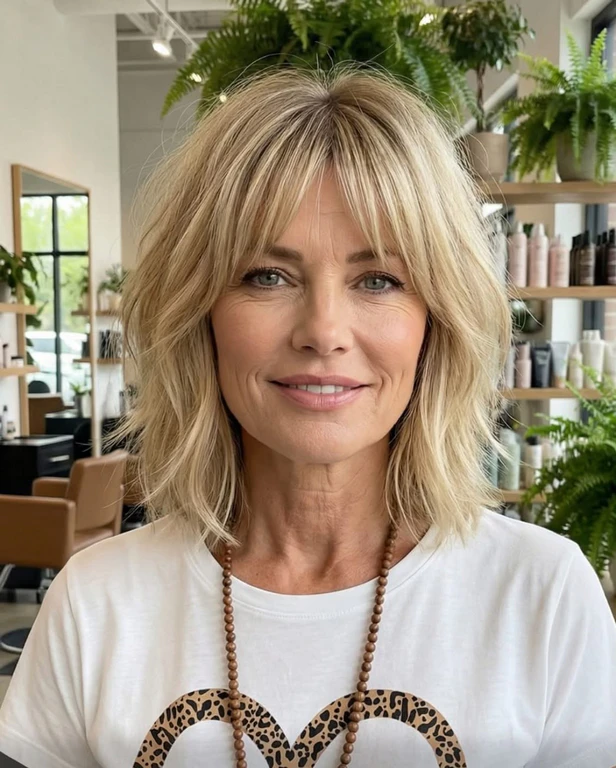
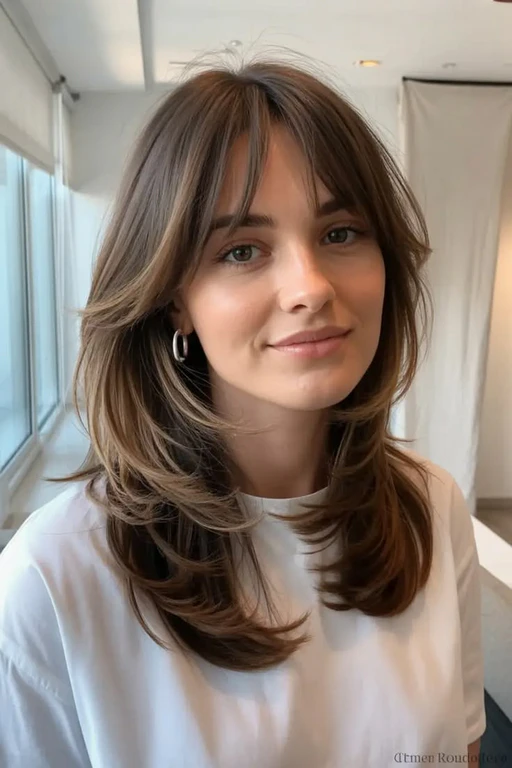
Curtain Bangs With Graduated Mid-Lengths
Curtain bangs do the heavy lifting for fine hair. In particular, they add fullness exactly where it is most visible: around the face. Pair them with a mid-length graduation, and the whole shape opens up.
Curtain bangs also grow out gracefully. Therefore, you will not feel trapped between appointments.
The Chin-to-Shoulder Bob With Stacked Back
For maximum lift, consider slight stacking at the back. Here, the nape sits shorter while the front stays longer. This builds a rounded, full silhouette.
Still, keep the stacking subtle. Otherwise, heavy graduation can look dated and may leave fine hair wispy at the neckline.
Styling Tips That Keep the Volume All Day
A fantastic cut is only half the equation. Your routine matters just as much. Fortunately, a few small adjustments make a dramatic difference.
Wash Smarter, Not Less
Generally, fine hair needs more frequent washing, not less. Oil flattens roots quickly. Therefore, a lightweight clarifying wash once a week keeps buildup under control. On other days, however, use a gentle volumizing formula.
Furthermore, focus shampoo on the scalp. Conditioner, meanwhile, belongs only to the mid-lengths and ends.
Apply Product to Damp Roots
Mousse and root spray work best on wet, not dry, hair. First, apply a golf-ball-sized amount directly at the roots. Then, rough-dry with your head flipped forward.
Master the Cool Shot
Heat shapes hair, whereas cold sets it. So, after blow-drying each section, hit it with the cool button for about five seconds. As a result, the volume locks in place far longer.
Surprisingly, this old-school trick still beats most modern tools. Place three large Velcro rollers along the top of your head while you finish getting ready. Afterward, remove them after ten minutes. The lift is immediate.
Skip Heavy Oils
Argan oil and shea butter are wonderful on coarse hair. On fine strands, however, they act like glue. Instead, choose lightweight serums or dry texture sprays. For more detail on product selection, see our guide to volumizing products for fine hair.
Certain habits sabotage even the best cut. Therefore, watch out for these.
Going Too Long
Anything past the bust line will drag fine hair down. Ultimately, medium length exists for a reason.
Overusing Thinning Shears
Thinning shears remove bulk. Unfortunately, fine hair has no bulk to spare. So, unless your stylist has a specific reason, you should politely decline.
Ignoring Color Choices
Flat, single-process color makes hair look even flatter. Dimensional highlights, on the other hand, create visual depth. Even subtle babylights can make hair look noticeably fuller. To learn more, read our post on color techniques for thin hair.
Brushing While Wet
Wet fine hair stretches and snaps easily. Instead, use a wide-tooth comb and work from the ends upward.
How Often Should You Trim?
Layers lose their shape faster than blunt cuts. For this reason, aim for a trim every eight to ten weeks. Moreover, split ends can make fine hair look thinner, so regular maintenance is worth it.
Between visits, protect your ends carefully. Above all, heat protectant is mandatory if you use hot tools. In fact, research on hair fiber damage, summarized well by Healthline, confirms how quickly repeated heat weakens thin strands.
Face Shape
Face shape guides layer placement more than anything else. Accordingly, please obey these quick rules.
Round faces: Keep layers longer and vertical. Additionally, avoid width at the cheeks.
Square faces: Soft, face-framing layers soften a strong jawline.
Oval faces: Almost anything works, so experiment freely.
Heart-shaped faces: Add volume near the jaw to balance a wider forehead.
Long faces: Curtain bangs and mid-length layers visually shorten the face.
If you are unsure, bring photos to your appointment. Clearly, visual references communicate far better than words.
Fine hair is not a limitation. Rather, it is simply a texture with specific needs. Once you respect those needs, the results speak for themselves.
To summarize, the best layered medium-length hairstyles for fine hair share three traits. First, they keep the perimeter strong. Second, they place layers thoughtfully. Finally, they pair with a styling routine that protects lift instead of crushing it.
Start with one change. Perhaps a collarbone trim, or maybe just a lighter conditioner. Regardless, small adjustments compound quickly. Before long, you will wonder why your hair ever looked flat at all.
Ready for more ideas? Next, explore our roundup of low-maintenance haircuts for busy mornings.