

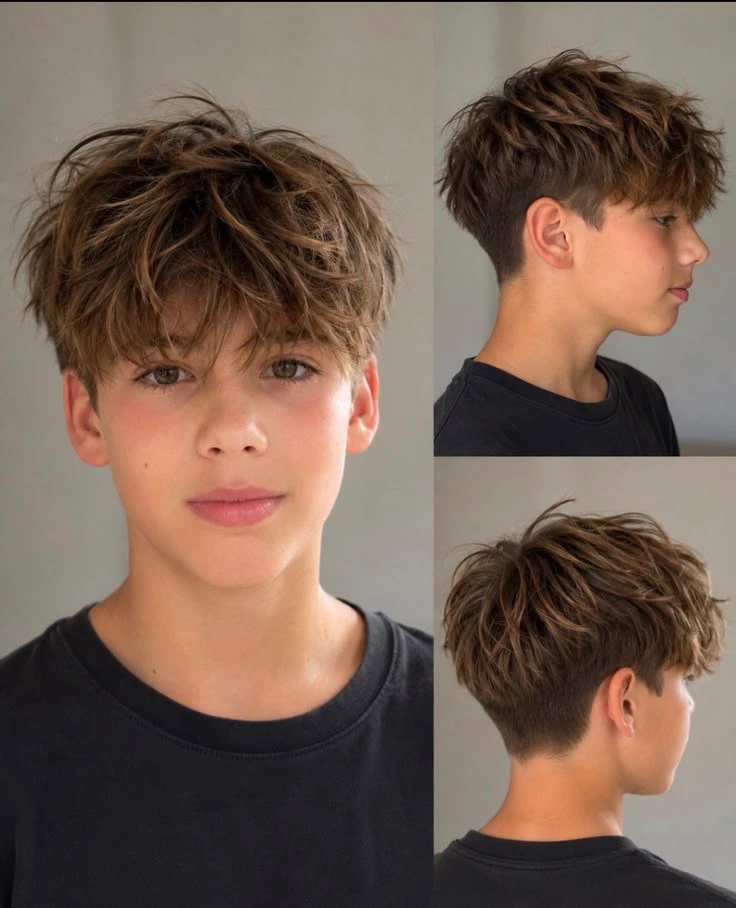
A haircut can affect the way a child thinks about getting ready in the morning. It can make hair more manageable, keep it out of the eyes, and give boys a hairstyle that fits their personality. But the ideal haircut should do more than look neat. It also needs to work with the child’s natural hair texture, everyday life, and the level of care a family can reasonably provide.
When comfort and practicality are the priority, finding cute short hairstyles for boys is considerably easier. Some kids appreciate crisp fades and well-defined partings. Others like messy layers, natural curls, or a basic crew cut. Fortunately, short hairstyles come in enough varieties to please just about everyone.
This guide covers traditional cuts, modern trends, texture-friendly alternatives, and practical grooming suggestions. It also covers what to discuss with a barber, how styles grow out, and what elements make a cut simpler to maintain.
Why Short Haircuts Are Still Popular
Short haircuts have stayed in fashion because they are easy to fit into busy childhood schedules. A neat crop, for example, can look clean with a quick comb, and a short taper needs minimal fuss before school.
Plus, shorter hair is easier to dry after swimming, playing sports, or washing. This can make morning and nighttime routines more doable, especially for smaller children.
Still, shorter hair doesn’t always mean less maintenance. A skin fade will need regular trims to keep its shape. A basic scissor cut, however, can look appealing for weeks as it grows out.
The ideal choice depends on how much maintenance the family wants to do and how the child likes his hair to feel.
Know Your Hair Type Before Choosing a Style
Hair texture impacts how a haircut sits, moves, and responds to styling. So if you copy a picture without considering the natural hair pattern of the child, you can get a different outcome.
Fine Hair
Light texture and compact shapes are frequently preferable for fine hair. For example, a crew cut or a short, side-parted style can give the illusion of a fuller look without the need for heavy styling products.
But thinning it out too much can make fine hair look sparse. Leaving enough length through the crown will often help balance the shape.
Thick Hair
Thick hair can do a lot, yet it can become bulky at the sides. Blended layers and a shorter neckline can remove unnecessary weight.
Meanwhile, textured tops allow thick hair to move around without looking rigid or too rounded.
Coily and Curly Hair
The haircut generally works best with curly and coily textures when the natural pattern is respected. A barber can shape the sides and keep the definition on top instead of pressing the hair flat.
As curls dry, they shrink; thus, the finished length may look shorter than expected. This makes it even more important to discuss shrinkage before cutting the hair.
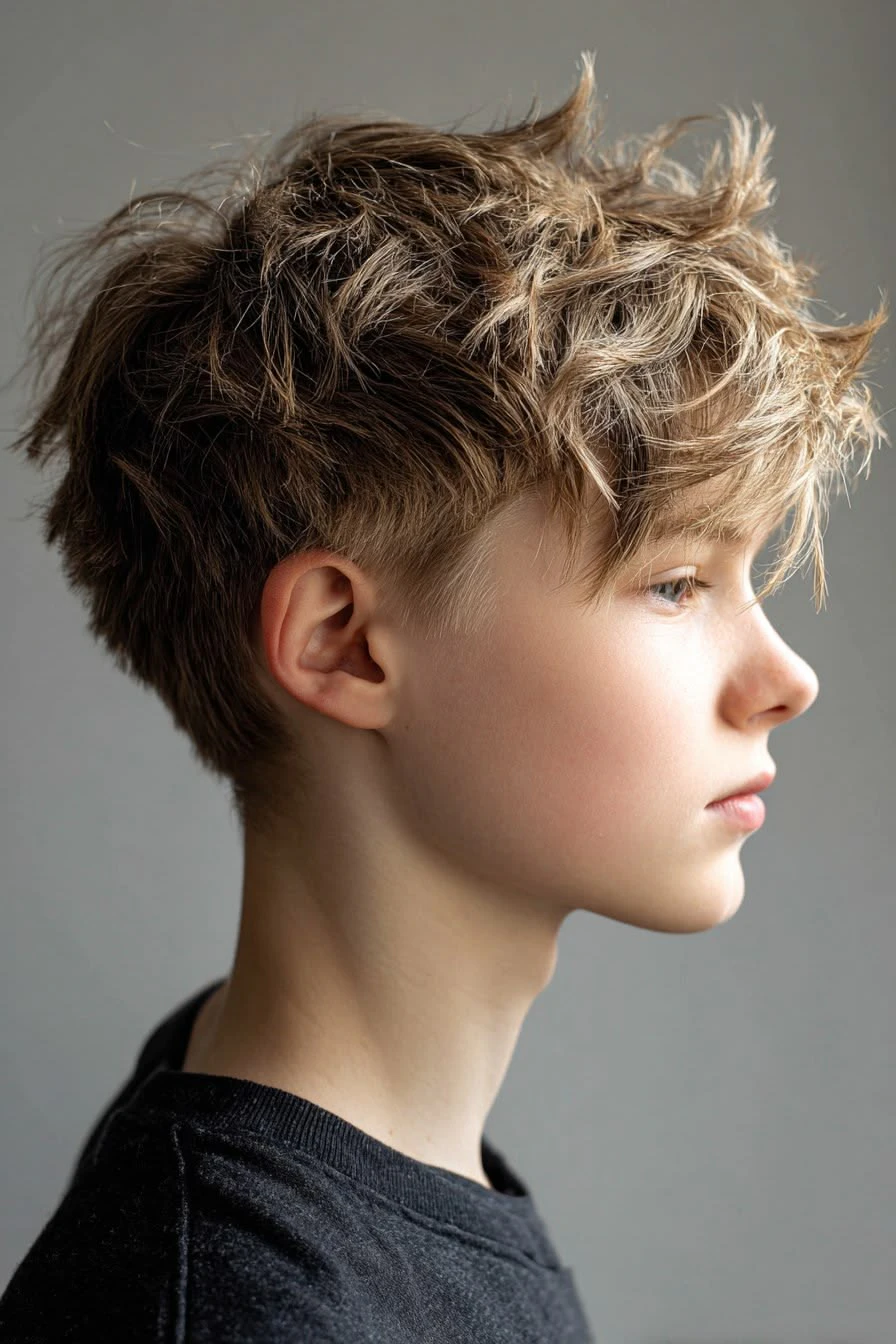
Textured Crop for a Casual Everyday Look
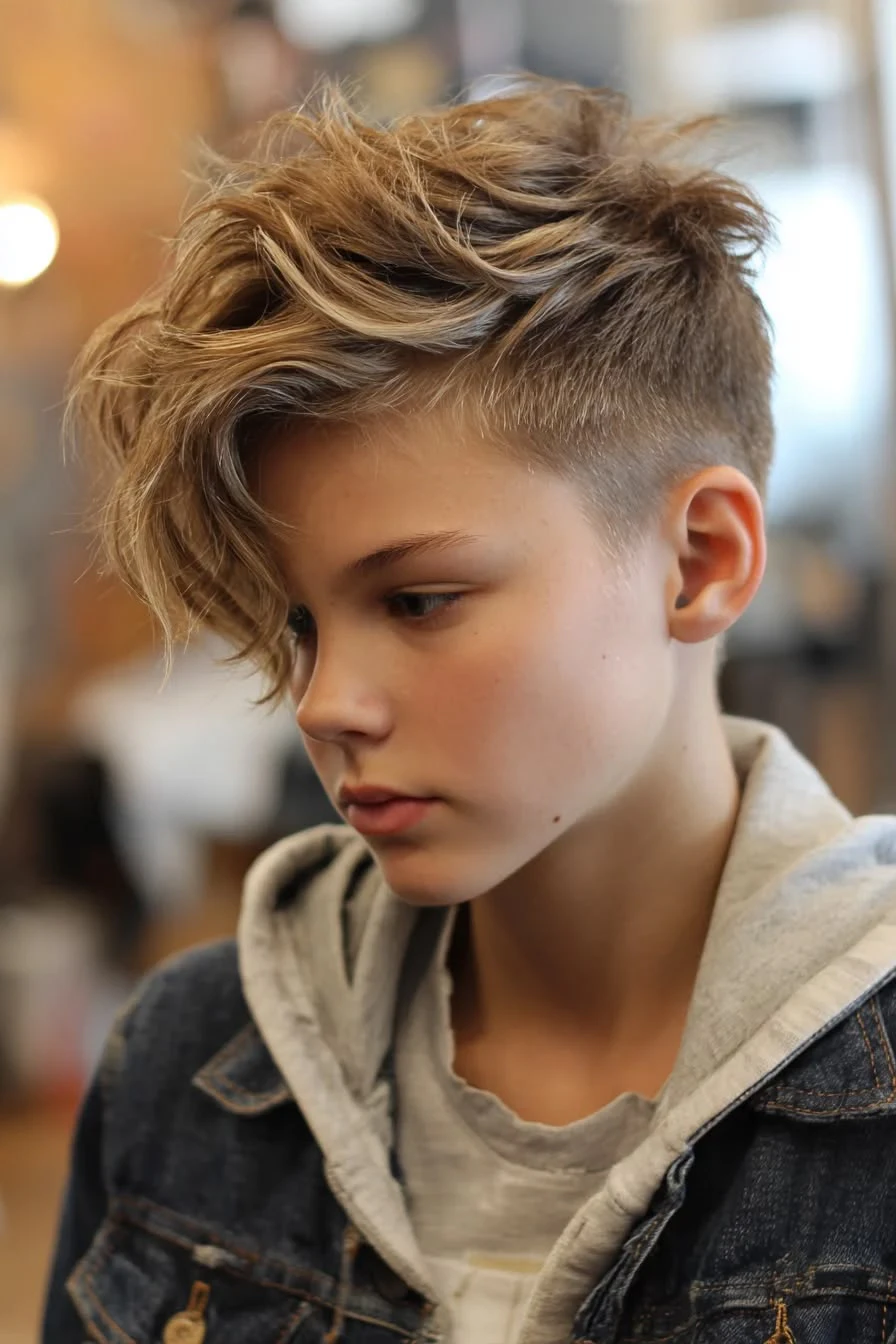
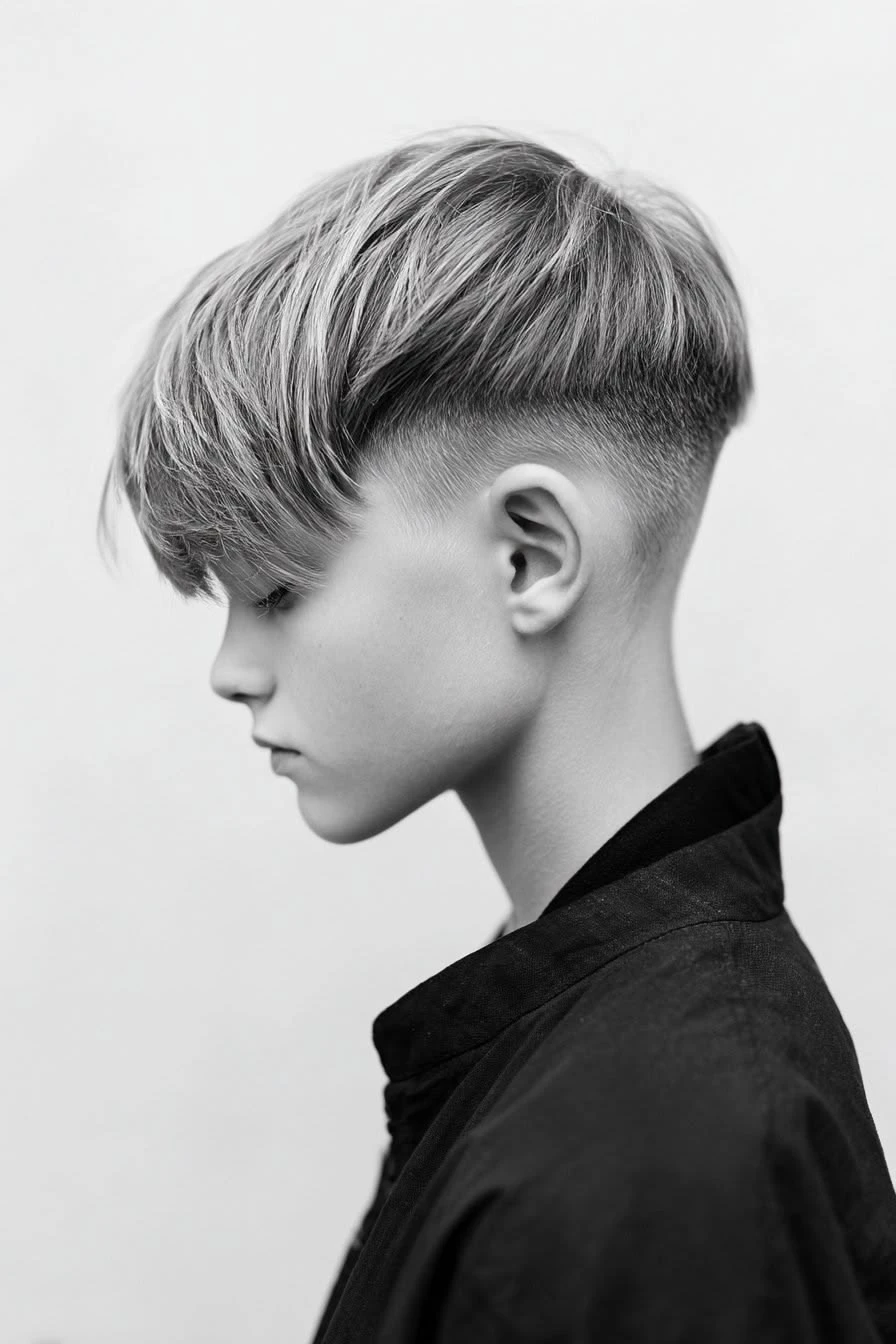
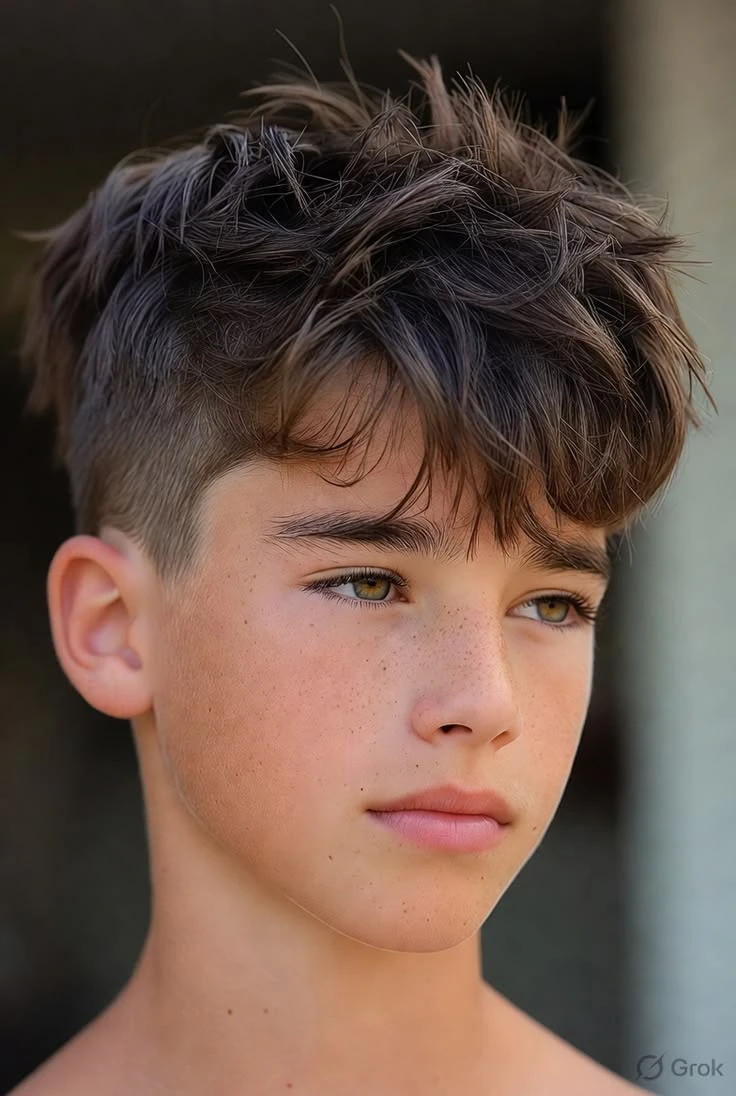
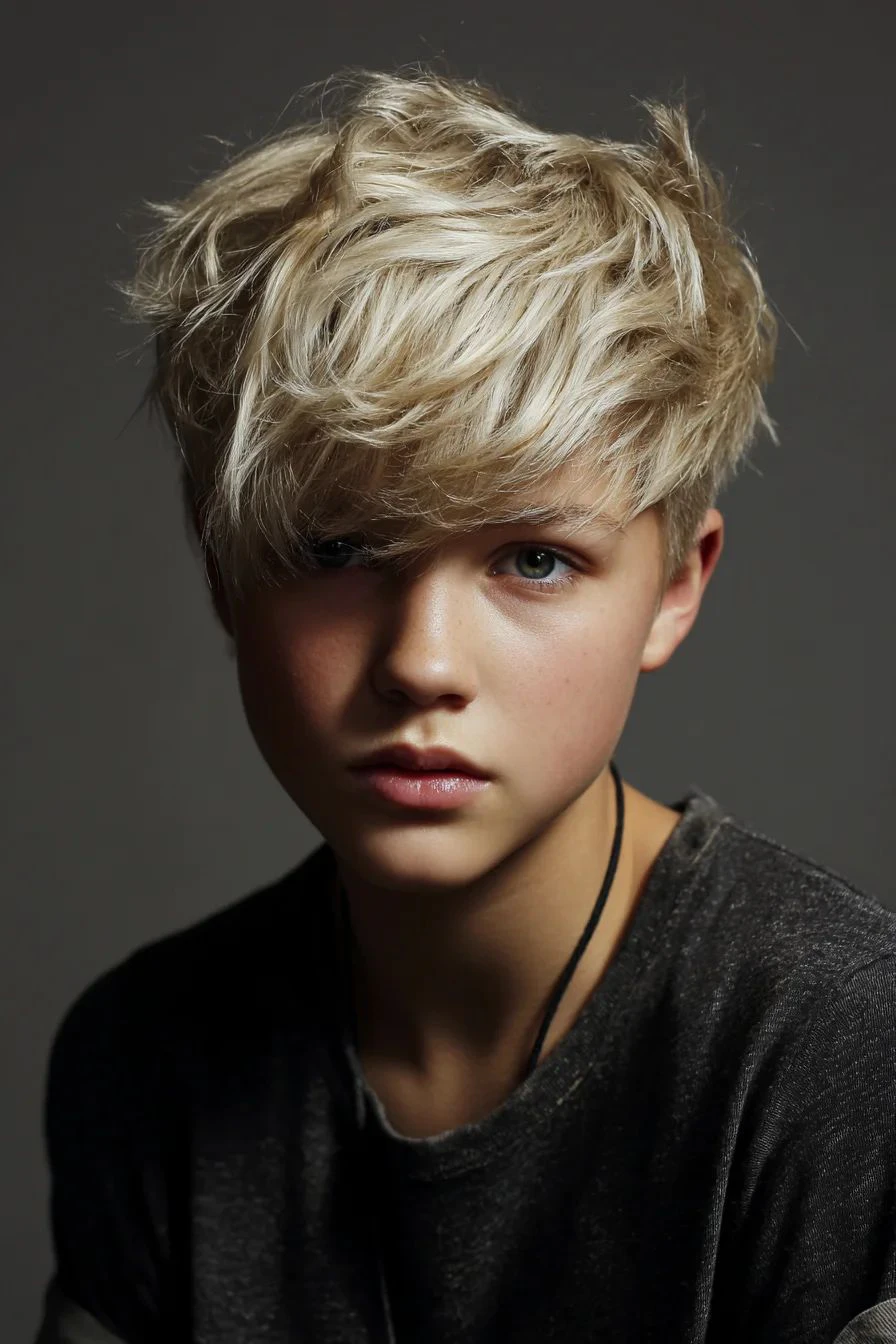
The textured crop is one of the most versatile short haircuts for school-age boys. It has relatively short sides with significantly longer hair on top.
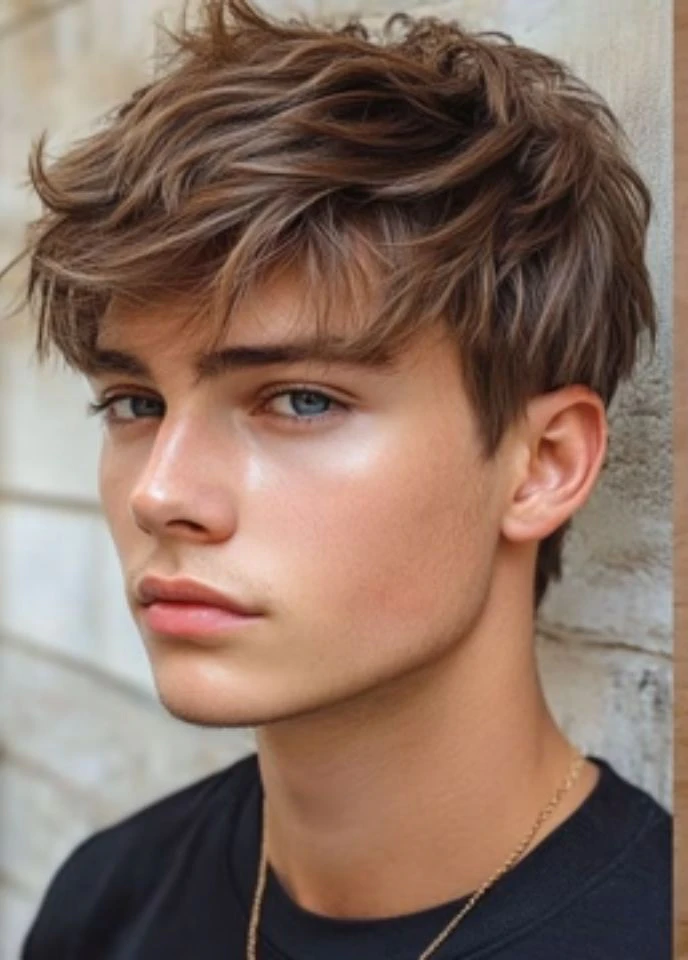
The barber adds controlled texture, creating a piecey finish rather than a perfectly smooth one. That means individual pieces can fall naturally.
A short, irregular fringe can soften the forehead area. Alternatively, the fringe can be swept up slightly to show more of the face.
This hairstyle especially suits straight or slightly wavy hair. Plus, it’s a style that still looks appealing when the top begins to get a little long between visits.
For everyday care, it is generally enough to dampen the hair slightly and shape it with your fingertips.
Classic Crew Cut for Easy Mornings
For families looking for low maintenance, the crew cut is a solid bet. The top is left long enough to create a soft, natural finish while the sides and back are cut shorter.
The crew cut creates a subtle contrast between the crown and the surrounding hair, unlike a uniform buzz cut.
It has a shape, but it doesn’t need a specific fringe or part.
It’s especially practical for boys who play sports, wear helmets, or don’t like hair in their faces.
A slightly longer crew cut might also help with prominent cowlicks. The barber can leave enough length for the hair to lie flat without cutting against the growth pattern.
Classic Taper With a Natural Finish
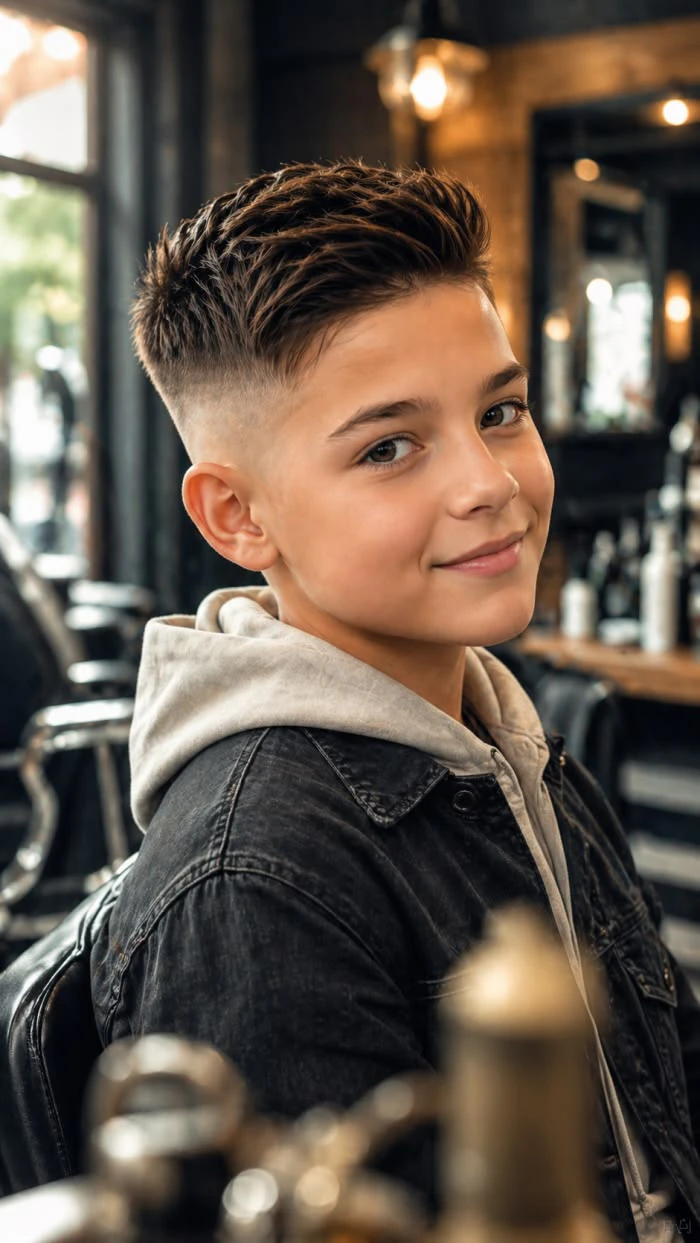
A classic taper gradually shortens the length toward the ears and neckline. However, it generally leaves more coverage than a high fade or skin fade.
This makes it better for younger boys and families that like a gentler look.
You may style the top straight, comb it to the side, or create a slightly tousled appearance. Meanwhile, the blended sides help maintain the overall shape.
Another advantage is how gracefully it grows out. The transition between lengths is gradual; thus, the haircut frequently remains neat as the hair grows.
For boys who don’t like getting their hair cut often, a low taper with a scissor cut on top can be a smart choice.
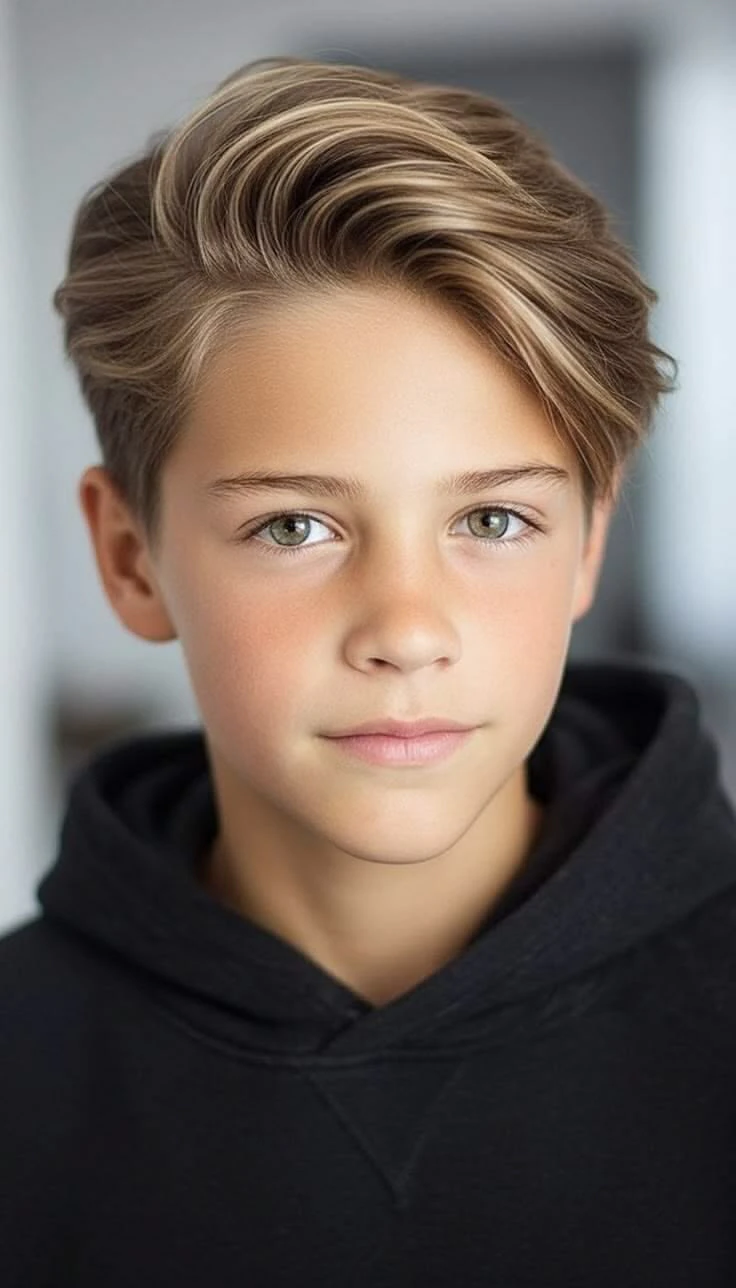
Sleek Side Part Haircut for a Sophisticated Look
A side part creates a classic look without being too stiff. Above the forehead, there is enough hair left for the barber to sweep it to one side.
Meanwhile, the sides are shorter and blended smoothly.
This hairstyle is ideal for school photos, family gatherings, and everyday wear. More importantly, it can be modified for different hair densities.
A loose part may better suit a boy with fine hair than a crisp line. If his hair is thick, he may need some weight taken out of the upper sides.
A comb will give a neat finish, but finger styling will give the same haircut a more casual look.
The Ivy League: Smart Yet Relaxed
An Ivy League haircut is like a longer crew cut. But the front is long enough to brush gently across the forehead or make a slight side part.
This combination gives structure while still being flexible.
For example, you might style the hair neatly for a particular occasion, then wear it more casually at other times.
The Ivy League is excellent on straight and slightly wavy hair. And the longer front can help tame some growth patterns around the hairline.
This style is normally done with a low taper rather than an ultra-short fade when you’re going for a traditional look.
French Crop With Short Fringe
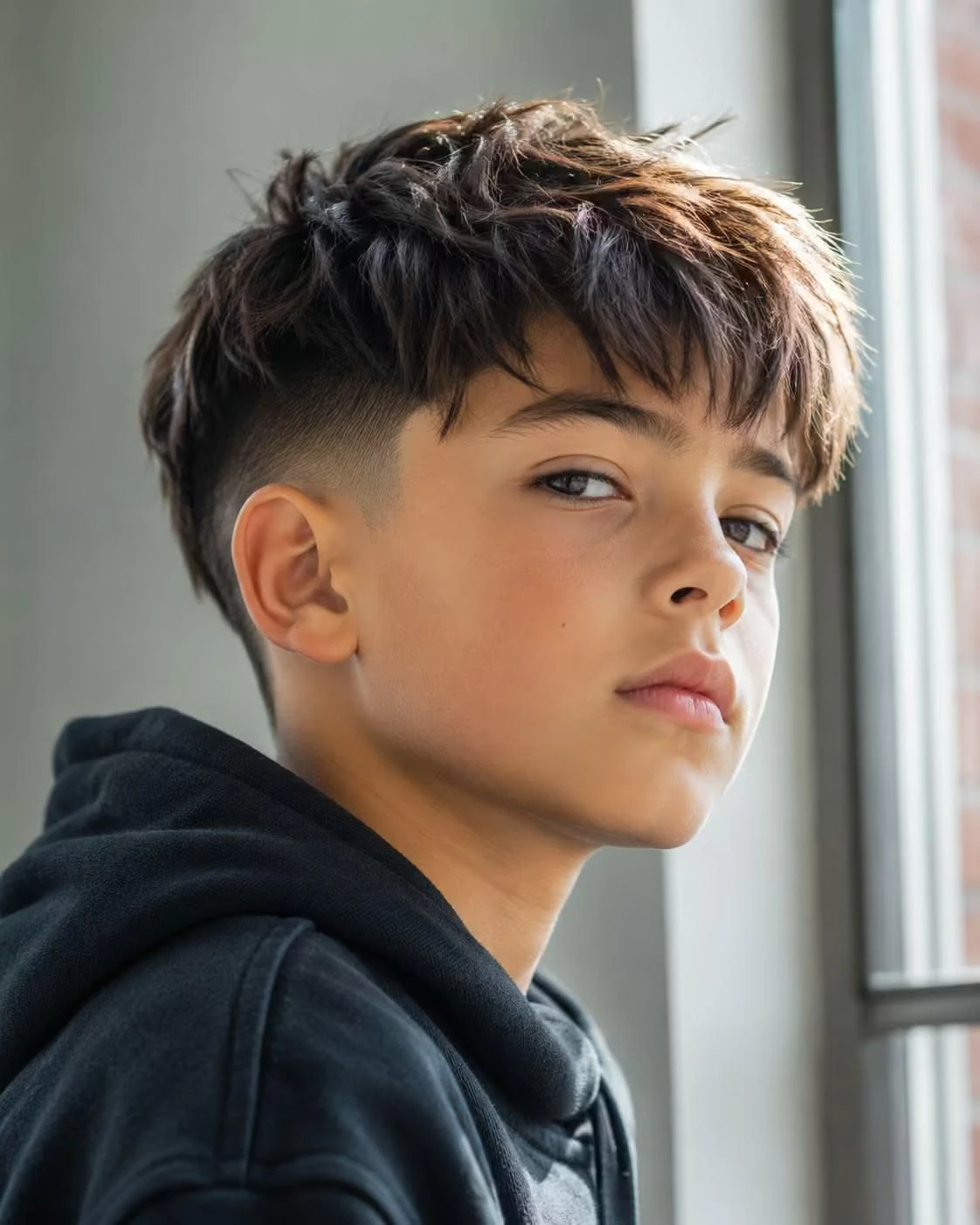
The French crop has tightly cropped sides and a compact fringe that slopes toward the forehead.
The hair on top is pushed forward, which is its distinctive feature. The result is a style that works well for boys who have hair that naturally grows toward the face.
The fringe might be straight, gently uneven, or softly textured. Each variation gives a different look without modifying the basic haircut.
For boys with thick hair, layering is done carefully so the top doesn’t become too heavy.
But the fringe should be kept out of the eyes. Children need a comfortable length if they read, sketch, or participate in classroom activities for long periods of time.
Mini Faux Hawk for Boys with Playful Hair
Some boys like hairstyles that feel energetic and a bit unusual. If so, a small faux hawk provides a fun alternative without the drama of a full mohawk.
The barber cuts the sides shorter but leaves the middle slightly longer.
Then the hair in the center can be lifted upward with the fingertips. The outcome is a soft ridge, not a stiff spike.
A soft faux hawk is very flattering on thick or wavy hair, as the natural volume fits the design.
For ordinary wear, the top can just fall forward. So the cut is still functional even if nobody has time to style it.
Modern Short Bowl Cut With Soft Layers
The old bowl cut has become a more versatile style. In current versions, the layers are softened and the sides are gently sculpted instead of forming one thick, uninterrupted line around the head.
This variation makes the haircut lighter and more natural.
The fringe can sit over the brows, while delicate layers avoid bulk around the ears.
A softly tapered neckline also makes the haircut look less round in the back.
The style works especially well on straight hair, but slightly wavy hair can create a great relaxed variation.
The secret is to keep the bottom edge from getting unnecessarily thick.
Boys’ Haircuts for Natural Curly Hair
Curly hair has movement and volume of its own. Therefore, the best short styles should embrace those features, rather than hide them.
The curly taper and rounded crop are two of the cutest short haircuts for boys because they keep the natural texture while minimizing the bulk around the sides.
Curly Taper With Defined Volume
This haircut features longer curls on top, with the hair gradually getting shorter on the sides and back.
This contrast is what gives the haircut its definition. At the same time, it maintains the texture that makes curls unique.
Looser curls often look best with a rounder, softer top. Tighter curls may be more successful with a more sculpted shape.
Because curl patterns change across the head, the barber needs to examine how different areas shrink and settle.
Try a light leave-in conditioner to help hold moisture, but avoid heavy products that might weigh down fine curls.
Short Curly Fringe
The curly fringe lets natural curls tumble over the forehead without a long hairstyle.
The sides are usually cut shorter, with a slightly fuller front.
But the barber must think about how wet curls shrink when they dry. Otherwise, the fringe will be far shorter than planned.
For daily styling, separating the curls with your fingers is usually better than brushing dry hair hard.
Compact Afro
A short afro allows natural coils to remain and keeps the silhouette manageable.
The barber can cut the hair into a well-balanced circular shape or a slightly flatter top, according to individual taste.
The compact afro doesn’t flatten the hair out like some styles do; it keeps the natural structure intact.
But moisture is still crucial. Gently washing, conditioning, and detangling will help prevent unnecessary breakage.
If you would like more texture-specific ideas, take a look at a companion article on curly haircuts for boys for helpful comparisons before your next barber session.
Short Haircuts for Natural Waves
Wavy hair is a texture that sits between straight and curly hair, allowing movement and adaptability.
Short layered cuts can emphasize these traits without the need for fancy styling.
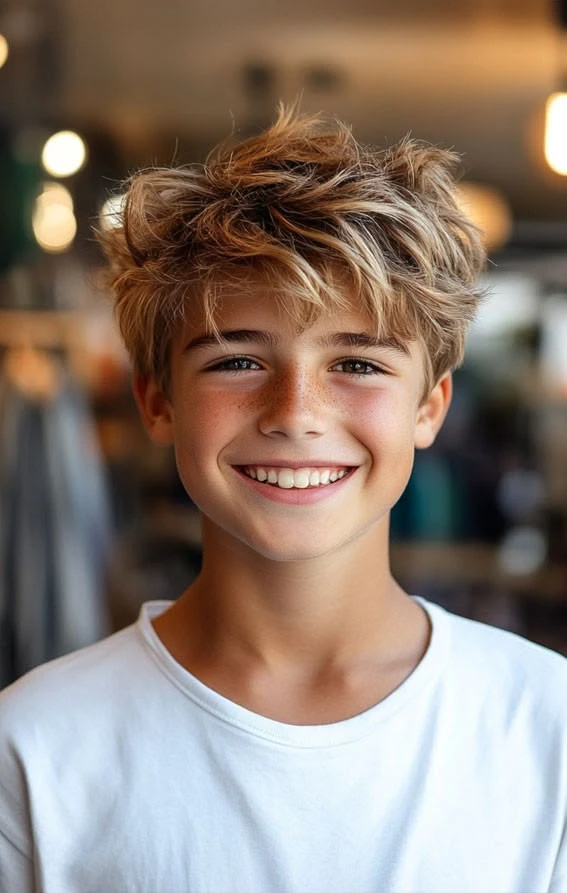
Soft Wavy Crop
The crop is cut long enough to show the natural bends of the hair. The shorter sides also create a narrower silhouette.
This hairstyle is excellent when the waves fall naturally forward or sideways.
The barber should work with the hair’s growth instead of attempting to achieve an absolutely uniform finish.
That makes styling easier on a day-to-day basis.
Low Taper With Wavy Top
The low taper starts at the ears and neckline, so the upper sides stay long enough to blend into the wavy top.
It provides a gentler contrast than a high fade.
It’s a good choice for boys who want a modern cut with a little less scalp showing.
Buzz Cuts
A buzz cut clips the hair to the same length all around or a little longer on top than it is around the sides.
Its key selling point is convenience. The hair normally needs no styling after washing.
But the clipper length matters. The shorter setting shows more of the scalp, while the longer setting gives a softer look.
If your child has a sensitive scalp or a cowlick that sticks out, you might want to leave a little extra length for comfort.
And very short hair provides little UV protection. Hats and effective sun protection are especially crucial when you’re outside.
Fade Haircuts: Low Fade, Mid Fade, High Fade
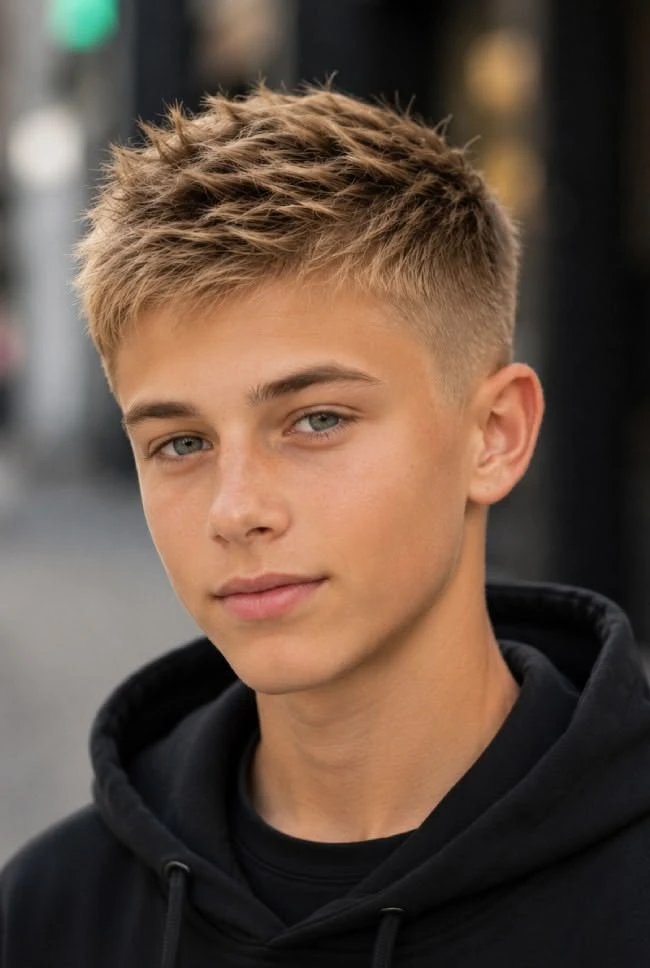
Fades create a gradual change from shorter hair at the bottom to longer hair at the top.
But the starting point changes the look greatly.
Low Fade
The low fade starts at the ears and neckline. It provides subtle definition while keeping coverage around most of the head.
This haircut can give younger boys a clean but subtle look.
Mid Fade
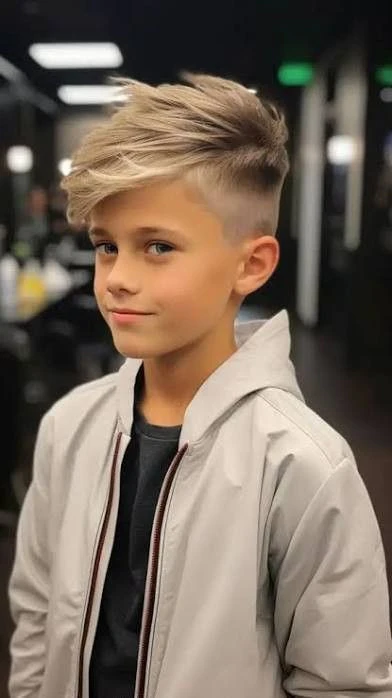
The mid-fade goes a bit higher on the sides. This results in a more distinct contrast between the upper and lower parts.
It works nicely on textured crops, short curls, and longer crew cuts.
High Fade
A high fade removes more hair from the upper sides for a more dramatic contrast.
It is striking but may need to be trimmed more often to keep its original shape.
If your son doesn’t like a close shave, a standard taper might be more comfortable than a skin fade.
Haircuts by Age and Daily Routine
Age does influence children’s responses to grooming, but temperament is more important than any rigid age category.
Younger kids tend to do better with simple, forgiving shapes.
A short crop, soft scissor cut, or moderate taper can be kept manageable and doesn’t require a lot of styling.
Additionally, keeping the hair away from the eyes reduces the need for frequent trims.
School-Age Boys
As they get older, kids may develop more set ideas about how they look.
Some like side parts and fades; others, natural curls or messy layers.
Generally, including the child in the decision makes the experience more pleasant.
Boys Ages 12 and Up
Older boys may choose sharper lines, textured fringes, or more modern barbering details.
But the final choice should still be determined by school standards, sports needs, and personal comfort.
A photograph can help clarify the style you would like but should be considered a source of inspiration, not a guarantee of an exact result.
How Face Shape Affects Short Hairstyles
Face shape can guide the proportions of a haircut. It should not, however, determine what a child is allowed to wear.
Round Faces
A little extra height at the crown can look more balanced. A lightly textured Ivy League or faux hawk, for example, can add shape.
But a lot of height isn’t necessary, especially if the child prefers a softer look.
Longer Faces
Longer faces can work with cuts that have a small fringe and less height on top.
A French crop or natural side-swept style will work really well.
Square Faces
A soft texture helps offset a strong jawline. Meanwhile, a classic taper enhances the structure of the haircut without making it look severe.
Oval Faces
Oval faces work well with numerous short styles, including crew cuts, crops, and side parts.
Still, natural hair growth patterns and hair density are more useful things to look at than face shape alone.
Before the Cut: What to Say to a Barber
Good communication can help avoid a disappointing result.
Instead of asking for a “short haircut,” talk about how you want the hair to look around the forehead, ears, and neckline.
For example, telling the barber that the fringe has to stay out of the eyes gives him a practical point of reference.
It also helps to talk about the following details.
The preferred length for the top and sides.
Whether the neckline should be tapered or closely cut.
How much natural curl or wave should be left.
Whether the haircut should look neat without any styling products.
How often the family plans to return for a haircut.
You should also point out cowlicks and sensitive areas to the barber so he can adjust his cutting method.
Short, clear explanations might make the experience less stressful for nervous kids. And it’s appropriate to take breaks as needed.
Daily Hair Care for Boys’ Short Hairstyles
Even a simple haircut needs some regular care.
You don’t need a long list of products to keep hair healthy.
Washing & Conditioning
Wash the hair according to your scalp condition, your activity level, and your hair texture—not on a rigid daily schedule.
For example, a child who swims often might need a different routine than one with dry, tightly coiled hair.
If there are any curls or longer parts left, conditioner can help avoid tangling.
Gentle Drying
Rubbing damp hair hard with a towel can create tangles and friction.
Instead, it’s typically more comfortable to gently squeeze out extra moisture.
For curly hair, choose a soft cotton shirt or microfiber towel to help maintain curl definition.
Detangling
If you have to detangle, begin at the ends and work your way up.
A good conditioner and a wide-tooth comb are also gentler on textured hair.
Keeping the Style Between Haircuts
Different styles grow out at different speeds.
A close fade could start losing its crisp contrast after two to three weeks. A classic taper or longer crop, in contrast, can remain presentable for four to six weeks or more.
These are rough estimates, not hard and fast rules. The result depends on hair growth, density, and the original cut.
Meanwhile, the fringe typically starts to show before the rest of the haircut needs to be tidied up.
Instead of trimming the fringe regularly at home, families might choose to go a little shorter during the appointment.
For more everyday grooming tips, see our guide to low-maintenance hairstyles for boys.
Seasonal Considerations for Boys’ Haircuts
Weather can affect how comfortable a haircut feels.
Boys who spend a lot of time outside in warmer months may want to go with shorter sides and less bulk around the neckline.
But very short hair doesn’t solve the heat problem and can expose more of the scalp to the sun.
Tapered scissor cuts and longer crops might give a little more coverage during the colder months.
Boys who often wear helmets or winter hats may prefer haircuts that readily fall back into their original position.
Comfort, not the season’s fashion, should be the key to every decision.
This approach helps boys feel positive about their hair.
Even if adults make the final practical decisions, they should consider the child’s perspective.
Some boys like a visibly styled look. Others dislike products, sharp parts, or very close trims.
Before seeing the barber, it is helpful to have a few practical choices in mind to make the appointment simpler.
For smaller children, two or three photos may be more helpful than dozens of options.
Older boys might like to explain exactly how they want the fringe, sides, or collar to look.
However, preferences change. A child who enjoys a textured crop this year might want a buzz cut or longer curls later.
Haircuts should leave room for that kind of experimentation.
Finding a Style That Looks Good After Day One
New haircuts look extremely tidy right after the barbershop. But a winning everyday style needs to hold up after a few washes and regular school mornings.
The best cute short hairstyles for boys are those that can keep a nice shape without frequent adjustment.
For example, a traditional taper grows out more subtly than a drastic skin fade. A textured crop has natural movement, while a crew cut makes maintenance simple.
Similarly, a curly taper or a compact afro can highlight natural structure without the need for kids to restyle their hair every morning.
The ideal haircut balances appearance, comfort, ease of care, and the child’s preferences.
A Haircut to Suit His Personality
Short hairstyles for boys are about much more than a close trim. From classic side parts to wavy crops, gentle fades to beautifully sculpted coils, every haircut sends a different message.
But rarely does the best result come from copying a trend perfectly. It is vital to know how the child’s hair grows, his daily routine, and what he feels comfortable with.
When looking for cute short haircuts for boys, consider not just the fresh look but also how the style will hold up in a few weeks.
Ultimately, a haircut works when a kid can run, play, learn, and enjoy his day without always worrying about his hair. A well-chosen short style supports these activities while still letting his individual personality show.